One word for every AFC team's biggest offseason improvement: Jets get 'professional,' Chiefs are 'fresh'
Through all the signings, trades and draft picks, we can boil down how each team got better

Coaches, general managers and owners love to use keywords to describe their rosters. Teams are "competitive" or "disciplined" or "resilient." They have "speed" or "physicality" or "grit" or any of the other countless words used to form supposed identities.
And if every team truly lived up to those keywords, there would be almost no bad teams and almost no firings.
But this is the NFL, where what a team aims to be and what a team is are often at odds, or at least not quite a match. And make no mistake, talent helps a lot, too ... and can cover a lot of the ground between what a team wants to be and what it is.
But identities are how front offices build teams and how coaches coach teams. If there aren't some basic principles in place, it all falls apart. So what directions did teams take to improve in 2026?
Whether they hit their target remains to be seen, but for now, this is where they've aimed.
AFC East

Buffalo Bills: Juice
Player who exemplifies it: DJ Moore
Last year, Moore averaged 13.6 yards per catch. The Bills haven't had a player hit that average (min. 50 receptions) since John Brown in 2019. Last year, Josh Allen averaged a career low in air yards per attempt, and that mark has been trending downward his entire career. The two are correlated; Buffalo hasn't had a reliable downfield producer in years.
Moore brings downfield juice and some after-the-catch juice, too. Defensively, the Bills are seeing if there's any juice left in Bradley Chubb (excellent in 2023, missed 2024, down 2025) and if they can get the most juice out of second-round rookie T.J. Parker (excellent in 2024, down 2025). We'll nominate fifth-round defensive back Jalon Kilgore as a player with some juice to his game, too.
Miami Dolphins: Opportunity
Player who exemplifies it: Malik Willis
The Dolphins were completely stuck last year. It was understood Tua Tagovailoa wasn't the answer, and it became clear that Mike McDaniel wasn't cutting it, either. Tyreek Hill got hurt. They had to start fresh, and they did.
With 13 draft picks and $179 million in dead cap in 2026 ($67 million more than any other team), the Dolphins are going to give opportunities to a bunch of young and/or unproven guys. Willis is the most major example. If he plays well, not only might the Dolphins have found their answer at quarterback early in their rebuild, but they would have done so on the cheap. If Willis isn't deemed the answer, Miami will have opportunities to find one in 2027, but that's a future worry. Rookies I'm excited to see get opportunities include Kadyn Proctor, Chris Johnson, Jacob Rodriguez, Chris Bell and Kyle Louis.
New England Patriots: Size
Player who exemplifies it: A.J. Brown (soon)
Brown isn't on the Patriots yet, but all signs continue to point to him being there in early June, when it's financially more palatable for the Eagles to trade him. Brown is a physical specimen at wide receiver who turns 50/50 balls into 80/20 balls and wins deep, intermediate or short, where his frame allows him to shield defenders and absorb hits over the middle.
Even outside Brown, the Patriots got bigger. They swapped K'Lavon Chaisson (255 pounds) for Dre'mont Jones (281) and second-round pick Gabe Jacas (270) to set a firmer edge, drafted tackle Caleb Lomu (6-foot-6, 308) in the first round and brought in Romeo Doubs (6-foot-2, 204) as another pass catcher with size.
New York Jets: Professional
Player who exemplifies it: Minkah Fitzpatrick
If you watched the 2025 Jets, I'm sorry. There was a game Justin Fields finished with -10 net passing yards. From Week 13 on, the Jets gave up 188 points, the most over the final five games of a 17-game season in NFL history. The passing game was non-existent for New York and wide open for New York's opponents.
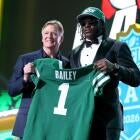
Enter this offseason. The Jets got grown-ups in the room basically everywhere, and Fitzpatrick leading the defensive secondary is a prime example. He isn't what he once was, but there won't be busted coverages all over the place like last year. Same for Demario Davis leading the linebackers and David Onyemata and Joseph Ossai in the defensive line/EDGE group. Even Geno Smith, coming off a brutal year in Las Vegas, should be an upgrade over Fields given a viable offensive line, running game and wide receivers. Rookies D'Angelo Ponds and Omar Cooper Jr. should be immediate high-floor contributors, too, with David Bailey and Kenyon Sadiq providing potential high-ceiling excitement.
The Jets might not be good, but they won't be embarrassing, and that's progress.
AFC North
Baltimore Ravens: Imposing
Player who exemplifies it: Olaivavega Ioane
Don't take it from me; take it from GM Eric DeCosta, who said after drafting Ioane, "We want to be a strong, imposing team."
In Ioane they have a first-round mauling guard who lives up to that descriptor. In second-rounder Zion Young, they have a tone-setting edge EDGE who lives up to that descriptor. In Ja'Kobi Lane (third round) and Elijah Sarratt (fifth round), they have big, physical wide receivers who live up to that descriptor. Even after the draft, they signed one of the most imposing defensive linemen to ever play the game in 6-foot-8 ageless wonder Calais Campbell.
Of course, the biggest addition was Trey Hendrickson, and while Hendrickson isn't imposing so much from a physical or violent play style, adding one of the best pass rushers of the 2020 season alongside such a strong defensive front is certainly an imposing challenge for opposing offenses.

Cincinnati Bengals: Talented
Player who exemplifies it: Dexter Lawrence
This may sound simple, but it fits. The Bengals simply didn't have the talent to compete defensively. This year, they hope to. Lawrence is a premier interior defensive lineman who can pressure the quarterback like few others can. His ability to help right away is a huge reason the Bengals were willing to part with the No. 10 pick.
Lawrence, pairing with Jonathan Allen inside, is a major upgrade. EDGE Boye Mafe showed flashes in Seattle and will get more opportunities as a full-time player. Second-round EDGE Cashius Howell and third-round pick Tacario Davis will get their opportunities. Bryan Cook brings excellent tackling, a much-needed skill for this team, to the safety room. The Bengals lost Hendrickson, but they are a significantly better all-around defense entering 2026.
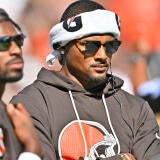
Cleveland Browns: Infrastructure
Player who exemplifies it: Spencer Fano
An offseason like this had been a long time coming for the Browns. Cleveland invested major resources into the offensive line, drafting Fano (ninth overall) and Austin Barber (third round), trading for and extending Tytus Howard, signing Elgton Jenkins and Zion Johnson and re-signing Teven Jenkins. Considering Cleveland lost essentially every piece of its aging 2025 line, this type of investment was necessary.
But it wasn't just the offensive line. The Browns took KC Concepcion and Denzel Boston in the first and second rounds, respectively. Whether the quarterback answer is on the roster or (more likely) in the 2027 draft, that player will have a sound infrastructure around him moving forward.

Pittsburgh Steelers: Flexible
Player who exemplifies it: Max Iheanachor
For a team that still doesn't know who its quarterback is, the Steelers did a decent job. Iheanachor is a developmental tackle with sky-high potential. After missing out on Makai Lemon, Pittsburgh nabbed Germie Bernard, a ready-made contributor, in the second round. In the third round, they added a developmental quarterback in Drew Allar and a potential Day 1 contributor in guard Gennings Dunker. Add in upgrades at wide receiver (low-cost trade for Michael Pittman Jr.), cornerback (Jamel Dean) and safety (Jaquan Brisker), and Pittsburgh did well upgrading around Aaron Rodgers while not being beholden to his decision.
AFC South

Houston Texans: Trenches
Player who exemplifies it: Keylan Rutledge
The Texans were already an absolute nightmare for opposing offenses with edge rushers Will Anderson Jr. and Danielle Hunter -- both of whom they extended this offseason -- but now Houston also has second-round pick Kayden McDonald, who was the best run stuffer in the class. On offense, the Texans added Braden Smith, Wyatt Teller, Evan Brown, and, with their first-round pick, Rutledge, who brings some nastiness to a front five that must be better than it was last year.

Indianapolis Colts: Spine
Player who exemplifies it: C.J. Allen
When we talk about the "spine" of the defense, we talk about the guys in the middle. The interior defensive linemen, the middle linebacker(s) and the safeties. And the Colts should be better at all three spots. A healthy DeForest Buckner should help up front, Allen should be a pick-and-play guy at linebacker as a second-rounder, and third-round pick A.J. Haulcy could open the year as a starter as well. With limited resources after retaining Daniel Jones and Alec Pierce, Indianapolis added key defensive pieces.
Jacksonville Jaguars: Continuity
Player who exemplifies it: Travis Hunter
The Jaguars had to navigate some iffy cap waters and didn't make many outside additions. What they're hoping for, though, is that the second year of Liam Coen leads to a lot of jumps, the same jumps we saw over the second half of last season. The biggest jump, though, has to come from Hunter, last year's No. 2 pick. Hunter missed the second half of the year after a knee injury. He was just starting to show out as a wide receiver before the injury. His exact role remains TBD, but we can count a healthy Hunter as the most important addition this offseason.
Tennessee Titans: Intriguing
Player who exemplifies it: Keldric Faulk
Last year's Titans were, frankly, not very interesting. For every flash Cam Ward showed -- and there were plenty -- there were two or three bad plays, either by him or by those around him. The defense was pretty awful, too. But the additions this offseason intrigue me, including new coach Robert Saleh. Will he show significant improvement from his rough run with the Jets?
As for the players, can Carnell Tate be the reliable, high-floor WR1 he's billed as? Can Faulk capitalize on his size/athletic potential? Will Jeffery Simmons and John-Franklin Myers just destroy everything up front? Can Jermaine Johnson II get back to his prior form? Can Alontae Taylor and Cor'Dale Flott carry over improved play from last year? The Titans won't make a real jump to contending, but I'm at least interested by this roster.
AFC West
Denver Broncos: Explosiveness
Player who exemplifies it: Jaylen Waddle
Waddle immediately adds downfield explosiveness to a Broncos offense that sometimes lacked it in 2025. In fact, Denver ranked 27th in average depth of target when throwing to wide receivers (7.4 yards). Waddle was at 13.1. He can win on intermediate and deep throws, and Sean Payton and Bo Nix are going to absolutely love him. He fits in perfectly alongside Courtland Sutton, a bigger, more physical archetype. Waddle averaged 14.1 yards per catch last year. Only one Broncos wide receiver (Sutton) averaged over 11.
Las Vegas Raiders: Hope
Player who exemplifies it: Fernando Mendoza
It's hard to assess the "vibes" of a team, especially in the offseason, but don't things just seem more sunshine and rainbows in Las Vegas? Mendoza exudes happiness and hope. Even Maxx Crosby is getting a clean start of sorts after the Ravens trade fell through. He returns to a much better roster: Tyler Linderbaum, Kwity Paye, Quay Walker, Nakobe Dean chief among them. Jermod McCoy could be one of the best stories of the draft after falling to the fourth round. After a disastrous season under Pete Carroll, the Raiders have Klint Kubiak and Mendoza heading a new era.
Los Angeles Chargers: Creative
Person who exemplifies it: Mike McDaniel
The Chargers' offense was completely broken because the offensive line was completely broken. Justin Herbert faced a quick pressure (within 2.5 seconds) on 177 dropbacks. No one else faced more than 150. So in comes offensive whizkid Mike McDaniel, whose creativity, coupled with the healthy returns of Rashawn Slater and Joe Alt, should open up a world of possibilities. There will be more motion, more varied (and simply better) run and pass schemes and, ideally, a much better environment for Herbert, Omarion Hampton and Ladd McConkey.

Kansas City Chiefs: Fresh
Player who exemplifies it: Kenneth Walker III
Even before Patrick Mahomes' injury, it was clear the version of the Chiefs that had won two of the past three Super Bowls had run its course. It couldn't rely on Mahomes to bail them out of every tough situation or close game. So they began anew. At cornerback, out went Trent McDuffie and Jaylen Watson, and in came No. 6 overall pick Mansoor Delane. Peter Woods has the athletic traits to be a stud alongside Chris Jones, and R Mason Thomas is the speed-based edge rusher Kansas City has long needed.
But Walker, the Super Bowl MVP, is the biggest change. Chiefs running backs were dead last in explosive rush rate the last two years. Enter Walker, who was second only to De'Vone Achane in explosive rush rate (min. 200 snaps) in 2025. He's a complete 180 from what Kansas City has had recently.