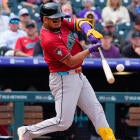
When it comes to outfield depth, your mileage will vary depending on whether your league requires you to start three or five (or four, I guess, though that's less common).
But either way, you should be in pretty good shape for 2027. The position has largely escaped the dismal state it was in 3-4 years ago, when most of us struggled to find even 30 names we were excited about.
Of course, exactly what shape it's in hinges on whether you're willing to give some of the high-profile misfires from 2026 -- a list that includes Aaron Judge, Ronald Acuna, Julio Rodriguez, Corbin Carroll and Kyle Tucker -- a pass. I mostly am, for reasons you'll soon discover.
As with every position, outfield is losing some players of note to eligibility elsewhere. Alec Burleson will qualify only at first base to begin 2027. Jose Altuve and Willi Castro will be limited to second base. Brent Rooker, George Springer and rookie Josue De Paula will only be startable at DH, at least to start out, though Rooker and De Paula are likely to regain outfield at some point.
Of course, save for Burleson, I doubt any of the players losing eligibility would crack this top 30.
Note that the focus here is standard 5x5 scoring (such as Rotisserie leagues), but scroll a little further, and you'll see my rankings for points leagues as well.
| 1 | 
Pete Crow-Armstrong
Chicago Cubs CF
|
| Though Crow-Armstrong was obviously the best outfielder in 2026, I'm not fully convinced he should be the de facto No. 1 for 2027, seeing as he doesn't really profile for another 40-homer season and his MVP campaign was built on never-before-demonstrated plate discipline. Still, if his downside case is the mere 30/30 campaign he had in 2025 ... that seems pretty safe. | |
| 2 | 
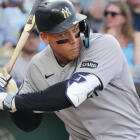
Aaron Judge
New York Yankees RF
|
| Feels like we just need to throw out Judge's 2026 given that he fractured his rib in late April and played through it for about a month before shutting down, effectively for the season (though he did return briefly in September). Throwing it out means presuming he'll pick up where he left off on a historic four-year run that yielded a 1.117 OPS, which feels right but is challenged by the fact he'll be 35 in 2027. | |
| 3 | 
Yordan Alvarez
Houston Astros DH
|
| The biggest threat to Judge at No. 2 is his batted-ball doppelganger Alvarez, whose stroke of good health led to career-best numbers and made him just as much of a standout for batting average as for home runs. Unless Alvarez is going to increase those career-high 42 home runs to 52 in the near future, though, he's still not quite what Judge can be at his best. | |
| 4 | 
Juan Soto
New York Mets LF
|
| The nagging calf issue that cost Soto so much time in 2026 represented his first real brush with injury in five years, so I don't care to hold it against him, especially since he was more or less himself when healthy. That he's back to being a sparse base-stealer will likely steer some away from him here, particularly in Rotisserie leagues. | |
| 5 | 
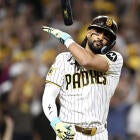
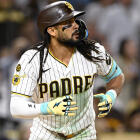
Fernando Tatis Jr.
San Diego Padres RF
|
| It's a close call between Tatis and James Wood here, but Tatis actually had more combined home runs and stolen bases (63 to 51) despite not delivering his first of the former until May 30. He was monstrous from that point forward, batting .299 with a .914 OPS, and has the added (and not insignificant) benefit of qualifying at second base. | |
| 6 | 
James Wood
Washington Nationals RF
|
| Wood was neck-and-neck with Crow-Armstrong before straining his oblique in early August, and though the injury cost him only a month, he was pretty useless after returning. He's grown into a first round-caliber bat with possibly first overall-type upside, but he still tends to strike out and put the ball on the ground too much. | |
| 7 | 
Jackson Chourio
Milwaukee Brewers LF
|
| Beginning his career with back-to-back 20/20 seasons put Chourio on the fringes of first-round status, and he wasn't even hitting the ball all that hard yet. The 2 mph jump in average exit velocity this year was hardly unexpected for the 22-year-old and puts him in a higher echelon for 2027. | |
| 8 | 
Ronald Acuna Jr.
Atlanta Braves RF
|
| A recurring hamstring strain in 2026 put Acuna back on the vicious cycle of playing at less than 100 percent, falling out of sync mechanically, and failing to deliver on his potential as a hitter. His studly self is still in there, as evidenced by his big September, but asking him to live up to it for a full season has been a losing bet more often than not. Still, few can compete with his upside. | |
| 9 | 
Julio Rodriguez
Seattle Mariners CF
|
| You could break down Rodriguez's 2026 into a typically slow first half and an uncharacteristically slower second half that was preceded by a lengthy concussion absence. The timing of that concussion is telling, and seeing as Rodriguez is only 25, it makes for the most plausible explanation for his uncharacteristic struggles. He'll be back to 30/30 in 2027. | |
| 10 | 
Corbin Carroll
Arizona Diamondbacks RF
|
| Rounding out the trio of early-round fixtures in their prime who flopped in 2026 is Carroll. He kicked off the year with a broken hamate bone before missing time in April and September with the same back issue (which suggests he was playing through it the whole time). As long as he gets back to being a 30-steal guy next year, which seems likely given his 97th percentile sprint speed, he'll justify this ranking. | |
| 11 | 
Jackson Merrill
San Diego Padres CF
|
| Merrill set career highs in both home runs (26) and stolen bases (27) in 2026, which is rationale enough for this ranking, but keep in mind his season started out miserably. If he truly turned the corner developmentally in the second half, when he hit .304 with a .909 OPS, he could leapfrog players such as Carroll, Rodriguez, Acuna and Chourio. | |
| 12 | 
Jordan Walker
St. Louis Cardinals RF
|
| It took him a few years to find his footing in the majors, but Walker's elite bat speed and contact quality finally culminated in a breakout season that would have looked even better if he hadn't staggered to the finish line with a .172 (15 for 87) batting average in September. A hip issue was reportedly to blame and also may be connected to the mechanical change that allowed him to take off in the first place, which is worrisome. | |
| 13 | 
Oneil Cruz
Pittsburgh Pirates CF
|
| Cruz's strikeout rate went from terrible in 2025 to even worse in 2026, yet his batting average went from .200 to .280 because of how much he improved against left-handers. A broken hand midseason confirmed it wasn't just a hot streak since he returned after two months with even better numbers than before the injury. Sure, there are still red flags, but if you prorate his numbers over 162 games, he winds up with 33 homers and 50 steals. | |
| 14 | 
Randy Arozarena
Seattle Mariners LF
|
| Arozarena enters free agency riding high after a career-best season in which he gained more than 40 points in batting average and led the AL with 113 runs. For our purposes, it almost doesn't matter where he signs since he already navigated his time in pitcher-friendly Seattle so well. Then again, career-best seasons at age 31 are inherently suspicious, particularly when accompanied by a 1.4 mph drop in average bat speed. | |
| 15 | 
Bryce Harper
Philadelphia Phillies 1B
|
| Harper regained outfield eligibility in 2026 while enjoying a mild rebound statistically, most notably reemerging as one of the top on-base men in the game. That's most helpful in points leagues, where he's my OF11, but it should also bolster his run total to go along with strong home run and RBI production. | |
| 16 | 
Kyle Tucker
Los Angeles Dodgers RF
|
| Tucker's poor first season with the Dodgers reads like a guy pressing to live up to the terms of his megadeal, consistently expanding the zone and rolling over on pitches. He seemed to shore up his swing in September, when he batted .262 with six homers and an .889 OPS, and he also performed well in the playoffs. I'd be willing to gamble on a bounce-back campaign at a multi-round discount, which this ranking represents. | |
| 17 | 
Jac Caglianone
Kansas City Royals RF
|
| Caglianone finally converted his massive exit velocities into real damage over the final four months, hitting .317 (106 for 334) with 18 homers and a .914 OPS. With average and max exit velocities that are 97th percentile or better and a strikeout rate that isn't prohibitive, he could develop into one of the game's elite sluggers if he could just put the ball on the ground a little less. | |
| 18 | 
Byron Buxton
Minnesota Twins CF
|
| Buxton spent most of 2026 battling a hip injury that required three separate IL stints and, ultimately, season-ending surgery. In between, he continued to flash the power we've come to expect from him along with 97th percentile sprint speed, so as long as he reports to spring training no worse for wear, you should continue to draft him like the glass cannon he is, capable of early-round production but with an outsized chance of injury. | |
| 19 | 
Michael Harris II
Atlanta Braves CF
|
| What's frustrating about Harris is that even though he moved up in the lineup finally and got his batting average back over .290 for the first time in three years, his totals were more good than great. He's not much of an on-base threat, which limits his potential for runs, and shows a decreasing inclination to steal bases. An awful lot hinges on him delivering with the batting average. | |
| 20 | 
Jake McCarthy
Colorado Rockies LF
|
| McCarthy became the latest beneficiary of Coors Field and greatest in quite some time, leveraging the thin-air environment into a top-10 performance among outfielders. A repeat performance seems perfectly plausible, but since he's more a product of his environment than his ability and already on the verge of his 30th birthday, it's not unthinkable that the Rockies could fade him for younger alternatives at some point in 2027. | |
| 21 | 
Carson Benge
New York Mets RF
|
| After a clunky start to his rookie season, Benge batted .299 with an .820 OPS from May 1 on, eking out a 20/20 campaign and making a late push for NL Rookie of the Year honors. His all-fields approach makes him a plus for batting average but also undermines his power potential. Still, he's a five-category performer as it is. | |
| 22 | 
Andy Pages
Los Angeles Dodgers CF
|
| Pages' breakout 2025 was a source of some skepticism, but he validated it with a 2026 that was nearly identical and may have been better if he hadn't missed a month with a broken hand. He's more of a 25-homer, 15-steal guy than a 30-homer, 20-steal one, but with that comes a respectable batting average and the run production associated with being in a good lineup. | |
| 23 | 
Seiya Suzuki
Chicago Cubs RF
|
| Suzuki took a step back power-wise but still delivered his second-most home runs while bringing his batting average back up to .270. He can be a plus in four categories but is unlikely to be a plus-plus, and his free agency adds some uncertainty, particularly since he was so much better at home than on the road in 2026. | |
| 24 | 
Cody Bellinger
New York Yankees LF
|
| Bellinger went from hitting 29 home runs in his first year with the Yankees to hitting just 17 in 2026, and the fact that he played in 20 fewer games because of a hamstring strain goes only part of the way to explaining it. He actually hit the ball harder in 2026 and pulled it in the air about as much as usual, so I'm betting on a rebound in 2027. His five home runs in September may have been the start of it. | |
| 25 | 
Wyatt Langford
Texas Rangers LF
|
| Sure, Langford hit just .188 (33 for 176) with a .661 OPS over the final two months, but the fact that his full-season slash line (.238/.333/.421) was about the same as a year earlier (.241/.344/.431) serves as a reminder of how well his 2026 campaign began. Between the quad, forearm, oblique, hamstring and shoulder injuries that popped up over the course of the season, his cooldown was hardly surprising. | |
| 26 | 
Luke Keaschall
Minnesota Twins 2B
|
| Keaschall's second base eligibility goes a long way toward explaining his high ranking here since that's a weaker position than outfield (and perhaps the weakest of all). His .324/.422/.508 slash line over the final three months, during which he hit eight of his 10 home runs, goes the rest of the way toward explaining it and suggests he could approach Jake McCarthy-level production in 2027, perhaps with even more upside in points leagues since his plate discipline is so good. | |
| 27 | 
Zack Gelof
Athletics 3B
|
| Gelof's third base eligibility goes a long way toward explaining his high ranking here, but at least in traditional 5x5 scoring, his performance itself would at least warrant strong consideration. A sharp increase in average bat speed and even sharper decrease in strikeout rate make his profile much more viable than in years past, and if you prorate his 22 homers and 16 steals over 162 games, they come out to 32 and 23. | |
| 28 | 
Riley Greene
Detroit Tigers LF
|
| Greene didn't have the batted-ball data to support the 36 home runs he hit in 2025, and a year later, it looks even more like an aberration. A 25-homer outcome is the more reasonable expectation, with a possibility of him being of some help in batting average (though that's largely contingent on BABIP since his strikeout rate figures to be in excess of 25 percent). | |
| 29 | 
Jake Bauers
Milwaukee Brewers 1B
|
| On performance alone, Bauers deserves a higher ranking than this, placing as a top-15 outfielder in both major scoring formats, and nothing in the underlying data would suggest it was a fluke. But a 30-year-old breakout naturally invites skepticism, and the possibility of a repeat is even more precarious with him hitting the free agent market this offseason. | |
| 30 | 
Cole Carrigg
Colorado Rockies CF
|
| Carrigg performed at about a 20/20 pace as a rookie, homering 12 times while swiping 11 bags in 93 games, and he may have even more upside as a base-stealer if his minor league numbers are to be believed. His power is hindered by his modest exit velocities, but he pulls the ball in the air well and should continue to provide a respectable batting average thanks to the BABIP-boosting effects of Coors Field. His dual eligibility (shortstop) is also a nice perk. | |
Next five
31. Tyler Soderstrom, ATH
32. Chase DeLauter, CLE
33. Henry Bolte, ATH
34. Chandler Simpson, TB
35. Daylen Lile, WAS
What changes in points leagues?
1. Aaron Judge, NYY
2. Yordan Alvarez, HOU
3. Juan Soto, NYM
4. Pete Crow-Armstrong, CHC
5. Fernando Tatis, SD
6. James Wood, WAS
7. Ronald Acuna, ATL
8. Corbin Carroll, ARI
9. Jackson Chourio, MIL
10. Julio Rodriguez, SEA
11. Bryce Harper, PHI
12. Jackson Merrill, SD
13. Jordan Walker, STL
14. Oneil Cruz, PIT
15. Randy Arozarena, free agnet
16. Kyle Tucker, LAD
17. Seiya Suzuki, free agent
18. Cody Bellinger, NYY
19. Jac Caglianone, KC
20. Byron Buxton, MIN
21. Luke Keaschall, MIN
22. Andy Pages, LAD
23. Jake Bauers, free agent
24. Carson Benge, NYM
25. Chase DeLauter, CLE
26. Wyatt Langford, TEX
27. Michael Harris, ATL
28. Jake McCarthy, COL
29. Mike Trout, LAA
30. Zack Gelof, ATH