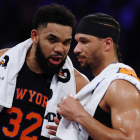


What, you didn't think NBA trade season had started? We live in a world in which Karl-Anthony Towns got swapped for Julius Randle on the Friday before training camp. NBA trade season has started because, really, NBA trade season never ends. No league loves change more than this one.
Realistically, most of the moves this season will wait until Dec. 15. That's when most 2026 free agents can legally be traded, and it also gives teams two months of regular-season action on which to judge their teams. For now, we're setting the table. Below are the 50 players who, before the 2026-27 season has begun, make the most sense as possible deadline trade candidates, listed in order of their salary.
Ranking the NBA's top 100 players: Victor Wembanyama enters 2026-27 season at No. 1
Sam Quinn

Top 50 NBA trade candidates: 2026-27

1. Anthony Davis, Wizards
- 2026-27 salary: $58,456,566
- Why he's here: Veteran stars in their 30s tend not to be thrilled about joining young teams, especially when they're eligible for contract extensions that said team has not yet offered. The Wizards reportedly plan to wait until the middle of the season to reopen extension negotiations, but if Davis plays well and stays healthy, there will be a market to flip him by February.
- Where he'd fit: Golden State is the obvious one, especially with Kristaps Porziņģis already dealing with a medical issue. Any older, smaller team with any sort of present ambitions could make sense.

2. Joel Embiid, 76ers
- 2026-27 salary: $57,985,752
- Why he's here: He has three supermax years remaining on his contract, he's perpetually injured, and there is perhaps no team in the NBA less in need of his offensive gifts than the one he currently plays for. With stars across the positional spectrum, the 76ers may simply decide they'd prefer a lower-usage center they can trust defensively and pay a far lower salary.
- Where he'd fit: I mean... we spent a month in free agency hearing about how much LeBron James would like to reunite with Anthony Davis. These aren't hard dots to connect here, though a trade really only makes sense if Davis stays healthy and Embiid struggles.

3. Jimmy Butler, Warriors
- 2026-27 salary: $56,832,773
- Why he's here: The Warriors are opening the season with more than $80 million in salary sidelined due to health issues, and if they want to make a big, win-now splash, Butler, still recovering from a torn ACL, more or less has to be the main money involved.
- Where he'd fit: Whoever has the big name that Golden State is trading for. Nobody is going to proactively trade for Butler at this cap figure.

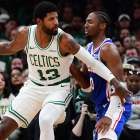
4. Paul George, Celtics
- 2026-27 salary: $54,126,380
- Why he's here: Brad Stevens said that part of the motivation in trading Jaylen Brown boiled down to not wanting to devote 70% of the cap to two players. Well, George makes nearly as much as Brown did, and he's quite a bit older. The George acquisition could easily be a stepping stone toward the next move, where Boston uses his salary slot to build the post-Brown team they actually wanted.
- Where he'd fit: As with Butler, it's a case of who has what Boston wants. Unlike Butler, George is seemingly healthy, and his playing style fits on basically any roster.

5. De'Aaron Fox, Spurs
- 2026-27 salary: $49,488,300
- Why he's here: He has four years of max money left on his contract and he might already be his team's third-best guard. If the Spurs had known they were getting Dylan Harper, they might not have traded for him, but that ship has obviously sailed. For now, Harper, Fox and Stephon Castle all figure to play prominent roles in San Antonio (they almost started together in a recent preseason game before Fox was a late scratch), but we all know that the endgame here is Harper and Castle starting together.
- Where he'd fit: Not many teams are eager to take on a contract like this, and if the Spurs could move it without paying draft picks anywhere, doing so would probably make sense. Realistically, you're probably looking at teams with bad contracts of their own to move. Maybe Toronto would flip the cheaper Immanuel Quickley along with RJ Barrett or Jakob Poeltl for him, as an example, but even that seems unlikely.

6. Zach LaVine, Kings
- 2026-27 salary: $48,967,380
- Why he's here: The Kings have a number of holdover veterans they've been unable to move as they pivot towards a rebuild. LaVine is the most expensive and plays the league's deepest position. It's unlikely anyone wants him at this salary figure, but hey, that's what we thought in 2025 when the Kings traded for him in the first place.
- Where he'd fit: In basketball terms? Almost anywhere. He's a great shooter whose usage scales pretty easily into any offense. Teams like the Pistons and Heat would love him in the event of a buyout. In trade terms, though, the contract essentially makes it a matter of "who's willing to take him."
7. Domantas Sabonis, Kings
- 2026-27 salary: $45,472,000
- Why he's here: Same as LaVine, especially with Maxime Raynaud in the building as a possible replacement. Sabonis was in trade talks last season, and if he can rebuild his value a bit this year, he'll generate interest among the contender class.
- Where he'd fit: Toronto sniffed around at last year's deadline. The Raptors are so loaded defensively that they can cover his vulnerabilities on that end of the floor, and the Poeltl and Barrett contracts cover matching salary if the Kings are willing to take them. The Raptors traded for a former All-Star center when they won the 2019 championship. Maybe history repeats itself.

8. Zion Williamson, Pelicans
- 2026-27 salary: $42,166,510
- Why he's here: Williamson and Derik Queen are simply incompatible defensively (and maybe offensively too), and given the investment the Pelicans made in Queen, it just makes sense to trade the older, more injury-prone player while his value is at a relatively high point. Zion was healthy and very effective last season. If he can string together a few more months like that, a real market will form.
- Where he'd fit: Truthfully, the teams with the infrastructure to maximize him just don't have the financial wiggle room for it to make sense. We're looking for a team with lots of shooting and defense, which essentially describes the contenders. How about Charlotte as a dark horse? The Hornets might challenge all-time 3-point volume records this season, so Williamson would have clean paths to the rim.

9. Michael Porter Jr., Nets
- 2026-27 salary: $40,806,150
- Why he's here: He's on an expiring contract, he just had a breakout season, he's out of Brooklyn's immediate timeline and the Nets just traded for another offense-centric power forward in Julius Randle.
- Where he'd fit: Get ready to hear a lot about the Detroit Pistons today, folks. A team that needs offense and controls all of its own picks is always going to feature prominently in deadline speculation, and Porter is the first of many candidates who will come up for them here.

10. Jalen Duren, Pistons
- 2026-27 salary: $40,160,643
- Why he's here: Duren is coming off of one of the more contentious restricted free agency negotiations in recent memory. He ultimately re-signed for $200 million over five years, but he reportedly had hoped for a sign-and-trade, and even if Detroit had wanted to oblige (every report suggested they didn't), it is simply easier, from a cap mechanics perspective, to trade a signed contract in January than a restricted free agent in October.
- Where he'd fit: We know the Kings and Bucks were interested in the offseason. A stealth fit might be the Jazz, given previous speculation about Lauri Markkanen's fit with the Pistons and Utah's decision to sign-and-trade Walker Kessler to the Lakers.

11. Kyrie Irving, Mavericks
- 2026-27 salary: $39,491,282
- Why he's here: He's 34 and his team's franchise player is 19. Timeline issues don't need to be deal-breakers, but the Mavericks don't control their own first-round pick again until 2031. They have to find longer-term assets where they can, and Irving is their most desirable trade piece.
- Where he'd fit: How does a reunion with Kevin Durant in Houston sound? Detroit checks similar boxes with less sentiment. The Heat are fairly asset-depleted, but would surely offer what they could. Ditto Toronto. The Mavericks should find a friendly market if they shop a healthy Irving in January. This happens to be a season populated with contenders in need of more shot-making.

12. Jalen Green, Suns
- 2026-27 salary: $36,251,166
- Why he's here: Devin Booker is a shooting guard, not a point guard. This fact gets drilled into our heads every season and yet the Suns keep paying other expensive shooting guards. Eventually, they're going to realize that Collin Gillespie is the better fit alongside their other volume scorers. Green was only a small part of last year's surprise success and not an easy fit into the defense-first culture they just built.
- Where he'd fit: A bad team with a track record for developing younger players. Memphis makes some sense here given all of its cap flexibility. Chicago doesn't have the same developmental history, but there are minutes and shots available in that backcourt. That's what we're looking for. It's less a matter of the fit itself than the team's willingness to invest shots and minutes into a former No. 2 overall pick whose career is at a bit of a crossroads.

13. Jrue Holiday, Blazers
- 2026-27 salary: $34,800,000
- Why he's here: The Blazers have too many guards and they'll need to create cap space to renegotiate-and-extend Deni Avdija next offseason if they want to keep him out of 2028 free agency. One of these guards is getting traded, and if the Blazers really do wind up starting Damian Lillard and Ja Morant together, bringing Holiday off the bench at this salary seems a tad wasteful, especially if they plan to keep budding defensive ace Scoot Henderson next summer.
- Where he'd fit: Anywhere. There is not a team in the history of basketball that would not be improved by Jrue Holiday's presence. Low-maintenance offense, still strong defense and an all-time teammate. Take your pick on who can fit the salary. The usual suspects (Detroit, Toronto, Miami) all make sense, but the true answer is probably everyone.

14. Tyler Herro, Bucks
- 2026-27 salary: $33,000,000
- Why he's here: He was more of a casualty of the mutual interest between Giannis Antetokounmpo and the Heat than a genuine Bucks trade target. As a native of Wisconsin, he might help the Bucks sell some tickets, but they're in a full rebuild and already have a million shooting guards. If someone will give up a real asset for him, the Bucks should take it.
- Where he'd fit: Detroit was the rumored destination in the offseason, and it was a sensible one. The Pistons can cover for him defensively better than most suitors. They need another high-end shot-creator, but can't pay max money for one with Jalen Duren and Ausar Thompson now extended. Toronto could use more shooting in the backcourt as well. If this Morant experiment goes south in Portland, that might even be a sensible swap. The Blazers need shooting and the Bucks are so far away that a lottery ticket on a former star makes some sense.

15. Jalen Suggs, Magic
- 2026-27 salary: $32,400,000
- Why he's here: We're not listing Paolo Banchero or Franz Wagner quite yet, but we all know what's coming in Orlando. The Magic are taking a big step -- or they're breaking up their core. They're in second apron danger as a Play-In team. Suggs is foundational to their defensive identity. He's also constantly hurt and has a ready-made replacement in-house in Anthony Black, who's headed for restricted free agency next summer.
- Where he'd fit: Depending on how low his value falls, he'd be a really interesting fit for a Lakers team that needs defense however it can find it. A 2032 first-round swap along with matching salary likely doesn't get it done, though, especially since most of the Lakers' spare salary isn't expiring. Notably, Suggs' contract descends in annual salary in each of the next three seasons, so his money is a bit easier to swallow for a slightly more flexible team.
16. Andrew Wiggins, Heat
- 2026-27 salary: $30,169,644
- Why he's here: The Heat have a number of mid-tier salaries, a history of ambition on the trade market and minimal draft capital left to trade with. They'd have to move a player of value to upgrade their offense, and Wiggins is the best of those mid-tier salaries. Keep in mind: his salary nearly cuts in half after the season due to the extension he just signed, so he'd be valuable to win-now teams as well as rebuilders looking to slash payroll.
- Where he'd fit: Pretty much anywhere. A 3-and-D wing who can rebound and create some of his own shots is helpful for basically any team. He's not the player he was at his Golden State peak, but there's not a roster in basketball he couldn't at least help.

17. RJ Barrett, Raptors
- 2026-27 salary: $29,616,071
- Why he's here: He's on an expiring contract, and the Raptors simply need other things more than his individual scoring. If they can use his salary to beef up their guard rotation or add a dead-eye shooter, that probably makes them a better team.
- Where he'd fit: Someone with the financial flexibility to extend him and a real need for a spare creator. Golden State comes to mind if the Warriors miss on their bigger-name targets.

18. Jarrett Allen, Cavaliers
- 2026-27 salary: $28,00,000
- Why he's here: Cleveland has changed coaches. It has spent most of its picks. It has split up the Darius Garland-Donovan Mitchell backcourt. It has taken half a dozen notable swings on major wings. Breaking up the Jarrett Allen-Evan Mobley frontcourt is the last bullet left in the chamber here. If Cleveland wants to mix things up, there's nothing left to be done. We'll see how the early season integration of Peyton Watson goes, but if the team struggles or lineups with Watson at power forward look better than the starters, an Allen trade starts to seem more realistic.
- Where he'd fit: There's a real supply-demand imbalance at center right now, so if Allen hit the market, the Cavaliers should be able to extract a real package. He'd be a nice Walker Kessler replacement in Utah, for instance. Atlanta could use a burlier alternative to Onyeka Okongwu as well, and Charlotte could target a high-end center.
19. Trey Murphy, Pelicans
- 2026-27 salary: $27,000,000
- Why he's here: The Pelicans have a bit of a wing glut, and his contract is so team-friendly that New Orleans could extract a haul by trading Murphy to the right team. If the Pelicans are ready to commit to the multi-year rebuild they're bound for anyway, cashing out on Murphy now, while he still has several years left on his contract, makes plenty of sense.
- Where he'd fit: His contract and his shooting make him a fit for basically any team with the assets to get him. Detroit, Boston and Golden State have been linked to him in the past. If New Orleans is open to something more player-centric and Orlando's season doesn't go as planned, maybe Murphy could be their path to a star swing on Banchero or Wagner, considering how badly the Magic need shooting.
20. Myles Turner, Bucks
- 2026-27 salary: $26,584,164
- Why he's here: He's an overpaid veteran on a rebuilding team, yet we keep coming back to that supply-demand imbalance at center. That goes double for shooting centers, as the league's renewed focus on offensive rebounding has really raised the bar on which bigs can actually get away with spacing the floor. Turner certainly can, and the hope is that he can bounce back to his Indiana form on a better team.
- Where he'd fit: He's something of a "wait and see" trade candidate. If Embiid gets hurt again and the Sixers are willing to attach draft capital to move him, something involving Turner makes sense. If some team emerges with a core perimeter player that has a shooting deficiency, Turner is a chance to paper over that flaw. We'll have more answers in January.

21. Fred VanVleet, Rockets
- 2026-27 salary: $25,000,000
- Why he's here: The Rockets are betting their championship hopes on VanVleet's return. Their halfcourt offense was barely functional for stretches last season because he wasn't available. Yet he's also by far the easiest matching salary they have if they decide to make a splash. If they trade VanVleet, it's to upgrade, not downgrade.
- Where he'd fit: Dallas in some sort of Irving swap is the obvious choice here, but VanVleet is about as flexible as point guards get. He can defend bigger players and doesn't need to hoard usage thanks to his 3-point shooting. Any team would be happy to have him as part of a bigger deal.

22. Cam Johnson, Nuggets
- 2026-27 salary: $23,062,500
- Why he's here: Denver relieved its financial pressure by trading Peyton Watson, but Johnson is still an impending free agent, and the Nuggets are all in on the present. If they want to use that 2031 first-round pick they got from Cleveland to upgrade, they're going to need to use one of their mid-sized salaries to do it. Hence, Johnson, whose shooting and contract make him far more palatable than Denver's alternatives.
- Where he'd fit: Shooting wings on expiring deals can slide onto any roster, but Johnson showed he could do a bit more on the ball than has otherwise been expected of him at the end of his Nets tenure. His fate is tied to whatever trade targets the Nuggets pursue, but there's really no wrong answer.
23. Christian Braun, Nuggets
- 2026-27 salary: $21,551,726
- Why he's here: Everything we covered above in regards to the Denver situation applies here, but Braun is coming off of a far worse season, isn't nearly as reliable a shooter and has a five-year contract that looks iffy right now. He's probably the contract Denver would be most eager to move in a win-now trade.
- Where he'd fit: Someone with clean enough books to absorb a five-year deal based on optimism from Braun's first three seasons. That's a short list. Chicago, Memphis and Brooklyn make varying degrees of sense, but if teams don't trust his offense away from Nikola Jokić, that contract is going to be tough to move.

24. CJ McCollum, Hawks
- 2026-27 salary: $21,000,000
- Why he's here: The Hawks are designed to make a big trade. They have more than $50 million in expiring contracts, and while McCollum is the most important player among them, his niche as the halfcourt shotmaker is the one Atlanta is likeliest to address when it eventually does seek a star trade.
- Where he'd fit: All of the offense-needy contenders would love him off of a buyout, so Detroit, Miami, Toronto, Orlando and Houston are all options. Toronto is probably the best equipped of those teams to actually trade for him, though, if it determines that it would rather have his shooting than Barrett's size.
25. Malik Monk, Kings
- 2026-27 salary: $20,190,035
- Why he's here: The Kings spent the entire 2025 offseason trying to move him, and he has a player option for the 2027-28 season. The market for all-offense bench guards has cratered and Sacramento is about to start a rebuild.
- Where he'd fit: The realistic answer is that some team would have to want Monk on a longer-term deal at a lower annual salary, and trading for him would be a means of bringing him in before that option triggers so they can use it to negotiate. For now, though, we don't know which team that would be.
26. Shaedon Sharpe, Blazers
- 2026-27 salary: $20,089,287
- Why he's here: He's in the trickiest position in Portland's guard glut simply because he's hurt and, at best, will miss most of the season. If Holiday proves essential to the present and Henderson looks like a fixture for the future, that just doesn't leave a substantial enough role for Sharpe to justify the contract extension he's just starting.
- Where he'd fit: Think of Sharpe as the younger, cheaper Jalen Green equivalent. Prodigious athletic gifts, scoring upside, iffy shot selection and not much defense. He hasn't been moved yet, so teams that liked him during the draft process could re-emerge here, but otherwise, we're looking for young teams with minutes and shots available.
27. PJ Washington, Mavericks
- 2026-27 salary: $19,813,044
- Why he's here: The Mavericks have a million forwards. Masai Ujiri tends to prefer having a million forwards, but this is excessive even by the standards his Raptors teams set. Washington was acquired and extended by Nico Harrison, so he's an obvious candidate to cash out on that forward surplus.
- Where he'd fit: His last go-round with Luka Dončić worked out pretty well, so the Lakers make some sense. Minnesota does as well, though both teams are lacking in tradable draft capital. Donte DiVincenzo's shooting would look nice in Dallas, though.
28. Daniel Gafford, Mavericks
- 2026-27 salary: $17,263,584
- Why he's here: The Mavericks aren't as deep at center as they are at forward, and Dallas really can't trade Gafford until it has a better idea of how healthy Dereck Lively can stay. Still, if the Mavericks are confident in Lively, or they believe Morez Johnson can play some center in small doses, Gafford is another holdover from the previous regime that may not fit in the team's long-term plans.
- Where he'd fit: He's a very different player from Walker Kessler, but he's the sort of lower-cost replacement that would make sense for Utah at center. He's probably even affordable as a backup for Indiana if Jay Huff doesn't prove up to the task.

29. Max Strus, Clippers
- 2026-27 salary: $16,660,836
- Why he's here: The Clippers got him for free and have no use for a 30-year-old wing with injury concerns. If they can flip him for a few second-rounders, that's just good arbitrage.
- Where he'd fit: He's among the players to watch for teams that lose a key wing to injury during the season, and he's also affordable enough to feasibly just land with a team that needs shooting as is. Portland stands out if one of the guards moves, and he could be a helpful stopgap for Dallas as well.
30. Gary Trent Jr., Bucks
- 2026-27 salary: $15,200,000
- Why he's here: Because the Bucks have infinite shooting guards, and because the easiest way for the Bucks to survive the cap circumvention investigation triggered by Trent's contract is to prove that another team does, in fact, view Trent as a positive-value asset on the ridiculous deal they gave him.
- Where he'd fit: Whoever was supposedly interested in signing-and-trading for him at a price similar to what Milwaukee paid. Everyone else would demand compensation for taking on this contract.
31. Herb Jones, Pelicans
- 2026-27 salary: $14,898,786
- Why he's here: Murphy is younger and better. Saddiq Bey just got an extension. The Pelicans need Herb Jones for his defense, but shooting is a real concern here as well and if Jones can't improve, he might need to play on a team with a better offensive infrastructure.
- Where he'd fit: He's probably the Lakers' dream target, but they simply lack the draft capital to get him unless his value plummets during the season. Denver looks a bit more interesting now that it has a tradable first-round pick, but would probably need New Orleans to take Braun rather than Johnson purely for the sake of shooting.
32. Jock Landale, Hawks
- 2026-27 salary: $14,100,000
- Why he's here: You know why you give a soon-to-be 31-year-old backup a bloated one-year contract? To serve as a human trade exception.
- Where he'd fit: Wherever Atlanta needs to send salary. There are plenty of teams that need a backup center who might be able to redirect money to a third team to snag Landale, though, with the Lakers standing out in that group.
33. Rui Hachimura, Clippers
- 2026-27 salary: $14,000,000
- Why he's here: He signed a team-friendly contract (that includes a team option for the 2027-28 season) because he wanted to stay in Los Angeles. Well, despite the player-friendly reputation Hachimura cited as a motivator for joining the Clippers, they are under no obligation to keep him and should probably flip him for draft capital if the opportunity presents itself. Here's a fun fact: Hachimura has the highest playoff 3-point percentage in NBA history. Someone will want him for that shooting alone.
- Where he'd fit: Who needs another shooter and can cover for him defensively? We're right back in that Toronto-Miami-Detroit nexus of defense-first contenders. Portland and Dallas make sense if you go down a tier or two.
34. Scoot Henderson, Blazers
- 2026-27 salary: $13,585,523
- Why he's here: Henderson took real steps last year, but he's a No. 3 overall pick not currently projected to start in his fourth NBA season. He'll be a restricted free agent next summer and needs to find a team that's both more eager to invest in his future and has the offensive infrastructure he'll need to take the next step.
- Where he'd fit: Henderson is among the best second-draft trade candidates to hit the market in recent years. Indiana, Oklahoma City and Memphis are three of the teams that emphasize second-draft players more than most, and of those three, Memphis probably has the most runway for him. Charlotte considered him with the No. 2 pick in 2023 and could use a defensive-minded guard. His athleticism would blend very nicely with all of the Hornets' shooting. Really though, with someone as touted as Henderson was as a prospect, almost anyone is theoretically in play because there will inevitably be GMs around the league who fell in love with him during the draft process.

35. Donte DiVincenzo, Timberwolves
- 2026-27 salary: $12,535,000
- Why he's here: Minnesota is paying three other guards almost $110 million this season, has other cheaper options in the backcourt and badly needs frontcourt depth. DiVincenzo, recovering from a torn Achilles, may not even be able to play for them this season. He's by far their most tradable salary, and some team hoping for a long-term bargain might like to buy low on DiVincenzo now while he's hurt.
- Where he'd fit: All three Texas teams make varying degrees of sense. The Spurs are going to need to find bargain shooting down the line and the Rockets could use it now, but neither seems likely to send Minnesota the frontcourt help it needs. Dallas certainly could, though, and with less pressure to win now, the Mavericks could easily wait out his injury.

36. Jarred Vanderbilt, Lakers
- 2026-27 salary: $12,428,571
- Why he's here: He's the matching salary the Lakers would likely prefer to use for a mid-season upgrade. His offense just hasn't allowed him to be a viable playoff rotation player.
- Where he'd fit: Wherever the Lakers need to send him, but if he's going to play, it has to be somewhere that has shooting everywhere else.
37. Reed Sheppard, Rockets
- 2026-27 salary: $11,108,880
- Why he's here: Ime Udoka has thus far been reluctant to trust Sheppard with the role you'd expect out of a No. 3 overall pick, and the additions of Marcus Smart and Bogdan Bogdanović, along with the return of VanVleet, raise real questions about Sheppard's role in this year's rotation. Still, despite his NBA inconsistency, he was an elite shooting prospect who at least generates turnovers defensively. His second team could rationalize a lot of his struggles through Houston's weak offensive infrastructure.
- Where he'd fit: VanVleet and Sheppard for Irving is going to be one of the more common fake trades of the season, and it really makes sense given how badly Dallas needs a young guard who can shoot. Atlanta had the No. 1 pick in his draft class, so the Hawks presumably scouted him closely and could use a younger shooter as well.
38. Derrick Jones Jr., Clippers
- 2026-27 salary: $10,476,190
- Why he's here: He's probably the most desirable of the veteran Clippers, given his defensive versatility, and while he's by no means a 3-point marksman, he's at least become reliable enough not to truly drag down an offense.
- Where he'd fit: At this salary range, basically anyone with some spare draft capital could justify it. If the Thunder were to dip their toe into the veteran trade market, this would be a sensible candidate. They threw an offer sheet at Spencer Jones this summer hoping to find this sort of wing defender with size, and Derrick Jones' salary is low enough that he's gettable without crossing the second apron threshold.
39. Anthony Black, Magic
- 2026-27 salary: $10,106,316
- Why he's here: As we've covered, Suggs and Anthony Black are redundant and the Magic are headed for a financial cliff when Black hits restricted free agency this summer.
- Where he'd fit: Charlotte is the obvious fit as a team with both financial flexibility and surplus draft capital that also needs a defensive-minded guard.
40. Day'Ron Sharpe, Nets
- 2026-27 salary: $10,000,000
- Why he's here: The Nets keep signing him to short-term deals. This season is his first shot at being a full-time starter, and he should do well with that chance. He's a bit undersized, but he's versatile defensively and a great offensive rebounder. The Nets are very much still in asset collection mode, so if someone in need of a cheaper yet reliable backup center comes calling, Brooklyn will probably listen.
- Where he'd fit: He's a hair too expensive for the Knicks given their commitment to remaining below the second apron, but he'd be a perfect Mitchell Robinson replacement if New York could make the money work, and the Nets are already so invested in New York's future drafts that adding some more Knicks picks would likely appeal to them. Philadelphia is another obvious "if they can make the money work" team as a high-end Joel Embiid backup option, but that would probably require giving up a core backup like Dean Wade. Some team with a notable center need that would love to have Sharpe's team option for 2027-28 will emerge midseason.
41. Kevin Huerter, Pistons
- 2026-27 salary: $9,507,042
- Why he's here: Duncan Robinson and Isaiah Joe are ahead of him on the Detroit shooter pecking order, and if the Pistons go shopping for another ball-handler, they're going to have to match that player's salary with someone.
- Where he'd fit: He'll likely be treated as matching money more than anything else, but if his shooting doesn't bounce back this season, his contract will be viewed as bad money.
42. Naji Marshall, Mavericks
- 2026-27 salary: $9,428,471
- Why he's here: He was acquired by Nico Harrison, but he was extended by Masai Ujiri. That makes him a slightly less likely trade candidate than Washington, but he's still stuck in a glut of wings with questionable shooting.
- Where he'd fit: He was a really interesting Oklahoma City fit for the same reasons that Jones would be before the extension made him too expensive long-term. Now, a team like Utah or Indiana with plenty of shooting and flexible salary structures would make more sense.
43. Ron Holland, Pistons
- 2026-27 salary: $9,069,600
- Why he's here: The Pistons just extended Ausar Thompson, and unless Ron Holland's jump shot takes a massive leap this season, it's just hard to imagine Detroit being able to justify paying two defensive aces with severe offensive limitations. Aside from draft picks, Holland is the most attractive trade chip the Pistons have as they pursue offensive upgrades.
- Where he'd fit: Utah could use a long-term defender, and Indiana could make use of him for the next two years before he gets expensive. Beyond the teams with short-term ambitions, virtually any younger team could talk itself into Holland as a second-draft candidate. Most teams don't have a Thompson twin blocking his path into a major role.
44. Zeke Nnaji, Nuggets
- 2026-27 salary: $7,466,667
- Why he's here: It wouldn't be a trade candidates list without the most inconvenient rookie extension in NBA history making a perpetual appearance. Denver paid Nnaji on upside, never trusted him enough for a real role and has been paying for it ever since. For most teams, this contract would be a minor annoyance. For a team as expensive as Denver, it has become enormously prohibitive. Until they move him, Nnaji will always get listed in pieces like this.
- Where he'd fit: He's athletic and he can shoot. Send him somewhere without much pressure and see how he handles spot minutes.
45. Kris Dunn, Clippers
- 2026-27 salary: $5,684,800
- Why he's here: The last of the veteran Clipper wings, and the cheapest. Anyone could use 15 or 20 minutes of stellar point-of-attack defense.
- Where he'd fit: Cleveland needs both guard defense and bench ball-handling, so if the Cavaliers free up a bit of financial flexibility in some other way, he'd be a nice backup for them. He did well in his first stint with the Jazz and could fit there yet again. Denver could use him to throw at Shai Gilgeous-Alexander should it meet Oklahoma City in the playoffs again.
46. Dalton Knecht, Lakers
- 2026-27 salary: $4,201,080
- Why he's here: He hasn't been the same since the Lakers nearly traded him to Charlotte. He's just matching salary at this point, but maybe he'll start shooting again for his next team.
- Where he'd fit: Wherever the Lakers need to send him, but as unlikely as it is based on their roster construction, it'd be nice to see him land in Charlotte after all. The Hornets can never have enough shooters.

47. Deuce McBride, Knicks
- 2026-27 salary: $3,956,523
- Why he's here: The Knicks have drawn a line in the sand when it comes to the second apron, and Karl-Anthony Towns and Josh Hart are likely higher priorities for extensions. He's also one of the few assets appealing enough to potentially get New York a Mitchell Robinson replacement at backup center.
- Where he'd fit: McBride deserves and likely wants a chance to start somewhere, so finding a team suited to giving him that chance should be the goal. That's trickier than it sounds since McBride is a shooting guard on offense, but he's a point guard-sized point-of-attack defender. Chicago, with Josh Giddey at point guard and a bunch of bigger wings, makes sense in this respect.
48. Yves Missi, Pelicans
- 2026-27 salary: $3,512,760
- Why he's here: The Pelicans probably should trade Williamson and build around their two bigs on rookie deals, but if they really want to push forward with the Zion-Queen duo, there's known interest in Missi as a center with nice defensive upside.
- Where he'd fit: The Knicks tried and failed to get Missi over the summer. They'll likely keep calling. Indiana would love a high-end backup center on a rookie deal as well.
49. Ariel Hukporti, 76ers
- 2026-27 salary: $3,400,000
- Why he's here: It's a sad reality of the NBA. The 76ers signed Hukporti to be their primary backup center, but he tore his Achilles in the preseason and is now taking up space on a roster and balance sheet he can't help. If the 76ers need to create a roster spot or clear some first apron hard cap room, dumping Hukporti is the logical path to doing so.
- Where he'd fit: Anyone who has a roster spot. Hukporti is unlikely to garner positive trade value given his injury.
50. Pacôme Dadiet, Knicks
- 2026-27 salary: $2,983,680
- Why he's here: The Knicks could use another roster spot. As of now, they're auditioning a number of third center options as well as some spare wings for their final roster spot at training camp. Moving Dadiet, who hasn't played much in two years, would give the Knicks the flexibility to sign two of their camp signings rather than just one. If it doesn't happen now, he'd be helpful matching salary in a backup center trade at the deadline.
- Where he'd fit: Wherever the Knicks need to send him, or perhaps a team that liked Dadiet during the draft process.