

Allow me to share with you the plight of the sports writer. In a perfect world, we want to grade offseasons relatively early, when interest is peaking. The NBA is usually pretty accommodating. Most of the big trades come in early July, and free agency thins out pretty quickly, so we generally have a good idea of how a team's summer is going quickly enough to publish grades a week or so into July.
Alas, the fourth free agency of LeBron James has been the slowest yet, and with a complicated, ongoing Kawhi Leonard investigation looming over one of the summer's biggest trades, we've delayed as long as we could here. So here's the compromise: we'll grade based on what we know now, and then, when the dust settles on James, Leonard or any other big surprises, we'll revisit any grades that need to change.
Before we dive in, something to keep in mind ahead of the parade of "C's" you're about to see: I grade based on the resources teams had at their disposal. You don't get credit for landing a young star with the No. 1 pick, for instance, because you should get a star with the No. 1 pick. I am judging how well each team accomplished its own, specific goals given the tools it was feasibly working with. So with that in mind, let's dive in.
Philadelphia 76ers: A
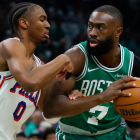
Right away, we have a team to applaud for maximizing the resources at its disposal. The 76ers turned the No. 22 overall pick into LaBaron Philon, a prospect many mocked in the lottery range. They turned one nontaxpayer mid-level exception into two valuable rotation players: Dean Wade and Anfernee Simons. And of course, they turned two first-round picks and one of the worst contracts in the NBA in Paul George into a Second Team All-NBA player at the same position who is six years younger in Jaylen Brown.
The 76ers are hardly a flawless team, and these moves aren't without their risks. Maybe Philon fell for a reason. Wade has injury concerns and is a complete zero offensively. Simons is a defensive disaster, and this team has more than enough shot-making. Brown was presumably traded over concerns both about his own contract and analytics that indicate he wasn't nearly as good last season as his accolades suggest. They didn't really address backup center. Ariel Hukporti was New York's No. 3 big. The 76ers are not suddenly the Eastern Conference favorite. There is barely any passing on this roster.
But they got better, younger and deeper at price points that seem almost unfathomable. Their offseason has gone well enough to draw some reported interest from LeBron James. If they seal the deal there, this is an "A+" offseason. Either way, the 76ers did the absolute best they could with what they had.
Charlotte Hornets: A
There is no trait more valuable in a front office than self-awareness. Most teams would've looked at a 40-24 stretch to end the regular season as something to build on. The Hornets saw it as fool's gold and decided to take the opportunity to cash out on a player in LaMelo Ball with serious defensive, durability and maturity concerns. The price they got for him was modest relative to his talent level, but reasonable in light of the risks he carried. Getting an unprotected 2033 first-round pick for Miles Bridges was outright theft.
The Hornets still have two young possible stars in Brandon Miller and Kon Knueppel, but they now have arguably the best collection of future draft capital in the entire NBA and squeaky-clean books for the foreseeable future. They're positioned perfectly now to remain competitive in the revamped lottery format, balancing the present and the future as they opportunistically build their new team from a position of strength. It will take a few years for their vision to come to fruition, but they were bolder in laying the groundwork for it than almost any other team would have. They should be applauded for that.
Miami Heat: B-
They managed to get Giannis Antetokounmpo without giving up their lone star in Bam Adebayo. That's good work in a vacuum. Getting an MVP-caliber player without giving up anything that could serve as the centerpiece of his old team is a win. But man, the Heat gave up practically everything they had of value. They've mostly exhausted their tradable draft capital, they gave up most of their young talent, and taking on Bobby Portis cost them the financial flexibility they needed to keep Norman Powell.
They have their centerpiece now, but they don't have the shooting and ball-handling they'll need to support him. The Heat are acting as though they have several transaction cycles with which to do so. The front-loaded nature of the contract extension they just gave Andrew Wiggins is the tell here: they're maintaining future flexibility. That's not crazy, but it's a big risk in light of Antetokounmpo's recent injury concerns. Only offering Anfernee Simons the minimum was a strange choice. They have a roster tailor-made to hide his defense and maximize his offense. For now, they're not good enough. Getting LeBron James would go a long way in getting them there, but they'd still need more shooting.
Toronto Raptors: B-
We will assume for now that the Kawhi Leonard trade happens as expected, and if it does, the Raptors have given themselves the best Eastern Conference roster outside of New York. Toronto will be able to put lineups on the floor in which Leonard, a two-time Defensive Player of the Year, is the least impactful defender on the floor. He is the perfect shotmaking partner for Scottie Barnes, who excels at basically everything else. The fit here is close to perfect. Toronto could easily have a top-five defense, one of the NBA's best transition offenses and through Leonard alone, the reliable closer the team lacked last season.
The Raptors' goal was to give themselves a team with genuine hope of reaching the Finals, and on that front, they probably succeeded. But the risk here is strong enough that it's also fair to wonder if they went a bit too far on price. Leonard is practically never healthy for full seasons. He's going into his age-35 campaign and played in only around 60% of Clipper games over the past seven seasons. He played in their final game in just three of those seven years. They gave up really substantial draft equity to get him: those picks in the 2030s are worth their weight in gold because we don't know what the lottery rules will look like at that point. Whether or not they should have taken this risk is a real debate, but if this is the route they wanted to take, at least they gave themselves Finals-caliber upside.
Atlanta Hawks: B-
The best trade partners are stupid ones. The second-best trade partners are desperate ones. The Oklahoma City Thunder are obviously not the former, but the second apron made them the latter. The Hawks benefitted by snagging Aaron Wiggins and Lu Dort without giving up a first-round pick, giving themselves some of the best wing depth in the NBA. They drafted Kingston Flemings to hopefully be their point guard of the future, and retained strong midseason additions CJ McCollum and Jock Landale as both rotation placeholders and possible trade bait given their contracts. It hurts to give up a former No. 1 overall pick in Zaccharie Risacher, but most of the roster had turned over since he was picked and he no longer had a place in Atlanta's rotation.
The Hawks didn't drastically change their fortunes, but they didn't need to. They're still evaluating what they have, and the bigger moves will likely come in future transaction cycles when they have a better idea of the upside their young core currently has. For now, they're remarkably deep and flexible at a point in NBA history in which depth and flexibility have never been more prized. Their roster is better now than it was at the end of the season, yet they can still get to around $40 million in cap space next summer or more than $50 million in expiring contracts to trade at the deadline. They can go in practically any direction from here.
Chicago Bulls: C+
Chicago had a fairly by-the-numbers offseason. The Bulls had the fourth pick in a draft with four perceived stars and landed the one that fell to them in Caleb Wilson. They needed more shooting and a warm body at center and landed Norman Powell and Nic Claxton on short, reasonably priced contracts. Neither are long-term solutions, but they're good enough to help keep the Bulls out of the relegation zone in next season's lottery odds.
No. 15 pick Dailyn Swain had a rough go of things at Summer League, but he'd hardly be the first rookie to suffer some growing pains. Chicago will take bigger swings down the line. For now, the name of the game was to add talent and give Wilson real, NBA-level infrastructure to grow within. The Bulls took steps in that direction this offseason. And if Wilson's shot is as promising as it looked at Vegas Summer League, that alone takes the Bulls closer to a genuine star than they've been at any point this decade.
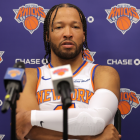
New York Knicks: C+
Mitchell Robinson was a real loss, but a slightly overstated one. Health is a major concern. Mike Brown wasn't as eager to play him next to Karl-Anthony Towns as Tom Thibodeau, who also seemed far more comfortable playing Robinson through poor free-throw shooting stretches than Brown was. He was a high-level backup on this team, and he's still comfortably better than Andre Drummond. Don't be surprised if OG Anunoby winds up being the backup center in higher-leverage moments next season. It's a different look but a potentially effective one.
There was no single, obvious reason for the Knicks to duck the second apron beyond preserving future flexibility, so their decision to do so after a championship is disappointing. But the decision isn't a death knell. They kept everyone else of note, and did so on favorable contracts. Landry Shamet, Jose Alvarado and Mohamed Diawara (a name you should familiarize yourself with now, as he will matter next season) all returned on long-term deals that will not only pay them less than they deserve, but that come without full guarantees. Jordan Clarkson not only came back for the minimum, but waived his implicit no-trade clause.
The Knicks will have to figure something else out at center. They don't even have a third big yet. Maybe they find someone at training camp. Maybe they trade for someone during the season. They tried an offer sheet for Moussa Cissé that got matched, but as Dallas currently has 15 other players with guaranteed contracts, the Knicks may be hoping that the Mavericks simply waive him before the season so they can pick him up then.

Detroit Pistons: C
The name of the game for the Pistons this summer was adding offense. The results have been mixed. Isaiah Joe's shooting and value contract won't hurt, but he overlaps with Duncan Robinson and doesn't really address their bigger need for more shot-creation. John Collins probably makes slightly less sense as the starting power forward than Tobias Harris did, given that he functions more like a big than a forward offensively, but he unlocks some interesting lineup possibilities as a small-ball center next to Ausar Thompson that Harris could not.
They gave up some depth in Isaiah Stewart and Caris LeVert, but they did so from areas in which they had depth to spare. They just couldn't convert their financial flexibility into the secondary creator they badly need. They'll have to try to do so during the season, but with all of their picks at their disposal, that's achievable. The bigger questions here relate to Jalen Duren, who is still a restricted free agent. The Pistons deserve credit for using the leverage restricted free agency grants them to actually negotiate with him. The end result here is probably a more favorable contract than Duren is hoping for, but this will likely take weeks or months to play out fully.

Indiana Pacers: C
Losing the No. 5 overall pick in the lottery stings, but that was the result of a trade deadline deal, not an offseason maneuver. Functionally, Kelly Oubre Jr. for Bennedict Mathurin, while a talent downgrade, is a replacement that makes plenty of sense. Mathurin had five 20-point games off the bench in the 2025 playoffs, but eight games in which he scored five or fewer. Oubre is a bit more stable and will play within the system a bit more comfortably than Mathurin, who needs the ball in his hands more frequently to be effective. With Ivica Zubac replacing Myles Turner at center, the Pacers have all of the core rotation slots from their Finals team now accounted for.
The Pacers are over the tax line for now, which is a surprise in light of their history of ducking it. They might elect to do so during the season, so only time will tell there. The decision to waive Micah Potter in favor of Larry Nance Jr. is a bit disappointing. Potter's shooting was a nice little bench weapon for the regular season. Nance is a respected veteran and versatile defender when available, but just hasn't been able to stay healthy enough to be a reliable contributor. All in all, the Pacers are roughly where they should be: back in the hunt for an Eastern Conference crown.

Boston Celtics: C-
I'll confess that I've come around on the Jaylen Brown trade to an extent since my "D-" trade grade in the moment. The notion that paying Brown and Jayson Tatum 70% of the cap is untenable is warranted. Only one champion in the past 15 years has paid that much for a duo, and it was the 2022 Golden State Warriors team that helped lead to this restrictive CBA. It makes sense not to invest the sort of usage Boston was into two players, either. After Tatum's return last season, he and Brown combined for a 62.3% usage rate. Most champions devote somewhere in the mid-to-high 50s to two players, with more teams that have had recent success in the playoffs going even lower.
The Celtics felt they needed to reimagine their team. The Brown trade was a step in that direction. They'll still win a ton of regular-season games. Adding Mitchell Robinson only furthers their recent possession-game dominance and gives them a bit more needed front-court depth. Paul George is a bad contract, but a good player. Tatum, at full strength, is better than Brown.
But aside from Robinson, who is a threat only on lobs and putbacks, they did little to address their dire need for rim-pressure. Their on-ball defense takes a huge hit without Brown as well, and as we saw in the first round, Derrick White, for all of his off-ball genius, cannot guard elite point guards like Tyrese Maxey one-on-one. If they're moving forward with a one-star model, the two first-round picks they got for Brown probably won't be enough to generate the sort of depth they need to make up for him. If they eventually turn around and replace Brown with another star, that player probably costs way more in terms of picks than they got for Brown. I understand the Brown trade, I just see a pretty daunting path ahead of the Celtics to try to recover from it.
Washington Wizards: C-
The Wizards get no credit for winning the lottery, so put AJ Dybantsa aside for a moment. The Trae Young contract, in this cap environment and with this many important young, developmental players who need the ball, was ridiculous. The Wizards were seemingly the only team that wanted to trade for him in January. He played five games for them. Now he's worth $212 million? He's taken a step back physically, has never been much of an off-ball player and has at times been the NBA's worst defender. You derive value from employing Trae Young by letting him run 40 pick-and-rolls every night. Dybantsa shouldn't spend his rookie contract watching Young dribble. Deandre Ayton for $8 million is a great talent play. There's also a reason his teams keep dumping him. Teams this young don't need backups with effort concerns.
They could make up for all of this by taking advantage of LeBron's ongoing free agency to extract a haul for Anthony Davis from one of the interested suitors. He is already on one of the NBA's worst contracts and is eligible for an extension that's a near lock to rise up that list. If the noise that they don't want to trade him is just posturing for leverage's sake? Great work, we'll re-grade you when you pull off a deal. If they genuinely want to keep and possibly extend Davis, they're just devoting more shots, minutes and dollars to an aging player who won't be around when the young guys are ready to win for real. It's bad resource management at a time in league history in which that has never been more important.
Orlando Magic: C-
The Magic currently have the ninth-best championship odds in the Eastern Conference. That's a pretty big problem considering they traded four first-round picks for Desmond Bane one summer ago. The Magic are pretty close to all-in. They are betting this all-in roster on a coaching change. Sean Sweeney might help, but he has his work cut out for him. The Paolo Banchero-Franz Wagner fit concerns are real. The Magic did nothing to address their long-term cap crunch, only waiving Jonathan Isaac to duck the second apron this year. The only notable player they added was Nikola Vučević, who just flamed out with a better Celtics team.
The Magic didn't exactly have resources to work with, given all of those traded picks and how close they were to the second apron, but we know a drastic move is coming in the near future because of how expensive this roster is getting and how few assets they have left to trade. The longer they wait to make serious changes, the harder it will be to get fair value for any of their players. More than anything, it feels as though they're delaying the inevitable here. One near-upset over a very flawed Pistons team doesn't make up for this roster's fundamental flaws.

Milwaukee Bucks: C-
The Bucks could have gotten far more for Antetokounmpo last offseason, but that is a concern for, well, last offseason. Given the bad circumstances they created for themselves, they extracted about as much out of the Heat as they reasonably could have, and knowing what we know now about Jaylen Brown's trade value elsewhere, they were right not to take Boston's offer. They still didn't get anything resembling a centerpiece in that deal, and without control over their own picks, have no obvious path to finding one in the near future. Brayden Burries has looked great at Vegas Summer League, but he's the sort of prospect that makes more sense as a role player supporting the sort of centerpiece the Bucks don't have.
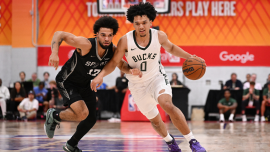
The Gary Trent Jr. contract was such a disaster that the easiest explanation for it is cap circumvention. They have a million scoring guards now yet none they should be particularly excited about. Without control over their own first-round picks, they should have no fear of the relegation zone. They should be trading any veterans with a shred of value -- most notably Myles Turner and Tyler Herro -- for whatever draft capital they can get. They haven't. They set themselves up for a disappointing offseason by waiting too long to trade Antetokounmpo, and sure enough, that's how things played out.

Cleveland Cavaliers: D+
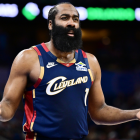
Look, their offseason hinges on LeBron. If they get him, obviously that changes a great deal. For now, they've let their only two notable on-ball defenders in Dean Wade and Keon Ellis walk without lining up replacements. Even if they get James, they'll have to find a way to trade for that player, because the combination of James in his age-42 season, James Harden and Donovan Mitchell is a defensive disaster waiting to happen. But LeBron is talented enough even now that letting role players go to maximize your chance of landing him is worthwhile in theory.
It just has the potential to blow up in their face in practice, because no obvious Wade or Ellis replacements exist on the market. Jaylon Tyson is ready for a bigger role, but probably can't guard opposing stars yet. At least second-round pick Meleek Thomas has been a Vegas Summer League standout, but given how much perimeter offensive power Cleveland has already lined up, he's probably a ways away from a serious role.

Brooklyn Nets: D
The Nets have had a lot of success flipping veteran forwards. They got hauls for Mikal Bridges and Cam Johnson and could get good value for Michael Porter Jr. now as well. They can all play small forward. Julius Randle cannot. They all shoot 3s. Randle doesn't make them consistently. He is a high-usage floor-raiser. That is potentially useful for bad teams, which the Nets are, but mostly as a means of ducking the relegation zone, which the Nets shouldn't bother with next season because they don't control their own first-round pick. Unless Randle dials the clock back to his Knicks peak in his age-32 season, all he really accomplishes here is taking shots away from the youngsters.
The Nets went into this offseason with nearly limitless cap space. They turned it into... Keon Ellis and Mo Wagner. Not exactly franchise-changers, and both got bizarre mutual options. Given the money the Nets had at their disposal, why not just overpay to turn the second seasons of those deals into pure team options? For that matter, why not throw an offer sheet at Peyton Watson? Think of all the ridiculous offer sheets Sean Marks has given out over the years. Tyler Johnson. Allen Crabbe. Otto Porter at the max. Watson is where Brooklyn draws the line? Between their cap space and their picks, the Nets had the resources to do some pretty interesting things this offseason. Thus far, they've accomplished very little in terms of meaningfully improving their long-term outlook unless Mikel Brown Jr. outplays his draft slot.