Every NFL team's best and worst draft pick of the 21st century
Every NFL team has a draft pick that changed the game, and they all want at least one redo

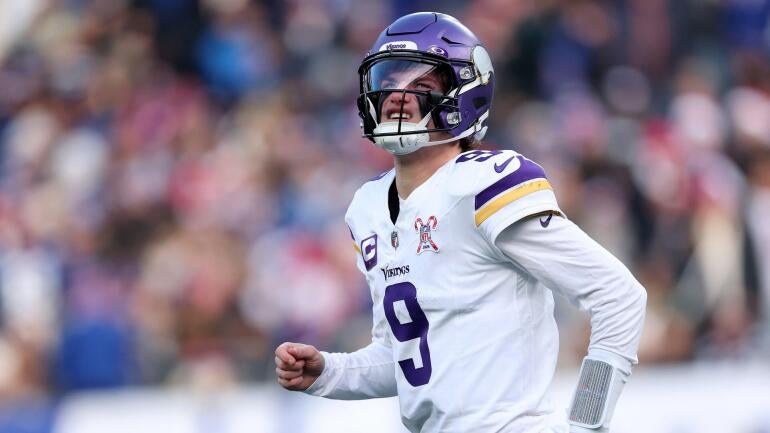
Many NFL Draft picks realize their potential, while others fall flat and make general managers wish for do-overs. There are also those players who end up enjoying lengthy careers despite being drafted in the later rounds or not even being drafted at all.
With the 2026 NFL Draft just days away, we look back at each NFL team's best and worst draft pick this century. "Best" represents a combination of star power, talent and franchise impact. When selecting the worst pick, career-altering and career-ending injuries were largely omitted.
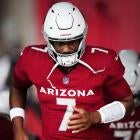
Arizona Cardinals
Best pick: WR Larry Fitzgerald (No. 3 overall, 2004)
A year after drafting Anquan Boldin in the second round, the Cardinals struck gold again with Fitzgerald, who will be inducted into the Pro Football Hall of Fame this summer. Arizona parlayed Fitzgerald's individual success (he is second to Jerry Rice in career catches and receiving yards) into its first Super Bowl appearance in 2008 and an NFC Championship game appearance in 2025.
Worst pick: QB Josh Rosen (No. 18 overall, 2018)
The Cardinals traded three picks (including a first-rounder) to move up to draft Rosen, who put up underwhelming numbers at UCLA. He went 3-10 as Arizona's starting quarterback as a rookie. Arizona traded him to Miami the following offseason after the Cardinals drafted Kyler Murray with the No. 1 overall pick.
Atlanta Falcons
Best pick: QB Matt Ryan (No. 3 overall, 2008)
Julio Jones (the No. 6 overall pick in 2011) received consideration, but Ryan got the nod by virtue of his league MVP in 2016 and the simple fact that he plays the most important position in sports. Ryan's MVP season coincided with the Falcons coming up just short of a Super Bowl ring.
Worst pick: OLB Takk McKinley (No. 26 overall, 2017)
While Atlanta drafted worse players, McKinley was an easy pick given how his time with the Falcons transpired. McKinley put up decent numbers during his first few years, but was released during his fourth season in Atlanta following multiple trade requests. Making this draft selection worse is the fact that the Falcons could have selected T.J. Watt, who went four picks later.
Baltimore Ravens
Best pick: S Ed Reed (No. 24 overall, 2002)
Reed edged out Lamar Jackson (the 32nd overall pick in 2018) because he is arguably the best free safety in NFL history, in addition to the fact that he helped Baltimore win a Super Bowl. Reed was inducted into the Hall of Fame in 2019, his first year of eligibility.
Worst pick: QB Kyle Boller (No. 19 overall, 2003)
Baltimore likely regretted releasing Trent Dilfer after winning Super Bowl XXXV. That decision led to short, unsuccessful runs with veterans Elvis Grbac and Jeff Blake and the selection of Boller, who lasted just three seasons in Baltimore. The Ravens wouldn't find their long-term solution at QB until 2008 with Joe Flacco.
Buffalo Bills
Best pick: QB Josh Allen (No. 7 overall, 2018)
After a challenging rookie season, Allen enjoyed a meteoric rise that included winning the league MVP in 2024. A Super Bowl is the only thing that has eluded Allen as he enters his ninth season.
Worst pick: QB J.P. Losman (No. 22 overall, 2004)
Buffalo drafted worse players than Losman. What makes this the Bills' worst pick is that they traded their 2005 first-round pick to select him. Had they kept that pick, they could have landed Aaron Rodgers.
Carolina Panthers
Best pick: LB Luke Kuechly (No. 9 overall, 2012)
Steve Smith Sr. (the 74th overall pick in 2001) was a phenomenal pick, and Cam Newton (the No. 1 overall pick in 2011) was a superstar, but Kuechly ultimately became the choice. He is about to become the first player drafted by the Panthers to be immortalized in Canton, Ohio. Kuechly's short but decorated career included Rookie and Defensive Player of the Year honors.
Worst pick: DE Everette Brown (No. 43 overall, 2009)
In addition to not getting much production from Brown (who recorded 6.0 sacks during his two seasons with the Panthers), the fact that Carolina gave up its ensuing first-round pick to trade up to select him makes this the Panthers' worst pick since the turn of the century. The Panthers' first pick in the 2010 draft ended up being quarterback Jimmy Clausen, who also ended up being one of the franchise's worst picks.
Chicago Bears
Best pick: LB Brian Urlacher (No. 9 overall, 2000)
While he didn't win a championship, Urlacher led the Bears to an NFC title in 2006. He and former teammate Devin Hester (57th overall, 2006) are both members of the Pro Football Hall of Fame.
Worst pick: QB Mitchell Trubisky (No. 2 overall, 2017)
The fact that the Bears passed on the chance to select Patrick Mahomes makes this one of the worst picks of the 21st century.
Trubisky and the Bears experienced immediate success, but he didn't live up to gigantic expectations during his remaining years in Chicago. After losing his starting job to Kenny Pickett in Pittsburgh, Trubisky has since found his niche in the NFL as a backup quarterback. The Bears seemingly found their long-term solution at quarterback in Caleb Williams.
Cincinnati Bengals
Best pick: QB Joe Burrow (No. 1 overall, 2020)
Ja'Marr Chase deserves mention, but there was no doubt about Burrow being the choice, as he is one of the most influential draft picks in recent NFL history. In his second season, Burrow nearly led the Bengals to a Super Bowl Championship. Burrow's health is the primary force holding Cincinnati back in recent years.
Worst pick: WR Jermaine Burton (No. 80 overall, 2024)
While it was "only" a third-round pick, Burton represents a low point. The Bengals counted on Burton to fill Tyler Boyd's role as a complementary weapon alongside Chase and Tee Higgins. Instead, what they got was an unreliable player who was released after less than two seasons. Cincinnati is still looking for a receiver who can help take some of the attention away from Chase and Higgins.
Cleveland Browns
Best pick: Myles Garrett (No. 1 overall, 2017)
Garrett has become the most dominant defensive player of his era. A two-time Defensive Player of the Year, Garrett took down opposing quarterbacks an NFL record 22 times last season. His play back in 2020 helped the Browns win their first playoff game since 1994.
Worst pick: Johnny Manziel (No. 22 overall, 2014)
Manziel self-sabotaged his career by underpreparing and not taking full advantage of his opportunity. The result was a short and unsuccessful NFL career for the former Heisman Trophy winner. The Browns had more luck with Baker Mayfield, but they unwisely parted ways with him after just four seasons.
Dallas Cowboys
Best pick: LB DeMarcus Ware (No. 11 overall, 2005)
While Jerry Jones understandably took some flak for his draft record, the Cowboys drafted some Hall of Fame-level players under his watch, most notably Ware, Zack Martin, Tyron Smith and Jason Witten. Ware, a 2023 Hall of Fame inductee, is the Cowboys' all-time career leader in sacks. He won a Super Bowl with the Broncos in 2015.
Worst pick: DE Taco Charlton No. 28 overall, 2017)
Charlton simply didn't live up to his draft positioning in the NFL. His output, compared to players that went after like T.J. Watt, was modest with 4.0 sacks in 27 career games and just seven starts.
Denver Broncos
Best pick: OLB Von Miller (No. 2 overall, 2011)
One of the most impactful draft picks in franchise history, Miller spearheaded the Broncos' third Super Bowl run in 2015. He earned MVP after notching 2.5 sacks and a pair of forced fumbles during Denver's Super Bowl win over the Panthers. Miller, who won another Super Bowl with the Rams in 2021, is the Broncos' career sack leader and tied for 13th all-time on the NFL's career sack list.
Worst pick: QB Paxton Lynch (No. 26 overall, 2016)
John Elway's legacy as the Broncos' decision-maker includes the acquisitions of Peyton Manning and the drafting of Von Miller. It also includes several unsuccessful quarterback drafts that led to Denver's decade-long playoff drought. Lynch lasted just two seasons in Denver and made just four starts over that span.
Detroit Lions
Best pick: WR Calvin Johnson (No. 2 overall, 2007)
Johnson steps in ahead of Matthew Stafford because he is one of the best players ever at his position. One of three Hall of Famers to be inducted at age 35 or younger (the other two are Jim Brown and Gale Sayers), Johnson led the NFL in receiving in consecutive years. In 2012, the man known as "Megatron" broke Jerry Rice's single-season receiving record with 1,964 yards.
Worst pick: WR Mike Williams (No. 10 overall, 2005)
Williams is the selection instead of Charles Rodgers, largely based on the fact that the Lions already drafted a receiver in the first round the previous two years. Despite that fact, then-GM Matt Millen rolled the dice and drafted Williams, who caught just 37 passes during his two-year stay in Detroit. His most successful season in the NFL occurred with the Seahawks in 2010.
Green Bay Packers
Best pick: QB Aaron Rodgers (No. 24 overall, 2005)
Green Bay wisely ended Rodgers' historic free fall, even though they had Brett Favre. While it led to some initial hostility between the two, the Packers ended up seamlessly transitioning from one future Hall of Fame QB to another. Rodgers led Green Bay to a Super Bowl title in 2010 and won each of his four league MVP awards in Green Bay.
Worst pick: DT Justin Harrell (No. 16 overall, 2007)
Harrell began his NFL career behind the 8-ball due to an injury he sustained in college. He didn't help matters by showing up for training camp out of shape and slightly overweight. Harrell really never got on track after that; he played in just 14 NFL games and didn't record a single sack.
Houston Texans
Best pick: DE J.J. Watt (No. 11 overall in 2011)
Houston already drafted one Hall of Famer this century in wideout Andre Johnson, and they have another one as soon as Watt becomes eligible. Watt leaves behind 448 solo tackles, 114.5 sacks and 27 forced fumbles in his career.
Worst pick: WR DeVier Posey (No. 68 overall in 2012)
The Texans have a slew of regrettable draft picks. What makes Posey stand out? In addition to Posey not having a productive career (he caught 22 passes in 26 regular-season games), this pick looks even worse when you consider that the Texans could have used the pick to select Russell Wilson, who went seven picks later.
Indianapolis Colts
Best pick: DE Dwight Freeney (No. 11 overall, 2002)
Freeney was the defensive force the Colts needed to break through and win a Super Bowl during the Peyton Manning era. Freeney was the pick, but shout-outs are also in order for the selections of receiver Reggie Wayne, Bob Sanders and defensive end Robert Mathis for their roles in helping Indianapolis get over the hump in 2006.
Worst pick: QB Anthony Richardson (No. 4 overall, 2023)
Richardson was projected as a first-round pick despite completing fewer than 55% of his pass attempts at Florida. Richardson quickly went to the bench after the signing of Daniel Jones. His future is uncertain, with Indianapolis likely hopeful to find a trade partner.
Jacksonville Jaguars
Best pick: CB Jalen Ramsey (No. 5 overall, 2016)
Ramsey's career may eventually lead him to be immortalized in Canton, Ohio. An eight-time Pro Bowler, Ramsey was the best player on a Jaguars team that nearly took down Tom Brady and the Patriots in the 2017 AFC Championship game. He later won a Super Bowl as a member of the Rams.
Worst pick: WR R. Jay Soward (No. 29 overall, 2000)
Soward caught 14 passes in 13 games before his career ended prematurely after multiple violations of the league's substance abuse policy. Soward's story is similar to the one later experienced by fellow Jaguars receiver Justin Blackmon, the No. 5 overall pick who played just two seasons before substance abuse issues led to a quick end to his career.
Kansas City Chiefs
Best pick: QB Patrick Mahomes (No. 10 overall, 2017)
While Mahomes (who is just one of just three quarterbacks in history with at least two league and three Super Bowl MVP awards) was an easy pick, Kansas City's success in later rounds over the years also deserves mention. Travis Kelce -- one of the most prolific tight ends in NFL history -- and standout running back Jamaal Charles were third-round picks in their respective drafts.
Worst pick: DE Breeland Speaks (No. 46 overall, 2018)
Speaks played his entire rookie season before a violation of the league's substance abuse policy (which occurred while he was on injured reserve) sent his career into a tailspin. The Chiefs released Speaks after the 2019 season. He hasn't played in a regular-season game since his rookie year.
Las Vegas Raiders
Best pick: OLB Khalil Mack (No. 4 overall, 2014)
Mack was the obvious choice given that he is a former Defensive Player of the Year and a likely future Hall of Famer. That being said, it's necessary to acknowledge the Raiders' selection of Maxx Crosby in the fourth round of the 2019 draft. A Pro Bowler each of the last five years, Crosby has the sixth-most sacks in the NFL since his rookie season. He's also third on the Raiders' career sack list.
Worst pick: QB JaMarcus Russell (No. 1 overall, 2007)
Not only is he the worst No. 1 overall pick of this century, but Russell is also arguably the biggest draft bust in NFL history.
Russell arrived in Oakland fresh off of a memorable season at LSU that included a blowout win over Notre Dame in the Sugar Bowl. After spending most of his rookie season on the bench, Russell completed fewer than 54% of his passes in 2008, as the Raiders went 5-10 with Russell as their starter. Russell completely bottomed out the following season, completing just 48.8% percent of his passes with three touchdowns and 11 interceptions in nine starts.
The Raiders released Russell during the ensuing offseason. He has not played professional football since 2009 after unsuccessful comeback bids in 2013 and in 2016.
Los Angeles Chargers
Best pick: RB LaDainian Tomlinson (No. 5 overall, 2001)
The Chargers took Tomlinson and fellow Hall of Famer Drew Brees with consecutive picks in the 2001 draft. Tomlinson spent most of his career with the Chargers and was league MVP in 2006 after scoring a single-season record 31 touchdowns. Brees started in career in San Diego before putting up historic numbers in New Orleans and leading the Saints to their first title.
Worst pick: WR Craig Davis (30th overall, 2007)
The Chargers definitely reached when they selected Davis, who put up good but not great numbers during his college career at LSU. He caught 20 and 21 passes, respectively, during his first and last seasons with the Chargers. Sandwiched between those seasons were two years where he caught a combined 10 passes.
Seven picks after selecting Davis, the Chargers picked safety Eric Weddle, who went on to enjoy a 14-year career that included six Pro Bowl nods and a Super Bowl win with the Rams in his final game.
Los Angeles Rams
Best pick: DT Aaron Donald (No. 13 overall, 2013)
You can make a strong argument that Donald is the greatest defensive player drafted since 2000. During his 10-year career, Donald was a Pro Bowl every year, an eight-time All-Pro and three-time Defensive Player of the Year. He was the best player the Rams' 2021 Super Bowl-winning team.
That championship was also heavily influenced by Cooper Kupp, a 2017 third-round pick who in 2021 had one of the most productive seasons in league history. Including the postseason, his 2,425 receiving yards that year is a single-season record.
Worst pick: OT Jason Smith (No. 2 overall, 2009)
In three seasons with the Rams, Smith made 26 starts before being dealt to the Jets, where he spent one season before being released. He later had brief stints with the Saints and back with the Jets but was released during training camp on both occasions.
Miami Dolphins
Best pick: S Minkah Fitzpatrick (No. 11 overall, 2018)
A case can be made for Jake Long, who started his career with four consecutive Pro Bowl selections before injuries slowed him down. Fitzpatrick -- who is currently a member of the Jets -- blossomed into an All-Pro player in Pittsburgh.
Worst pick: DE Dion Jordan (No. 3 overall, 2013)
Jordan did little during his rookie season before the league suspended him multiple times -- including for the entire 2015 season -- for violating the league's substance abuse policy. Jordan then spent two seasons in Seattle before playing one season apiece in Oakland and San Francisco. He recorded just 13.5 sacks in 63 regular-season games.
Minnesota Vikings
Best pick: RB Adrian Peterson (No. 7 overall, 2007)
The Vikings have had some impressive picks, but the obvious pick is Peterson, who -- along with LaDainian Tomlinson and Derrick Henry -- is among the greatest running backs of all-time. The last non-quarterback to win league MVP, Peterson's 2,097 rushing yards in 2012, represent the second-highest single-season total in NFL history.
While Peterson beat him out, Justin Jefferson is quickly making his case as being the best receiver of his era. Despite not having elite quarterback play in Minnesota, Jefferson racked up 8,480 receiving yards during his first six seasons, the most in NFL history during a player's first six seasons.
Worst pick: QB J.J. McCarthy (No. 10 overall, 2024)
A year after drafting McCarthy (who missed his entire rookie season with an injury), the Vikings allowed Sam Darnold to test the open market, then watched as Darnold won a Super Bowl with the Seahawks. McCarthy, meanwhile, delivered a forgettable 2025 season that saw him complete less than 58% of his passes with more interceptions (12) than touchdown passes (11). His struggles last season compelled the Vikings to go out and sign Kyler Murray.
New England Patriots
Best pick: QB Tom Brady (No. 199 overall, 2000)
Six quarterbacks were famously drafted ahead of Brady, who overcame his humble NFL start to become the most accomplished player in league history. Brady finally retired after the 2022 season with more Super Bowl wins (seven) than any other quarterback. A three-time league MVP, Brady won a record five Super Bowl MVP awards and is the NFL's career leader in passing yards and touchdown passes.
Worst pick: WR N'Keal Harry (No. 32 overall, 2018)
New England hoped that Harry would help infuse life into an aging roster while extending the team's dynasty. Instead, Harry battled through injuries in what was ultimately Brady's final season with the team. He had two more uneventful seasons in New England before spending one season apiece in Chicago and Minnesota.
New Orleans Saints
Best pick: DE Cameron Jordan (No. 24 overall, 2011)
Jordan edged out offensive tackle Jahri Evans, a perennial Pro Bowler who played a key role in the Saints' first championship in 2009. Jordan, 36, is still playing at a high level as he prepares for his 16th season. He had 10.5 sacks last season and is 22nd all-time on the NFL's career sack list.
Worst pick: DT Jonahtan Sullivan (No. 6 overall, 2003)
After a lackluster rookie season, Sullivan entered the 2004 season overweight and out of shape. He was inactive for the team's final eight games and was traded to New England ahead of the 2006 season. Sullivan recorded just 1.5 sacks in 36 regular-season games.
New York Giants
Best pick: Eli Manning (No. 1 overall, 2004)
Manning was essentially the Giants' first-round pick after the Chargers traded him to New York. Manning's Hall of Fame credentials will continue to be debated, but what can't be argued is his place in playoff lore after he helped lead the Giants to two improbable Super Bowl wins over the Patriots. Manning is one of just six players in NFL history with multiple Super Bowl MVP trophies.
Worst pick: WR Kadarius Toney (No. 20 overall, 2001)
Toney caught just 41 passes for the Giants before New York traded him to the Chiefs during his second NFL season. Toney played a small role in the Chiefs' offense but nonetheless won two Super Bowls in Kansas City; he caught a key touchdown pass during Kansas City's Super Bowl win over the Eagles.
Toney announced his retirement in 2025 after playing in just three games for the Browns in 2024.
New York Jets
Best pick: CB Darrelle Revis (No. 14 overall, 2007)
Revis was so dominant that his side of the field was known as "Revis Island" during his heyday. A first ballot Hall of Famer, Revis was the best player on the Jets teams that played in consecutive AFC Championship games. He won a Super Bowl later in his career with the Patriots.
Worst pick: DE Vernon Gholston (No. 6 overall, 2008)
A year after drafting Revis, the Jets appeared to draft another defensive stud in Gholston, who was coming off an epic season at Ohio State that included 14 sacks and 15.5 tackles for loss. Gholston's success in college didn't carry over to the NFL, though. He didn't record a single sack in 45 regular-season games.
Philadelphia Eagles
Best pick: C Jason Kelce (No. 191 overall, 2011)
Kelce is one of the most accomplished sixth-round picks in NFL history. He was a seven-time Pro Bowler and the anchor of an Eagles offensive line that helped Nick Foles win Super Bowl MVP honors in Philadelphia's first Super Bowl win. He helped the Eagles return to the Super Bowl in 2023.
Worst pick: DE Marcus Smith II (No. 26 overall, 2014)
Smith edged out fellow busts Jerome McDougle and wideout Jalen Reagor because McDougle's issues were largely injury-related and Reagor's shortcomings contributed to the Eagles' future acquisitions of DeVonta Smith and AJ Brown. Smith recorded just 4.0 sacks in three seasons with the Eagles.
Pittsburgh Steelers
Best pick: QB Ben Roethlisberger (No. 11 overall, 2004)
After famously passing on the chance to draft Pittsburgh native Dan Marino 21 years earlier, then-Steelers owner Dan Rooney wasn't about to pass up on the chance to draft Roethlisberger, who fell into the Steelers' lap after Eli Manning and Philip Rivers were drafted before him. In Roethlisberger, the Steelers found their successor to Terry Bradshaw, who like Bradshaw, led the Steelers to multiple championships while carving out a Hall of Fame career.
Worst pick: OLB Jarvis Jones (No. 17 overall, 2013)
Jones was supposed to replace James Harrison, who was coaxed out of retirement during the 2014 season amid Jones' struggles. Jones had just 6.0 sacks during his first six seasons in Pittsburgh, who spent two first-round picks on his position (Bud Dupree in 2015 and T.J. Watt in 2017) to help make up for his unfulfilled potential.
San Francisco 49ers
Best pick: RB Frank Gore (No. 65 overall, 2005)
Gore just edged out Hall of Fame linebacker Patrick Willis because he was the soul of a 49ers team that played in one Super Bowl and three NFC title games over a three-year span. Gore's incredible longevity (he played 16 seasons and is third all-time with 16,000 rushing yards) and the fact that he overcame multiple torn ACL injuries in college also didn't hurt his case.
Worst pick: QB Giovanni Carmazzi (No. 65 overall, 2000)
Third-round picks don't always work out, which was the case with Carmazzi, who never played a regular-season snap in the NFL. What makes this pick infamous, though, is the fact that the 49ers drafted Carmazzi over Tom Brady, a California native who grew up a diehard 49ers fan. The 49ers passing on Brady and later Aaron Rodgers has contributed to San Francisco's ongoing championship drought.
Seattle Seahawks
Best pick: CB Richard Sherman (No. 154 overall, 2011)
Sherman beat out several other deserving players, including Russell Wilson, Bobby Wagner, Shaun Alexander, Hall of Fame guard Steve Hutchinson and Jaxson Smith-Njigba. Sherman was chosen because he was the face of Seattle's formidable "Legion of Boom" defense that led to the way to Seattle's first title. Sherman's case was strengthened by the fact that he was a fifth-round pick.
Worst pick: DT Malik McDowell (No. 35 overall, 2017)
Seattle's first pick in the 2017 draft, legal issues derailed McDowell's career. He played in just one NFL regular season in 2021 as a member of the Cleveland Browns, and that was after he served an 11-month prison sentence.
Tampa Bay Buccaneers
Best pick: WR Mike Evans (No. 7 overall, 2014)
While he is embarking on a new chapter with the 49ers, Evans left a lasting impact with the Buccaneers, his team during his first 11 NFL seasons. Evans, the franchise's career receiving leader in just about every significant category, was tabbed as the fourth-greatest player in the franchise's 50-year history ahead of the 2025 season. He played a key role in the Buccaneers' second Super Bowl win in 2020.
Worst pick: K Roberto Aguayo (No. 59 overall, 2016)
Tampa Bay traded third- and fourth-round picks to move up to select Aguayo, who made just 71% of his kicks during his only season with the team. He bounced around for four more years before things ended in disappointment.
Tennessee Titans
Best pick: RB Derrick Henry (No. 45 overall, 2016)
After a quiet first two seasons in Nashville, Henry quickly became one of the greatest running backs in NFL history. He won back-to-back rushing titles with the Titans, which included a season that saw him become the eighth player to run beyond 2,000 yards in a season. With the Ravens, Henry had the greatest season in NFL history by a running back over the age of 30 in 2024 when he ran for 1,921 yards.
In 2026, Henry could conceivably pass four running backs to move into sixth place on the NFL's all-time career rushing list.
Worst pick: OT Isaiah Wilson (No. 29 overall, 2020)
Barring injury, not many first-round picks end up playing in just one regular-season NFL game. Discipline issues, however, led to Wilson's career amounting to just one game and four games. He was traded to the Dolphins for a seventh-round pick in 2021 but was released just three days later after showing up late for his physical and missing two workouts.
Washington Commanders
Best pick: OT Trent Williams (No. 4 overall, 2010)
A surefire Hall of Famer, Williams earned seven consecutive Pro Bowl nods with Washington and has been named to four more Pro Bowls since joining the 49ers. Williams was an easy pick, but it's worth mentioning some of Washington's other notable draft picks over the past 25 years that includes the late Sean Taylor, Robert Griffin III, Kirk Cousins, Alfred Morris and Jayden Daniels.
Worst pick: QB Patrick Ramsey (No. 32 overall, 2002)
Washington spent a first-round pick on Ramsey despite some clear red flags that included completing fewer than 60% of his passes in college while throwing an alarming number of interceptions (he threw 24 interceptions during his first season as Tulane's QB1). Ramsey actually threw more touchdowns (35) than interceptions (30) in the NFL, but that was one of the only positives in an underwhelming pro career.