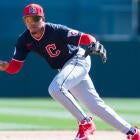
If you've been following along all season, you surely know that one of the rarest commodities on the waiver wire has been potential difference makers at shortstop.
The position has no shortage of difference-making, superstar-caliber players, of course, it's just that it tends to be an all-or-nothing kind of position, with a very weak middle class. The best options at shortstop are universally rostered and have been so since the spring, and there have been vanishingly few players with any kind of upside to emerge on the wire – since Otto Lopez's emergence early on, there might not have been a true must-start shortstop to emerge from the wire. If you've lost shortstops or just been stuck with an underwhelming starter like Mookie Betts or Gunnar Henderson, there has been very little to get excited about on the waiver wire.
But that changed this week with a trio of prospect promotions. We got started with the most hyped of the group, Yankee George Lombard, and he was followed by Angel Genao and then Kaelen Culpepper. All three are top-50 prospects on Scott White's midseason Fantasy update, and you'll find them at least that high in lists more focused on real-life implications, too, so this is a talented group.
But who should be the priority when waivers run this weekend? I'm adding all three, but here's how I'd be prioritizing them:
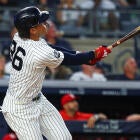
- George Lombard, Yankees (63%) – Lombard's combination of plus plate discipline (which is already on display with three walks in his first five games) and plus raw power (two homers, plus a 92.7 mph average exit velocity at Triple-A) would likely have him at the top of the priority list here even if his playing time wasn't more or less guaranteed in the Yankees lineup. That he is the present and future of the shortstop spot for the Yankees makes him the top choice here pretty clearly – and the fact that he's on the Yankees means the hype is always going to be at least a little higher, so you'll need to be prepared to pay a premium when FAB runs. He's the top choice here, but I'm not so convinced he'll be better than the other two shortstop call-ups that I'm willing to pay that particular premium.
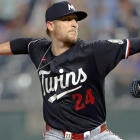
- Kaelen Culpepper, Twins (31%) – Culpepper would have beaten these guys to the majors months ago if not for some injuries down at Triple-A. That doesn't mean he's a better prospect, but there probably isn't a huge difference between them all, and Culpepper does have a skill set that should fit very well for Fantasy, with 25 homers and 27 steals in 133 career games between Double-A and Triple-A. He doesn't quite have the same mastery of the strike zone as either Lombard or Genao, but he never ran a strikeout rate over 20% in the minors, either, so contact shouldn't be too big of a limitation for him. If there's anything possibly holding Culpepper back, it's the fact that the Twins are in a playoff race and may not commit to playing him every single day – he was out of the lineup Sunday, for example. Given that his primary competition is probably the light-hitting Ryan Kreidler, I don't think playing time will be too hard for him to come by, but it's the one potential limitation I can think of.
- Angel Genao, Guardians (28%) – Playing time hasn't been hard for Genao to come by, and if he keeps hitting like he has in the early going (6 for 16 with a homer in four games entering Sunday), it probably won't ever be an issue. But his promotion came at a time when it looked like Jose Ramirez might go back on the IL, and with Ramirez overcoming that issue, this is suddenly a pretty crowded infield. The likes of Brayan Rocchio and even Travis Bazzana shouldn't be enough to keep Genao on the bench if he hits up to expectations, but Genao's margin for error might be pretty slim here if he does slump. I think he's a pretty comparable prospect to Lombard, and I'd bet on him hitting well enough that the Guardians can't justify sitting him, but the margins between all three are slim enough from a talent perspective that I'll rank Genao third for that alone.
Prospects are, of course, always risky, but I think all three should basically be 100% rostered right now and are likely to be your last chance to realistically upgrade your shortstop spot on the wire, so if you need help there, don't overlook any of them. Here's who else we're looking to add heading into Week 21.
Week 21 Waiver Targets
Catcher
Endy Rodriguez, Pirates (25%)
Rodriguez might just be a top-12 catcher – and unlike in years past, that's not just damning with faint praise, given the position's depth. But Rodriguez has now played 45 games in the majors this season while hitting .267/.373/.467 seven homers and six steals and the underlying data to back much of it up. I'll hedge my bets and won't rank him as a top-12 catcher yet, but he's been so good this season that he absolutely has to be rostered in any two-catcher league, and if you aren't thrilled with what you're getting from your option in a one-catcher league, it might make sense to just give him a shot and see if he can't stick.
Deep league option: Moises Ballesteros, Angels (21%) – Ballesteros has started six straight games since joining the Angels, and while only two of them have actually come behind the plate, we don't really care about that right now – though we would certainly like to see him get 10 more appearances there so he'll carry eligibility into 2027, too. But for now, the fact that he's in the lineup somewhere is what we care about, and that's happening. He slumped and ultimately earned a trip back to Triple-A with the Cubs after a hot start to the season, but he'll get a long runway with the Angels and has plenty of upside to make an impact at least in two-catcher leagues. And, who knows, if he gets hot enough, his everyday role could make him a viable choice in one-catcher leagues, too, though we aren't there yet.
First Base
Spencer Horwitz, Pirates (41%)
With Ryan O'Hearn out for the year and the Pirates desperate for offense, Horwitz seems well positioned to play everyday moving forward. He really isn't an impact bat, but he isn't a bad one, and his full-season pace of 20 homers and a .269 batting average is pretty useful, even if the counting stats are pretty underwhelming otherwise. Horwitz isn't good enough to be a starting first baseman in most leagues, but he could be a viable corner infield option.
Deep league option: Nate Lowe, Guardians (11%) – Lowe has seen his average swing speed climb two mph this season, a sign that maybe his solid production so far may not be a fluke. Lowe has hit .269/.341/.488 for the season with the underlying numbers to back it up, and while he's likely to remain just a strong-side platoon bat for Cleveland, that could be enough to make him relevant in mixed leagues if he stays hot.
Deep league option: Abimelec Ortiz, Nationals (6%) – Ortiz has started five of six games since his return, batting second against each right-handed pitcher they've faced. That kind of strict platoon role is going to limit Ortiz's value, but just because that's how he's being used right now doesn't mean it'll always be that way. He homered for the second time in five starts Sunday, and if he gets hot he could play his way into a more consistent role. For now, he's a career .253/.350/.491 hitter in the minors with 27 career homers in 126 games at Triple-A, and is worth a look to see if he can tap into that upside in the majors.
Second Base
Bryson Stott, Phillies (70%)
Stott gained third base eligibility this week, and that's why we're focusing on him here, though the fact that he's been red hot since the All-Star break (.318/.444/.545) doesn't hurt. But here's the thing: The bar for Fantasy relevance is just lower at third base than at second these days. According to the FanGraphs player rater, there have been 18 players at second base who have provided at least $10 in value so far this season, compared to just 13 at third. Stott has been the 14th-best second baseman in Fantasy this season; now that he is eligible at third he ranks ninth. There is one third baseman rostered in around the same number of leagues as Stott who I would rather have – more about him shortly – but Stott is a very solid option at either position (and especially as either a middle or corner infielder).
Deep league option: Tim Tawa, Diamondbacks (10%) – I don't think it's likely to prove sustainable, but Tawa is on a nice heater right now, hitting .323/.353/.516 in the month of August while playing pretty much everyday. He's seen a nice bump in his average exit velocity this season combined with a cut in his strikeout rate, and with eligibility at first, second, third, and the outfield, he's a nice piece for players in deeper leagues who want to stream as many starting pitchers as possible to have around as a plug-and-play option.
Third Base
Royce Lewis, Twins (72%)
Since his return from Triple-A in early June, Lewis is hitting .279/.342/.513 with 10 homers and eight steals in 52 games. That's a 162-game pace of: 31 homers, 93 runs, 87 RBI, and 25 steals, and that's good to be the No. 4 third baseman in Roto leagues. He's only seventh in H2H points leagues, but hey, that's still a very solid starting option, and he's also eligible at second and first base now, so you probably have somewhere you can put Lewis in your lineup. He should be pretty much 100% rostered at this point.
Deep league option: Coby Mayo, Orioles (15%) – Maybe the Orioles need to give Mayo another chance to play everyday? He isn't in the lineup anywhere close to everyday, but he's been a .259/.306/.603 hitter since the start of July with five homers in just 62 trips to the plate. The limited opportunities mean he really doesn't matter outside of very deep leagues, but if the Orioles decided to give him a bit more run down the stretch, maybe he could start to matter in shallower leagues, too.
Outfield
Dominic Canzone, Mariners (73%)
Canzone is more than holding his own against lefties since earning an expanded role, which matters a lot more to me than the fact that he's been a little cold since the start of August. He has a .364 expected wOBA for the season, a very strong number, and he's up to a .419 mark against lefties specifically. Even if that doesn't prove sustainable, his .339 xwOBA against lefties last season was good enough given how well he typically does against righties. I'm pretty much fully bought in on Canzone as a viable everyday hitter, one who matters in all Fantasy formats now.
Spencer Jones, Yankees (41%)
I really don't have a ton of faith in Jones, but he deserves credit for showing signs of growth since his most recent promotion. He is hitting just .178 since the All-Star break, but a peak under the hood shows some real signs of growth – he has cut his strikeout to a totally manageable 26% mark since the break and his expected wOBA in that span is up to .389, a borderline elite mark. He's got to turn it into actual production for it to matter, but if you want to chase upside, Jones certainly has plenty of it, especially if he can keep the strikeout rate below 30%.
Jake Mangum, Pirates (29%)
Mangum has a limited ceiling because of the near total lack of power in his game, but he still strikes me as particularly under-rostered right now. He's been red-hot for a long time, hitting .316 since the start of June, with a near 80-run, 20-steal pace. You'd like those latter two numbers to be a bit more impressive for a guy who is playing pretty much everyday, so you're probably just viewing him as a batting average specialist. But he also isn't showing any signs of slowing down, going 5 for 12 over the weekend. Oneil Cruz's looming return from the IL could threaten Mangum's playing time, though if Esmerlyn Valdez can't pull out of his slump (3 for 38 with a 35% strikeout rate since his last homer), Mangum still may be part of the team's best outfield alignment in the long run.
Ryan Waldschmidt, Diamondbacks (26%)
Waldschmidt's second stint in the majors is going a lot better than his first one did. Since being promoted back to the majors in early July he is hitting .333/.354/.500 with two homers in 20 games – he had none in 33 games the first time he was up. There's still a bit too much swing-and-miss in Waldschmidt's game, but at least he's finally hitting the ball with authority (90.8 mph average exit velocity since his promotion). I'm still willing to bet on the talent winning out here, especially now that we're seeing flashes of it.
Griffin Conine, Marlins (15%)
There's probably still too much swing and miss in Conine's game for him to ever be someone you really want to rely on in the long run. But it's growing increasingly hard not to at least view him as a very interesting hot-hand play when he's as locked in as he has been for a while now. And it truly is a good long while now, as Conine was hitting .256/.338/.488 with eight homers in 40 games since coming off the IL before he hit two more long balls Sunday. He doesn't play quite every day (usually sitting against lefties) and he's still striking out more than 30% of the time even during his hot streak, but there aren't many cheap sources of power that are widely available who are also this locked in.
Starting Pitcher
Shane Baz, Orioles (68%)
Baz might be in the midst of the best stretch of his career. He struck out nine over eight innings Friday and now has a 2.93 ERA with nine quality starts in his past 15 tries. That's basically a half-season of ace production, and while the strikeouts are generally a bit underwhelming, the underlying numbers buy into the fact that he has taken a step forward during this stretch (3.79 xERA, 2.92 FIP). There's surely some good luck at play in this run – Baz has been unusually good at keeping the ball in the yard during this stretch – but he's been good enough for long enough that he should at least be rostered in all leagues until his good luck wears off.
If you're just talking about upside, I think I like Jump even more than Baz. We've seen tantalizing flashes of that upside in Jump's rookie season, and the most impressive one came Saturday when he struck out 11 in six innings against the Red Sox. It was, naturally, away from the Athletics home ballpark in Sacramento, of course; Jump has a 2.60 ERA in six starts on the road compared to a 6.16 mark in eight home starts. Sacramento is a tough place to pitch, but Jump isn't going anywhere, so that's a real limit on how much value he can provide until he figures out what he needs to do to survive and thrive at home. For now, he's definitely not a must-start pitcher, but I wouldn't mind starting him for a matchup in Kansas City this week.
Jackson Jobe, Tigers (47%)
In his return from Tommy John surgery, Jobe's velocity was up nearly two mph from the last time we saw him. Surely, some of that was the adrenaline of making his first start in the majors in more than a year, but I will note that Jobe showed signs of having improved velocity in the one rehab start we have Statcast data for as well. So, it might not be a fluke, and it could make Jobe even more interesting than we thought. He's always missed fewer bats than you would expect given the apparent quality of his stuff, but he generated nine swinging strikes on 71 pitches in this one, and if the four-seamer can be a bat-missing weapon that could help overcome the limitations of his secondaries. It's a long shot, and the Tigers will probably keep Jobe limited to around 80-85 pitches moving forward, but he could still matter if Saturday's start was any indication.
Tyler Mahle, Braves (26%)
Any time a pitcher has a new home, we're going to be interested to see what kind of changes their new team made to their approach. And that's especially true when a pitcher's first start with his new team is arguably his next of the season, as was the case with Mahle Friday in his Braves debut. He tossed six shutout innings against the Yankees and he did so with nine strikeouts, his second start with that total. Mahle did prioritize both his four-seamer and splitter in this one at the expense of his cutter, and the fastball was especially effective, generating eight of his 13 swinging strikes. You can't count on Mahle dominating to that extent every time out, but he's looked a lot better in the second half of the season and gets a beatable matchup against the Mets this week, with the Twins on the schedule for his next one. Mahle could be a useful streamer for this stretch.
Relief Pitcher
Brandyn Garcia, Diamondbacks (39%)
What makes prognosticating about closers so tough is, sometimes save situations just don't come up for a while. Garcia got the first two saves after the Diamondbacks announced that Paul Sewald would be removed from the closer's role, and more than a week later, they haven't had another save opportunity. That makes it tough to say with any degree of certainty whether Garcia is the guy here. On the other hand, two of his three appearances since have come in the ninth and 10th innings of close games – in one, they scored twice in the eighth inning to push it out of a save situation, but he would likely have gotten a save chance in that game, at least. That doesn't mean Garcia is guaranteed to be the closer moving forward, but he's the best guess we've got right now.
Sammy Natera, Angels (5%)
We have even less to go on with Natera than Garcia – just one save opportunity Thursday, in fact, and someone else got a save just a few days later. But that was Jose Fermin, not Ben Joyce, who we assume is the primary competition for saves in L.A. That could mean this is just a wide open situation that is going to be a headache the rest of the way, but I still think it makes sense to bet on Natera getting a chance given how good he has been this season – Natera has a 2.16 ERA, 1.98 xERA, and a massive 39.2% strikeout rate in 25 innings. He is a lefty, which could limit his chances, but I'm remaining hopeful that the Angels will just give Natera a real chance to run away with this job.