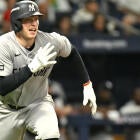
Some people don't like to hear about how deep starting pitcher is, as if pointing it out is inviting a horde of injury bugs to ravage the bountiful harvest.
Well, yes, attrition happens — especially within these ranks. No matter how deep starting pitcher appears now, it'll appear less so by next September. But that's all the more reason why we should celebrate its depth while it's still pristine. Having more high-end possibilities allows for a greater margin for error.
Of course, that's only true if you draft multiples, and that's a stance I've been taking for some time now. You draft four of these top 40 -- which isn't a strict cutoff, though it makes for a good one this year -- and hope two of them pan out. If three do, you're golden.
What I'm less interested in doing is playing favorites here. The distinctions -- particularly after the top seven or eight -- are too slim for me to be deeply invested in how I've ranked them. Rather than target a specific pitcher, I'll take the best one available when either the value is too great to pass up or I don't like what's happening at the other positions.
Also, I've become increasingly convinced in recent years that we can't predict to any serviceable degree which pitchers will indeed get hurt. Some may be likelier than others, but they're all so likely as to make the concept of a "safe choice" laughable. As such, I've made a concerted effort in this year's rankings to prioritize skills over durability or longevity. That's not to say I've completely ignored the latter, but at a position that's always been difficult to parse, I've chosen to parse in other ways.
I should mention that Mason Montgomery technically qualifies at starting pitcher and will officially rank among them once rankings are official. But for the purposes of this article, I've chosen to forgo him since he's actually a closer. I will mention, though, that my initial inclination is to slot him 18th at starting pitcher in Rotisserie leagues and 27th for Head-to-Head points (as depicted below).
Note that the focus here is standard 5x5 scoring (such as Rotisserie leagues), but scroll a little further, and you'll see my rankings for points leagues as well.
| 1 | 
Jacob Misiorowski
Milwaukee Brewers SP
|
| A historic performance in which he led the majors in ERA, WHIP and strikeouts, not to mention opponent batting average, makes Misiorowski an easy choice at No. 1. His unprecedented radar gun readings may amplify the injury risk, but presuming 2027 will be the year he goes down is the coward's way. | |
| 2 | 
Cam Schlittler
New York Yankees SP
|
| Though it was overshadowed by Misiorowski's performance, Schlittler's 2026 was an all-timer as well, marking the first time since 2018 that two qualifying pitchers had an ERA below 2.00 (excluding 2020, of course). I'm tempted to rank him ahead of Misiorowski because his velo (while also high) doesn't seem quite as destructive, but the 0.12 gap in WHIP is too much for me to overlook. | |
| 3 | 
Tarik Skubal
Los Angeles Dodgers SP
|
| Midseason surgery to remove loose bodies from the elbow would have doomed most pitchers, but Skubal became the first to undergo a less invasive version of it and returned in record time, looking no worse for wear. He enters the free agent market with no lingering concerns and a well-established ace pedigree. | |
| 4 | 
Cristopher Sanchez
Philadelphia Phillies SP
|
| Sanchez has a near-perfect profile for limiting damage with plus bat-missing ability and elite control and ground-ball skills. His WHIP has trended high in part because of those ground balls but in part because of the Phillies' infield defense, which is sure to look different in 2027. | |
| 5 | 
Yoshinobu Yamamoto
Los Angeles Dodgers SP
|
| Yamamoto traded some strikeouts for even better efficiency in 2026, yielding a 0.87 WHIP to go along with his 2.53 ERA. There may be a best-of-all-worlds scenario still to come, but he's an ace regardless. | |
| 6 | 
Chris Sale
Atlanta Braves SP
|
| By the percentages, Sale could challenge Tarik Skubal for the third spot in these rankings, but the Braves build in so much extra rest for the 37-year-old that he has virtually no shot at 30 starts or 180 innings. Even in this format, which rewards percentages more than points leagues do, it puts a cap on his upside. | |
| 7 | 
Zack Wheeler
Philadelphia Phillies SP
|
| A year ago, Wheeler was on the mend from thoracic outlet surgery and facing an uncertain future. While he did lose a little something in the way of velocity upon his return, he didn't lose anything in terms of performance. Decline is still possible at age 36, but honestly, he seems pretty bankable. | |
| 8 | 
Jesus Luzardo
Philadelphia Phillies SP
|
| In Luzardo, the Phillies have a third near-perfect starting pitcher, with his ERA estimators all matching up with his actual 2.86 mark and his strikeout and ground-ball rates both ranking sixth among qualifiers. My one hesitation with drafting him here would be his late-season bout with shoulder inflammation, but to me, he put that concern to rest with a dominant postseason start. | |
| 9 | 
Chase Burns
Cincinnati Reds SP
|
| Burns was trending toward a top-10 finish before the Reds put a stop to it in the name of workload management, but the reins should come off in 2027. He has just one swing-and-miss pitch, which is worrisome for a profile so dependent on whiffs, but he's been so dominant to this point in the majors that I'm choosing to see the glass half full. | |
| 10 | 
Dylan Cease
Toronto Blue Jays SP
|
| It feels a little wrong to rank Cease so high, seeing as he was leaking velocity all year and finished on the IL with shoulder inflammation, but he was contending for the Cy Young through it all. He genuinely did make a leap with the Blue Jays, broadening his arsenal beyond just a fastball and slider, but walks remain an issue. | |
| 11 | 
Gavin Williams
Cleveland Guardians SP
|
| Williams is a pitcher of extremes, emerging as a bat-missing marvel over the course of 2026, with eight of his final 14 starts yielding double-digit strikeouts, but he also gives up some of the hardest contact of any pitcher. You can expect his ERA to skew high as a result. | |
| 12 | 
Paul Skenes
Pittsburgh Pirates SP
|
| A series of mechanical misfires, along with a velocity dip that may or may not have been related, relegated a generational talent to something far more ordinary, compiling a 4.56 ERA and 1.31 WHIP in 23 starts from mid-May on. The underlying data was still pretty impressive, though, and simply restoring Skenes' crossfire delivery would go a long way to fixing him. Seems worth the gamble here. | |
| 13 | 
Drew Rasmussen
Tampa Bay Rays SP
|
| Turns out Rasmussen is just as effective going six innings at a time as he was going five innings at a time -- maybe more, even, with the introduction of a changeup to his three-fastball arsenal. He's as stable as they come for ERA and WHIP, and now that the reins are off in terms of workload, he's not far off from being a Fantasy ace. | |
| 14 | 
Parker Messick
Cleveland Guardians SP
|
| Despite a solid seven-start showing late in 2025, Messick was the rookie few saw coming in 2026, throwing the seventh-most innings of any pitcher (186 1/3) with strong ratios all around. He seemed to get better as the year went on, too, delivering a 2.30 ERA, 1.05 WHIP and 10.0 K/9 in the second half. | |
| 15 | 
Payton Tolle
Boston Red Sox SP
|
| Tolle is my pick to be next year's Cam Schlittler and I'm ranking him aggressively as a result. His fastball is already a world-beater, and the rest of his arsenal is rounding into form, with the clearest evidence being his 1.94 ERA, 0.83 WHIP and 12.6 K/9 when throwing his curveball at least 10 percent of the time. | |
| 16 | 
Cade Cavalli
Washington Nationals SP
|
| Cavalli got better as his control improved over the course of his breakout season, resulting in a 2.14 ERA, 0.90 WHIP and 11.5 K/9 over his final 16 starts. I've ranked him based on his full-season numbers, which is the most I think you'll have to pay for him, but clearly he has the potential for more. | |
| 17 | 
Logan Gilbert
Seattle Mariners SP
|
| Mariners pitchers have been resolute about adding more pitches, and it's backfired for the most part, with Gilbert being no exception. There's still a lot to like about his game -- from the high whiff rate to the plus control to the big workload -- but he'll need to reverse the trend of a rising ERA. | |
| 18 | 
Reid Detmers
Los Angeles Angels SP
|
| Detmers used his 2025 banishment to the bullpen constructively, learning to attack better and improving the depth on his slider. It culminated in a breakthrough 2026 in which he put together a 2.63 ERA, 0.93 WHIP and 10.4 K/9 in his final 22 starts. | |
| 19 | 
Logan Henderson
Milwaukee Brewers SP
|
| The Brewers quit fence-straddling with Henderson finally, and he ended up being about as effective in 18 starts as he was in five a year earlier. His mediocre velocity and limited pitch selection are sure to invite more skepticism but his line now, in 23 career starts, is a 2.33 ERA, 0.87 WHIP, and 10.4 K/9. | |
| 20 | 
Max Fried
New York Yankees SP
|
| Despite contending with a bone bruise in his elbow that relegated him to the IL twice, Fried ended up delivering about his typical stat line, at least as far as percentages go. He could still deliver 95 percent of what we're expecting from Drew Rasmussen, but he'll need improved health at age 33 to do so. | |
| 21 | 
Bryan Woo
Seattle Mariners SP
|
| Woo's ERA jumped from 2.94 in 2025 to 4.01 in 2026, which accounts for him dropping about a dozen spots in the rankings, but if you dig a little deeper, the difference is mostly in the quality of the defense being played behind him. He's still a WHIP standout with adequate strikeout capabilities, making him a strong bounce-back candidate for 2027. | |
| 22 | 
Nolan McLean
New York Mets SP
|
| Most will probably rank McLean higher than this given that he already carries a lot of name value and was basically fine during his first full season. He really leaned into his sinker as the year went on, though, averaging less than a strikeout per inning in the second half and registering just a 9.6 percent swinging-strike rate for the season. | |
| 23 | 
Garrett Crochet
Boston Red Sox RP
|
| The biggest first-round bust of 2026 hardly pitched because of a shoulder capsule issue and a lat strain, and given the severity of those injuries, it's anybody's guess what he'll look like in 2027. He reportedly used the time off to sort out his mechanics, and if he's lighting up the radar gun this spring, he'll likely rocket up these rankings. | |
| 24 | 
Hunter Brown
Houston Astros SP
|
| Brown failed to live up to his breakthrough in 2025 a year later, mostly because he missed 2 1/2 months with a shoulder strain. He still returned to deliver a 3.19 ERA, showing his usual velocity, which points to him having a high floor. He'll need to shore up his mechanics to get his command back in line, though. | |
| 25 | 
Gerrit Cole
New York Yankees SP
|
| Cole returned from Tommy John surgery with improved velocity and impeccable command, leaving little in the stat line to complain about. Still, his breaking balls lacked their usual bite, leading to harder contact and a rather pitiful 9.6 percent swinging-strike rate. Sometimes the stuff takes a little longer to come back after such a procedure, but seeing as he's 36, it's not certain to happen. | |
| 26 | 
Jared Jones
Pittsburgh Pirates SP
|
| This is an aggressive ranking for a guy who soared to new heights in September with a 0.93 ERA, 0.59 WHIP and 12.4 K/9 across five starts. Armed with a new curveball and having shaken off the rust from his UCL repair, Jones showed genuine ace upside, for as brief as it was. | |
| 27 | 
Blake Snell
Los Angeles Dodgers SP
|
| Snell's 2.69 ERA, 1.17 WHIP and 11.8 K/9 over the past five years would make him a cinch top-10 option if not for the fact that he's also averaged just 103 innings during that time because of injuries. And given the Dodgers' incredible pitching surplus, I'm not sure they'd have it any other way, content to give him long periods of rest to ensure he's in peak form when it matters most. | |
| 28 | 
Jacob deGrom
Texas Rangers SP
|
| I may be underrating deGrom here, seeing as he had the fourth-best K/9 rate (11.1) and second-best swinging-strike rate (15.9 percent) among qualifiers, but a bad second half from a 38-year-old with a marked injury history makes me a little squeamish. | |
| 29 | 
Carlos Rodon
New York Yankees SP
|
| The anxiety associated with Rodon's return from elbow surgery (loose bodies) turned to panic in June when he went back on the IL with inflammation in that same elbow. But after another six weeks of recovery, he excelled in his final eight starts, putting together a 1.89 ERA, 0.82 WHIP and 9.2 K/9. He also finished on the highest possible note with eight shutout innings against the eventual AL champion Rays. | |
| 30 | 
Joe Ryan
Minnesota Twins SP
|
| Ryan is beginning to develop a reputation as a pitcher who can't finish, once again dominating in the first half before slipping in the second half and landing on the IL, this time with a glute strain. As long as you don't mind an ERA in the mid-to-high threes, his WHIP and strikeout upside are worth selecting here. | |
| 31 | 
Braxton Ashcraft
Pittsburgh Pirates SP
|
| The first two months established Ashcraft as one of the breakthrough pitchers of 2026, but he treaded water thereafter, having to trade off strikeouts for ground balls as he wore down from the unfamiliar workload. The Pirates ultimately shut him down in September, but the final line was strong enough for you to hope for better as he comes into 2027 more built up. | |
| 32 | 
Logan Webb
San Francisco Giants SP
|
| After a five-year run as an ace or something close to it, Webb faltered in 2026, leaving too many pitches over the fat part of the plate instead of working the corners. Or that's the narrative, anyway, but he actually had a better WHIP than the previous two years and a FIP nearly a run lower than his ERA. I say he's fine, but I can only slot him so high since he's a tricky categorical fit even at his best.  | |
| 33 | 
Shohei Ohtani
Los Angeles Dodgers DH
|
| Only Jacob Misiorowski averaged more Head-to-Head points per game than Ohtani, who actually had the lower ERA of the two. Ohtani could only sustain it for half a season, though, being done in by biceps and knee issues that ended up undermining his hitting as well. Because his bat is so important, you have to figure the Dodgers will proceed cautiously with him as a pitcher, for as good as he is at it. | |
| 34 | 
Tyler Glasnow
Los Angeles Dodgers SP
|
| The story remains the same for Glasnow, whose performance is consistently stellar but whose inability to stay healthy makes him more of a garnish than a main course. Now 33, he still has yet to throw even 140 innings in a season, and you know the Dodgers' top priority with him is to make sure he's ready for the playoffs. | |
| 35 | 
Trevor Rogers
Baltimore Orioles SP
|
| Rogers' final numbers in 2026 -- a 4.03 ERA, 1.19 WHIP and 8.3 K/9 -- don't quite merit this ranking, but keep in mind his mechanics were compromised early on by a severe bout with the flu. From June 1 forward, he had a 2.90 ERA, a 1.03 WHIP and 8.9 K/9, confirming that his 2025 breakout was no fluke. | |
| 36 | 
Eury Perez
Miami Marlins SP
|
| Perez's control issues carried over into 2026, leading him to lean more on his sinker during the summer months. It worked at first but quickly became his most hittable pitch, bringing about a bumpy finish. His final numbers were decent, but he doesn't seem to be any closer to meeting his sky-high potential. | |
| 37 | 
George Kirby
Seattle Mariners SP
|
| Kirby has been trending in the wrong direction for a few years now, and after a second straight season with an ERA over 4.00, some would describe this ranking as generous. The pitch design crowd remains hopeful of a turnaround, though, believing his decline is less a matter of skill than of an overly broad arsenal and suboptimal pitch sequencing. He's fixable, in other words. | |
| 38 | 
Sean Burke
Chicago White Sox SP
|
| Burke is tough to rank because, while his 3.34 ERA, 1.20 WHIP and 9.7 K/9 are impressive, particularly over 172 1/3 innings, they were fueled by a midseason surge that was bookended by some pronounced control issues. So the stuff works, which points to a high ceiling, but his failure to repeat his mechanics consistently makes for heightened volatility. | |
| 39 | 
Taj Bradley
Minnesota Twins SP
|
| Between the high exit velocities and high walk rate, Bradley seemed like he was on a razor's edge all season, but his performance turned out to be pretty steady from start to finish. Unless he improves in those two areas, his ERA and WHIP will track high, but if he's racking up 200 strikeouts, you can live with it. | |
| 40 | 
Sonny Gray
Boston Red Sox SP
|
| Everyone will bristle at this, seeing as Gray won 18 games and was the 13th-best starting pitcher for Rotisserie leagues in 2026, but his 2.72 ERA came in spite of a higher FIP than the previous two seasons, when he had a combined 4.07 ERA. His K/9 rate also cratered from 10.5 in those two seasons to 7.9, which is a particularly alarming development for a guy in his late 30s. | |
What changes in points leagues?
1. Jacob Misiorowski, MIL
2. Cam Schlittler, NYY
3. Tarik Skubal, free agent
4. Cristopher Sanchez, PHI
5. Yoshinobu Yamamoto, LAD
6. Chris Sale, ATL
7. Zack Wheeler, PHI
8. Jesus Luzardo, PHI
9. Chase Burns, CIN
10. Dylan Cease, TOR
11. Gavin Williams, CLE
12. Paul Skenes, PIT
13. Drew Rasmusen, TB
14. Parker Messick, CLE
15. Payton Tolle, BOS
16. Cade Cavalli, WAS
17. Logan Gilbert, SEA
18. Reid Detmers, LAA
19. Logan Henderson, MIL
20. Max Fried, NYY
21. Bryan Woo, SEA
22. Nolan McLean, NYM
23. Logan Webb, SF
24. Garrett Crochet, BOS
25. Hunter Brown, HOU
26. Gerrit Cole, NYY
27. Jared Jones, PIT
28. Braxton Ashcraft, PIT
29. Joe Ryan, MIN
30. Sandy Alcantara, MIA
31. Trevor Rogers, BAL
32. Blake Snell, LAD
33. Jacob deGrom, TEX
34. Carlos Rodon, NYY
35. Eury Perez, MIA
36. George Kirby, SEA
37. Sonny Gray, free agent
38. Michael King, free agent
39. Shohei Ohtani, LAD
40. Tyler Glasnow, LAD