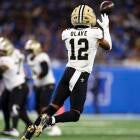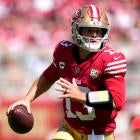


The New Orleans Saints fell to the Detroit Lions in overtime of their season opener, 31-30, but there were some positive takeaways. Wide receiver Chris Olave, for example, caught a whopping 10 passes for 182 yards. It marked the second-most receiving yards ever recorded by a Saint in a season opener, and he currently leads the NFL in receiving.
It was hard to miss Olave on the field Sunday, one because he was lighting up the stat sheet and two because he was sporting a new Guardian Cap. The former No. 11 overall pick has a documented history with head injuries, suffering four concussions in his first 39 NFL games. After Sunday's game, Olave got honest with reporters about his decision to choose the Guardian Cap, saying he wants to "live regular life after football."
After dealing with head injuries over the years, Chris Olave says it was his decision to wear a guardian cap.
— Farrah Yvette (@farrah_yvette) September 13, 2026
He says he is thinking about his life after football and the kids he has now. #Saints pic.twitter.com/d82633uR1D
"You all know the head injuries I've had in my career," Olave said. "So it was just a decision I've made. Shoot, I got kids now. I want to be able to live the long game, it's not all about football. I want to live regular life after football. I love my kids to death. I don't really care how it looks no more I just got to throw it on, and shoot, it did me good today."
TYLER SHOUGH FINDS CHRIS OLAVE FOR 43 YARDS LATE IN THE 4TH
— FOX Sports: NFL (@NFLonFOX) September 13, 2026
📺: FOX pic.twitter.com/cs39B0lI1r
The connection between football and head injuries is tough to ignore. A study published this summer by The BMJ found that at least 25% of former NFL players who died between 2016 and 2021 had chronic traumatic encephalopathy, the brain disease known as CTE. The disease is thought to be caused by repeated hits to the head or head injuries like concussions.
The Guardian Cap, created in 2010, is a soft-shell cover for the helmet designed to reduce impacts during play.
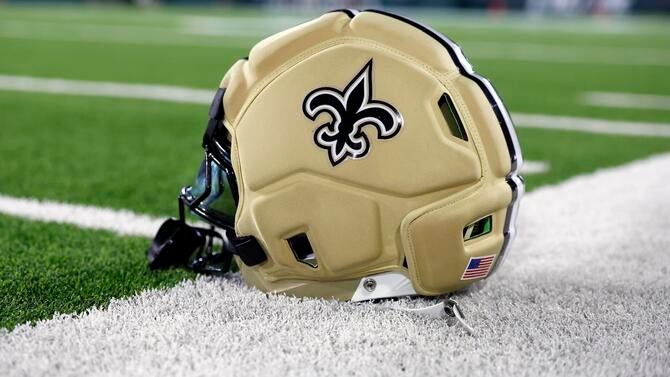
The NFL began requiring certain positions to wear Guardian Caps during preseason practices in 2022 and made them available to players to wear in the regular season if they chose. More and more players are opting for the extra protection, such as New England Patriots wide receiver Romeo Doubs, Los Angeles Rams offensive lineman Alaric Jackson and Houston Texans safety Jalen Pitre. Pitre actually became the first-ever Guardian Cap Signature Athlete just this offseason.
"Regardless of the level you play at, protection is the most important thing," Pitre said in a statement. "Be proactive. Don't wait until after you get a concussion. This is about continuing to push the game forward. Think about your safety now because that's what you'll have when you leave the game."
According to the Guardian Cap's official website, studies have shown a 54% to 62% reduction in practice concussions among players required to wear Guardian Caps. Laboratory testing claims protection doubles when both players involved in a collision wear Guardian Caps.
Sure, the puffy helmets aren't exactly a fashion statement, but more and more players are caring less about that. They want to protect their long-term health and still have a life to enjoy after football.