It has never been more challenging to make specific projections about how college basketball teams will perform over a five-month period than right now.
The season is less than a week away and there are more than 100 players across high- and mid-major basketball who are suing to get a fifth year of eligibility. Some of these players rank among the 30, 40 or 50 best in the sport. Their eligibility will likely sway the success, or lack thereof, with a litany of programs.
Best of all: Because the NCAA is resisting allowing a blanket waiver for all fifth-year cases for 2026 graduates (when everyone else who graduates in 2027 and beyond is qualified) nobody knows who will be allowed to play and for how long.
It's possible some of these fifth-year cases will get yanked more than a month into the season and cause significant recalibrations for those teams. More than 40% of the teams listed in this story are grappling with player-initiated lawsuits. Aside from the 2020-21 season during the COVID-19 outbreak that led to hundreds of postponements and game cancellations over the course of five months, there has never been a season with more uncertainty and consternation attached to it than the one that's about to begin. (This better be a one-off.)
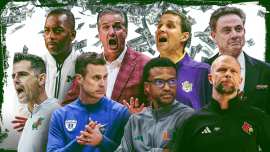
Given the gush of lawsuit-inspired headlines from the past three months, I think it's safe to declare that we're all desperate for the games to tip.
All of the courtroom crises didn't stop me from an annual rite of self-doubt and overthinking. It's time for CBS Sports' mega-ranking of the 101 best teams to know heading into the season. Before we get to Sunday's debut — Notre Dame vs. Villanova in Rome! — hop in and take an elongated tour of the many echelons of teams that tier out college basketball's landscape for 2026-27. Remember that we're trudging forward in a diluted new era. It's a 76-team national tournament now. The regular-season stakes have lowered, giving more schools an opportunity to backdoor into March Madness.
With that in mind, here's how I would index the rankings.
- Schools listed 1-15: National title hopefuls
- Schools listed in the top 22 or so: Final Four contenders
- Schools listed in the top 35: Sweet 16 candidates
- Schools listed in the top 65: At-large and bubble candidates
Obviously, some sitting outside the top 65 will surprise for the better, and plenty inside the top 50 will disappoint. But with all of the transfer movement, the hundreds of millions of dollars involved in building these rosters and the untold number of injuries that will mar many a team's season, the prediction game isn't for the faint of heart. I sprint ahead, undaunted!
Whether you're a diehard college fan who's been checking CBSSports.com practically every day of the offseason or if you're a casual that stumbled by on the eve of the season, this whopping annual piece of content was made for ball lovers of all types. Here are the 101 best teams in college hoops heading into November.
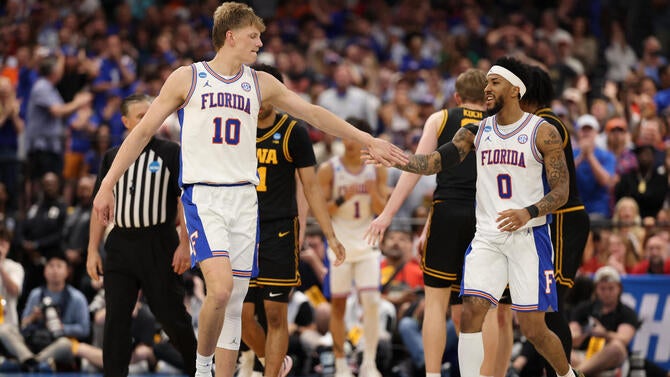

1. Florida
Unquestionably one of the strongest preseason No. 1s of the past 15 years. That doesn't guarantee Florida will win it all, but the Gators figure to have as good a shot as anyone. Three studs who helped UF to a national championship 19 months ago in San Antonio are still on this squad, including CBS Sports Preseason All-America big men Thomas Haugh (first team) and Rueben Chinyelu (third team, also the reigning Defensive Player of the Year), and a Preseason All-American from last season, Alex Condon. That's the best frontcourt in college basketball entering the season.
The triumvirate is one of just three trios in the last 35 years to each average 10-plus points, 6-plus rebounds and 1-plus block in a season (2007-08 UConn and 2025-26 Michigan are the others). Haugh, Chinyelu and Condon also propelled Florida to the best rebound margin (+14.7) of any team since Michigan State in 2000-01. Gators coach Todd Golden told CBS Sports earlier this month that all three returned, in large part, due to the stunning 73-72 second-round NCAA Tournament loss to ninth-seeded Iowa. With big paydays and all the motivation necessary to make good on that defeat, Florida is loaded and ready atop what should be another beastly SEC.
With guards Boogie Fland, Urban Klavzar and Isaiah Brown also back, Florida returns 81.8% of its scoring from last season, which is not only the most in high-major hoops but the fourth-most by any team coming off a No. 1 seed selection since 2002-03. Denzel Aberdeen, who was part of the 2024-25 championship squad, will return as a starter after a year at Kentucky so long as he wins his legal fight for a fifth year. Florida is rightfully receiving preseason No. 1 honors for the second time in school history, joining the 2006-07 team that won a second straight natty. The last time a preseason No. 1 won it all in the same campaign was 2008-09 North Carolina; will the Gators end that drought? The key will be reliable 3-point shooting: Florida ranked 321st last season.

2. Duke
Coming off another epic, heartbreaking NCAA Tournament exit, the Blue Devils are LOADED yet again (and adored by preseason metrics). They're ahead of Florida at No. 1 at BartTorvik.com, EvanMiya.com and KenPom.com, with their +34.42 efficiency margin ranking as the highest preseason KenPom evaluation in the history of that database (Florida's +33.38 beats every other preseason listing, too, except Duke's). Thankfully, we get to see these two play each other in Gainesville, Florida, on Dec. 1.
After back-to-back years of Cooper Flagg and Cameron Boozer winning National Player of the Year honors as freshmen, Duke will need someone to step into the spotlight. Wisconsin transfer John Blackwell (19.1 ppg, 5.1 rpg) ranks among the best shooting guards in the sport. If he's not Duke's top player, it could be someone gathering the most buzz of anybody since late September. Joaquim Boumtje Boumtje is 7-foot-1, 17 years old, and looking like a possible No. 1 pick in 2028. He's too young to qualify for the 2027 NBA Draft, so Duke will have an elite talent on campus for at least two years.
There are a lot of important guys back from last year's 1-seed squad that won 35 games: center Patrick Ngongba II (10.1 ppg), veteran PG Caleb Foster (8.3 ppg) and evolving wing Dame Sarr (6.4 PPG) all project to start alongside Blackwell and Boumtje Boumtje. If Foster does not start, Cayden Boozer will. This redemption story will be fun to watch after the gaffe that led to Braylon Mullins' epic shot in the Elite Eight. Beyond that, it's just the usual: five-star freshmen like Cam Williams and Deron Rippey Jr. help build out a second five that would be ranked on its own.

3. Illinois
Just one transfer inbound for the strongest national title contender in the Big Ten. So, how will Illinois make up for the loss of Keaton Wagler and the physicality of Kylan Boswell in the backcourt? More shooting and talent arrives in the form of Providence transfer Stefan Vaaks and five-star guard Quentin Coleman, who will play on and off the ball. Those are the new guys who will flirt their way into some nice nights.
But the dudes who will carry Illinois this season are the same faces you already know. Fresh off the program's first Final Four in 21 seasons, David Mirkovic, Andrej Stojakovic, Tomislav Ivisic, Zvonimir Ivisic and Jake Davis all came back to win two more games in April and deliver Illinois its first national title. Mirkovic (dealing with a foot issue; he won't be ready in the first couple of weeks) is easily a top-10 talent in college basketball as a point forward who could be a usage monster. In time, that will ease up some of Tomi's flow and allow the big guy to wreck shop yet again.
The way Brad Underwood scheduled for this team is worthy of praise, too. Illinois is the rare power-conference program playing two road games in the nonconference slate, and it is the only one with two roadies in a seven-day span against ranked foes: Nov. 10 at Texas Tech and Nov. 17 at Duke. There's also a game in Nashville in late January against UNC. Illinois will be one of the best offenses and most entertaining watches this season.

4. Arizona
No coach has won more games through the first five seasons of their career in men's college basketball than Tommy Lloyd. His 148-36 record includes Arizona's first Final Four since 2001. The Wildcats lost some significant pieces (Brayden Burries, 16.0 ppg; Koa Peat, 13.7 ppg; Jaden Bradley, 13.3 ppg; Tobe Awaka, 9.3 ppg; Anthony Dell'Orso, 8.8 ppg) but brought in enough legitimate ball players to put Arizona amongst the sport's best yet again.
Until Arizona fails to be really good under Lloyd, what use is there in underselling the Wildcats' potential? U of A seems way more likely than not to have three of the 10 best players in a talent-saturated Big 12. Starting center Mo Krivas is back in the middle and will be one of the best defenders in college basketball. He'll have competition for that title with teammate Ivan Kharchenkov, whose 230-pound frame and lengthy wingspan should equate to him being able to guard at least four positions — and he'll be all the more dangerous teaming up with Krivas.
Portal additions in the backcourt will keep Arizona steady. Derek Dixon (8.5 ppg at North Carolina) and JJ Mandaquit (5.2 ppg at Washington) will soft-launch this season before being one of the better backcourts in college basketball a year from now. Saved the best for last here, though. Five-star freshman Caleb Holt will play the 2 and could be a top-three NBA prospect. He's an infectious talent and who makes Arizona a title contender again.

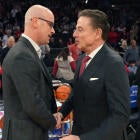
5. UConn
Will UConn advance to a fourth Final Four in a five-year span? It's plausible so long as Dan Hurley is running the show, though trusted lieutenants Luke Murray (now the Boston College coach) and Tom Moore (enjoying retirement) are no longer walking the halls in Storrs. Still, UConn is 126-28 over the past four seasons with an 18-2 NCAA Tournament record. The "Can Dan do it again?" storyline will be there so long as UConn's in the mix for a top-three NCAA Tournament seed.
The Huskies boast the Big East Preseason Player of the Year (Silas Demary Jr.) and bring back sophomore Braylon Mullins, who cashed what is fated to go down as one of the biggest shots in Elite Eight history. That's a great place to start. Here, UConn fans, watch it again. I know you will.
OH MY GOODNESS. BRAYLON MULLINS WITH .3 LEFT!!!
— CBS Sports (@CBSSports) March 29, 2026
"MARCH MEANS DRAMA!!!"@UCONNMBB pic.twitter.com/ER2wWCg3Ds
Until this week, the expectation was that shooting guard Solo Ball would sit this year on a redshirt/rehab season. Then this tweet dropped on Monday and now it seems like Ball is eventually going to be back on the floor for Connecticut at some point sooner or later. More reinforcements are ready, notably Colben Landrew, the highest-ranked freshman in the Big East. The name Hurley's really excited about is Seton Hall transfer Na'jai Hines, a low-post force who could grow into a Big East-wrecking beast by February. He gives the Huskies credence as a preseason top-five team in the country. Former Duke forward Nik Khamenia joins Hines as transfers who will start on Day 1 and anchor the frontcourt. Khamenia should get the additional opportunities he desires and seems like he's wired to be a Hurley guy. A familiar name back in the mix is wing Jayden Ross, who has patiently waited for his time and could take a leadership role. A fun bonus: Hurley scheduled up, with a title-game rematch against Michigan set for the opening Friday of the season.

6. Texas
Sean Miller has one of his strongest rosters in two-plus decades of running programs. The Longhorns are the preseason No. 2 pick in the SEC and doubly hold that spot in my SEC rankings, led by returning big man Matas Vokietaitis, who averaged 15.6 points and should vault into the top 10 of all big men. Texas beat the portal posse in the spring and got strong talent early, most notably Colorado transfer guard Isaiah Johnson (16.9 ppg), TCU bruiser David Punch (14.1 ppg at TCU), savvy Saint Mary's guard Mikey Lewis (13.9 ppg) and work-in-progress wing Elyjah Freeman (9.2 ppg at Auburn).
The summer brought a welcomed addition one year ahead of the pace: 17-year-old Marcus Spears Jr. In contention to be the No. 1 player in the high school class of 2027, he reclassified and will come off the bench in a developmental role this season. Spears will be joined by another potential future NBA player in Austin Goosby, who may start in November due to Lewis missing the opening weeks of the season because of injury. Texas seems to have a little bit of everything on this roster, except for year-over-year continuity. The same thing could have been said about Michigan last season. Fun-looking squad.

7. Houston
3.4. That's Houston's average KenPom.com finish over the past five seasons. It's the best of any team in that span. The Cougars have made seven straight Sweet 16s, the longest active streak for any team. Other active streaks? Five straight seasons of 30-plus wins and 127 consecutive weeks being ranked in the AP Top 25. So while Kelvin Sampson's program is undergoing serious roster turnover, the logical lean is to again bank on Houston being among the best teams the sport has to offer until the winter of Sampson's career proves otherwise.
LSU transfer Dedan Thomas Jr., who was hampered by injury but should be good for 15-plus points per night, will likely star for Houston. Though he has not been super-efficient, Thomas was a fun, mostly reliable initiator at point guard all three seasons with UNLV and LSU. He'll aim to come close to matching the previous All-American talents of Jamal Shead, Kingston Flemings, Marcus Sasser, LJ Cryer and Quentin Grimes. Yes: That's five All-Americans in the past six seasons for the Coogs. Toss in former Defensive Player of the Year JoJo Tugler, a wicked-underrated big-man transfer in Delrecco Gillespie (Kent State) and freshman 7-footer Arafan Diane, who is going to be one of the best defensive big men by next year, and there's every reason to believe there won't be much falloff for Houston in 2026-27.
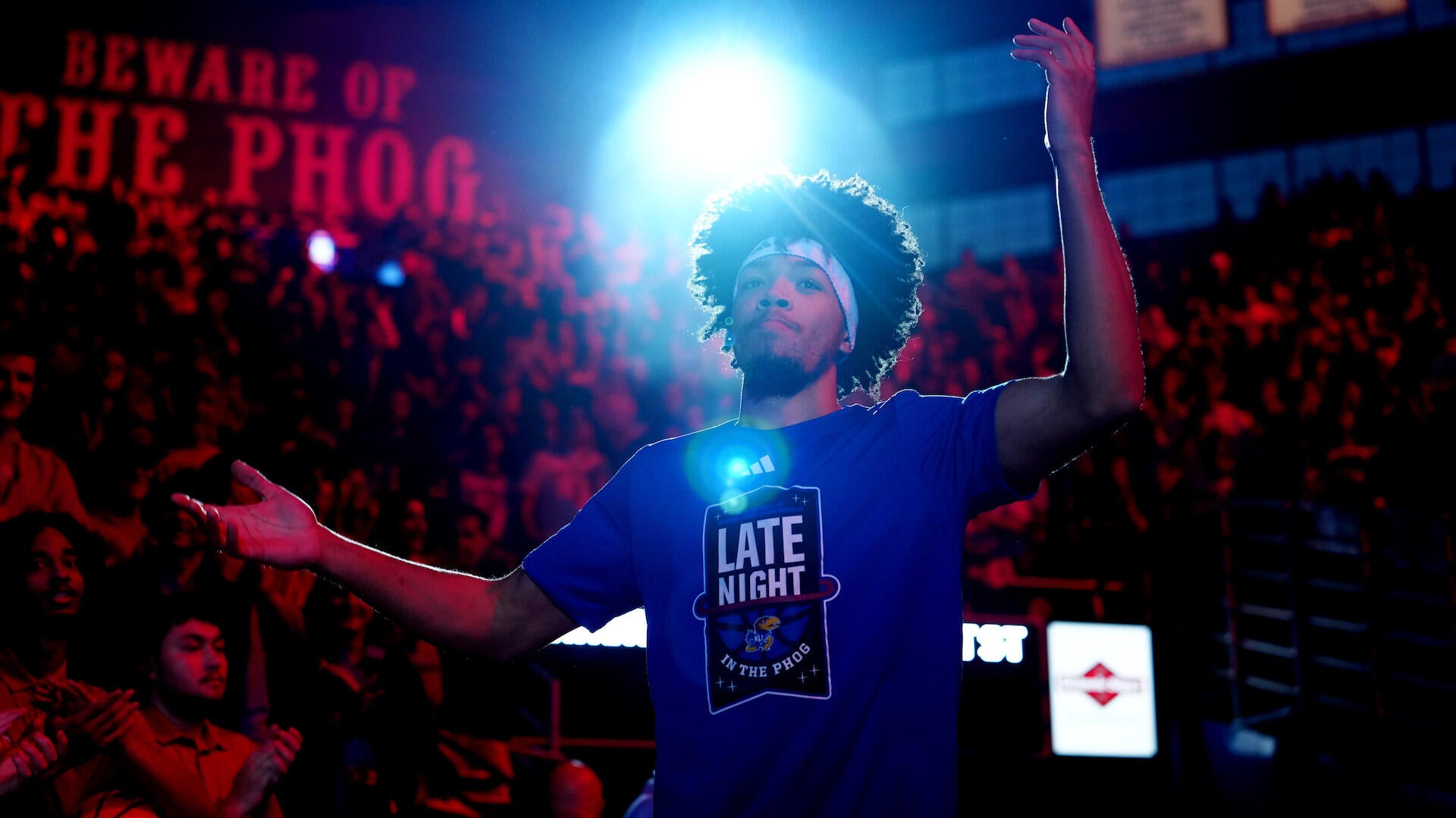

8. Kansas
Two months ago, Kansas had zero chance of being in the top 20. What changed? Three players going to court to sue for an extra year of eligibility, of course. Purdue mainstay Trey Kaufman-Renn trying to get a sixth season is a mockery of the system, but a judge decreed him eligible … for now. If he stays on the floor, the Jayhawks have a top-30 player. The other two cases are Jayhawks of recent vintage: Tre White and Melvin Council Jr. All three are no-brainer starters, and they totally flip Kansas' 2026-27 outlook — IF they remain eligible.
For all of the safety-net veteran acquisitions in the fall, the main attraction for the second straight year in Lawrence is a freshman. Darryn Peterson wound up having the most frustrating one-and-done campaign since Ben Simmons at LSU. Enter Tyran Stokes, who Bill Self told CBS Sports is the most naturally gifted passer he's ever rostered (insane praise considering Self once coached Deron Williams at Illinois). Should Stokes prove to be the best freshman in America, Kansas' chances of making a Final Four run become real ... as does Self's potential farewell tour. If the Jayhawks are good, it would not be shocking for Self to go out on top (relatively speaking).

9. Gonzaga
Congrats to Mark Few, who was inducted into the Naismith Hall of Fame in August. He'll burnish that reputation yet again when Gonzaga makes a 27th consecutive NCAA Tournament. New conference, same story for the Zags. The Pac-12 is back, and its incoming bully will have two high-end returnees (Braden Huff, Davis Fogle) plus a slew of transfers to keep the Bulldogs amongst the sport's Final Four hopefuls. In Huff, Gonzaga returns pretty clearly the best player outside the Power Five. He's an efficiency monster who needs to stay healthy the entire season in order to give Gonzaga a shot at a top-four NCAA seed. (Huff played in 18 games last year and was sidelined with a knee injury in January that wound up being more serious than initially disclosed.)
Xaivian Lee (Florida), Chauncey Wiggins (Florida State) and Javon Bennett (Dayton) are all relying on a gavel to get another year. A huge factor who isn't reliant on a lawyer: Arizona State big Massamba Diop. He seems to be the portal pickup most crucial to GU's goals of reaching another Sweet 16 (at minimum). The toughness quotient continues with Houston guard Isiah Harwell, plus French point guard Nathan De Sousa, who was borderline necessary after Gonzaga lost Mario Saint-Supery to a mid-July defection back to Spain. Spanish forward Izan Almansa was also cleared in late October and lifts GU's ceiling. This is an ambitious preseason slotting, but it'd be a shock if GU wasn't a top-20 program again if the guys who are banking on judges to keep them eligible remain eligible.

10. Michigan State
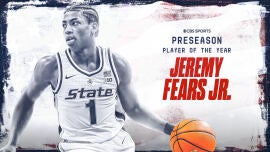
Tom Izzo is 71 years old and has a point guard who's been voted as the best player in the sport heading into the season. Not a bad place to find yourself in the December of your career. Jeremy Fears Jr. led the nation in assists last season (9.4 per game) and is only the third player in the last 30 years to lead the country in assists and return the following season. The previous two were TJ Ford (who went on to win the Naismith Award for a Final Four team at Texas) and Doug Gottlieb at Oklahoma State.
Beyond Fears' prospects and how valuable he'll be at the 1, MSU is a practical pick to round out the preseason top 10 because the Spartans bring back 65% of their minutes from a team that earned a No. 3 seed and won 27 games. The only high-major team with a larger portion of returning minutes can be found at No. 1 in these rankings. Coen Carr's high-flying carnival of dunks is back, but look for his game to expand (while also basking in his dunks. Please dunk on 87 people this season, Coen Carr). Kur Teng (7.5 ppg), Jordan Scott (5.9 ppg) and Cam Ward (5.2 ppg) will all increase their scoring load. The top transfer is Anton Bonke, who probably needs to be able to adjust to Big Ten play at a quick pace to give MSU a chance to level or best Illinois, Michigan and UCLA for the top spot in the league.

11. Virginia
Ryan Odom wasted no time getting the Cavaliers back into relevance with a 30-6 season that included a No. 3 seed in the NCAA Tournament and a second-place finish to Duke in the ACC. Still, there is room for improvement. Virginia was the only high-major team ever — ever! — to log at least 30 wins in a season and fail to beat more than one ranked team. Last season figures to be a fun tune-up for what should be a long tenure for Odom in Charlottesville. He gets the blessing of bringing back maybe one of the 15 best players in the sport, 23-year-old Thijs De Ridder, a buff forward who could be in line for better than 18 points and eight rebounds per night.
De Ridder and center Johann Grunloh are grown-ass men who will win way more battles than not. All-ACC guard Sam Lewis is also back, but the supreme breakout candidate is Chance Mallory, who's incredibly strong for his size (5-foot-9) and will emerge as one of the best sophomore guards in America. Odom's Wahoos can run and shoot; their 80.4 points per game last season was nearly 16 points better than the year before he arrived. Combine that with a Division I-best 6.4 blocks per game and so much production returning? An easy call to slot this team on the cusp of the top 10.

12. Tennessee
The 103-64 exhibition evisceration at Duke on Oct. 20 was ... jarring. It's smart not to overreact to meaningless games, but Tennessee's no-show did tilt many a head. Still, it's not hard to believe Rick Barnes' $20 million-plus roster will get him near the top of the SEC and be one of the better offensive teams in the country. It might be Barnes' best offensive team at Tennessee if the pieces prove to fit by league play. Defensively? This will not be a vintage Barnes group. He clearly traded off one side for another after making a third straight Elite Eight without breaking through to the Final Four. Tennessee has infamously never made a Final Four (its 34 NCAA Tournament wins are the most by any school without one).
If this group is to be the one that finally does it, here's the cast to know. The best get of the portal class is Wake Forest wing Juke Harris, who averaged 21.4 points and will likewise lead the Vols in scoring. He'll be set up by VCU transfer point guard Terrence Hill Jr., who is also capable of dropping 20 on anyone. The same is true of Notre Dame combo guard Jalen Haralson, who had a green light on a bad team last season. Cal forward Dai Dai Ames put up more than 16 per night, and 3-point sniper Tyler Lundblade, via Belmont, will be one of the best off-the-bench instant-offense guys in the country. Defensive stalwart Miles Rubin is looking for a reputation reboot after not making the most of his sophomore season at Loyola Chicago. Oh, and UT is still trying to get veteran big Jalen Washington cleared to make their case even better as a Final Four contender. So. Many. Pieces.

13. St. John's
The Johnnies' outlook on the season got a whole lot rosier less than three weeks before Game 1 when the NCAA cleared 23-year-old British point guard Quinn Ellis. He's got years of high-level international experience and will probably be one of the 10 best floor generals in the sport. Ellis is one of four Red Storm players who have fought eligibility battles heading into the season. SJU's other three (Keyshawn Hall, Reed Bailey and Babacar Sane) are going through the local courts. Whether they all get lawyer'd through, who knows? If they do, St. John's should again rank among the country's best.
What seems likely: Pitino's team is borderline top-10 material overall and eye-to-eye with UConn in the Big East if everyone is cleared and healthy with the top-ranked transfer class. Right before the NBA Draft withdrawal deadline, former Baylor star Tounde Yessoufou committed, giving the Red Storm one of the most talented sophomores in the sport. He'll team up with returnees Ian Jackson in the backcourt and 6-foot-11 Ruben Prey as a stretch big. The forecast would be better had Syracuse transfer Donnie Freeman not gone down for the year in the summer with a torn Achilles, but the Johnnies still have a ton of promise. The international takeover in Queens is even more pronounced than at places like Illinois. St. John's has rostered and/or is attempting to roster players whose home countries include Senegal, Sweden, Hungary, Portugal, Serbia, Nigeria and Greece.

14. Michigan
Has there EVER been an offseason for a recently minted national champion like the one Michigan had over the spring and summer? There's a lot to sum up, but I'll be brief: After enduring the portal wars and building up a hell of a roster, Dusty May was offered the Dallas Mavericks job and left Ann Arbor just days before the NBA Draft … where Michigan saw its entire championship-level frontcourt taken in the lottery. Mike Boynton, who got the job soon thereafter, had to fend off all-comers and managed to keep all but one Michigan player on the roster. In August, Michigan lost five-star inbound freshman Brandon McCoy Jr. to an ACL tear in overseas exhibition play. Through all of that, the Wolverines still have a defensible case as one of the nation's 15 best outfits heading into November.
Final Four Most Outstanding Player Elliot Cadeau will lead the charge, but the name who will pop is sophomore Trey McKenney, a shooting guard who probably flirts with 18 points per game. There will absolutely be nights when Cincinnati transfer big Moustapha Thiam is Michigan's most valuable player. Most don't realize how good Thiam is or how Michigan intends to use him. He's likely to emerge as one of the most immediately impactful transfers in the first month of the season. JP Estrella never blossomed at Tennessee, but he will in Maize & Blue playing at the 4. That quartet of players all rank in CBS Sports' Top 100 And 1. Last season's team is one of the five most dominant of the 21st century (at least according to college basketball coaches). There's no replicating that, but there's enough carryover to see a future in which Michigan still fights near the top of the Big Ten and gives itself another good run in March Madness.

15. Louisville
The Cardinals make their way into the top 16 after landing the No. 2 transfer class. (They paid a LOT of cash for that class, too.) This Cardinals team brings Final Four expectations, though, after the past two seasons brought the 'Ville back to the NCAAs but not to the second weekend. The most cherished incoming player is former Kansas forward Flory Bidunga, possibly the best portal pickup in the sport, who can be one of the nation's most disruptive defenders — he was the Big 12 Defensive Player of the Year — if Kelsey squeezes the most out of his still-improving game.
Bidunga has All-American potential and will be the frontcourt focal point, while the backcourt will be gilded by the high-profile acquisitions of Oregon lead guard Jackson Shelstad and North Carolina mainstay Seth Trimble, who has sued to remain eligible for one final season. Adrian Wooley is back and will likely be worth 10 ppg. More familiar names: Arkansas wing Karter Knox, Iowa's March hero Alvaro Folgueiras and Dayton do-it-all guard De'Shayne Montgomery. Oh, and there's also a 7-foot-2 freshman center who probably has the most natural talent on this roster. We will be talking about Obinna Ekezie Jr. plenty over the next five months. Kelsey had Louisville top-five in 3-point rate while scoring 84.3 points per game last season, its most since 1976-77. This team will also be a scoring bonanza. If they match their 56.5 effective field goal percentage and bump into the top 10 in defense, the Cards will be national title contenders, which they should be anyway after spending as much money as anyone in the sport this year.

16. UCLA
The Bruins are the sleeper pick in a stacked Big Ten. Lead guard Trent Perry is back and figures to bump up from 12.6 points per game. He'll have a backcourt wingmate in Texas Tech transfer Jaylen Petty, who's a fun dude to watch hoop. The frontcourt is where UCLA will be a problematic matchup for most teams it faces. Stretchy Spanish forward Nikola Kusturica has one-and-done talent, but like Joaquim Boumtje Boumtje at Duke and Marcus Spears Jr. at Texas, is too young to be eligible for the 2027 NBA Draft. Kusturica gets to hone his craft with the ever-cranky Mick Cronin while getting good benefits playing alongside a solid big-man veteran in Xavier Booker, who is lurking in plain sight, and Eric Dailey Jr. UCLA was 318th in rebounding last season and should shoot up those rankings over the next five months. Cronin also raved to us at Big Ten Media Day about incoming four-star recruit Joe Philon, who will have good minutes opportunities off the bench in the frontcourt, as will promising Auburn transfer Flip Jovic.
Cronin has averaged 23.1 wins in his seven seasons in Westwood. It would be a shocker if this team, which might have a top-five 2028 NBA Draft pick on the roster, doesn't hit the over on that total by the start of the NCAA Tournament. The key will be to win more away from home. UCLA has not been good outside the Los Angeles area in recent years; it was 17-1 at home last season, though.
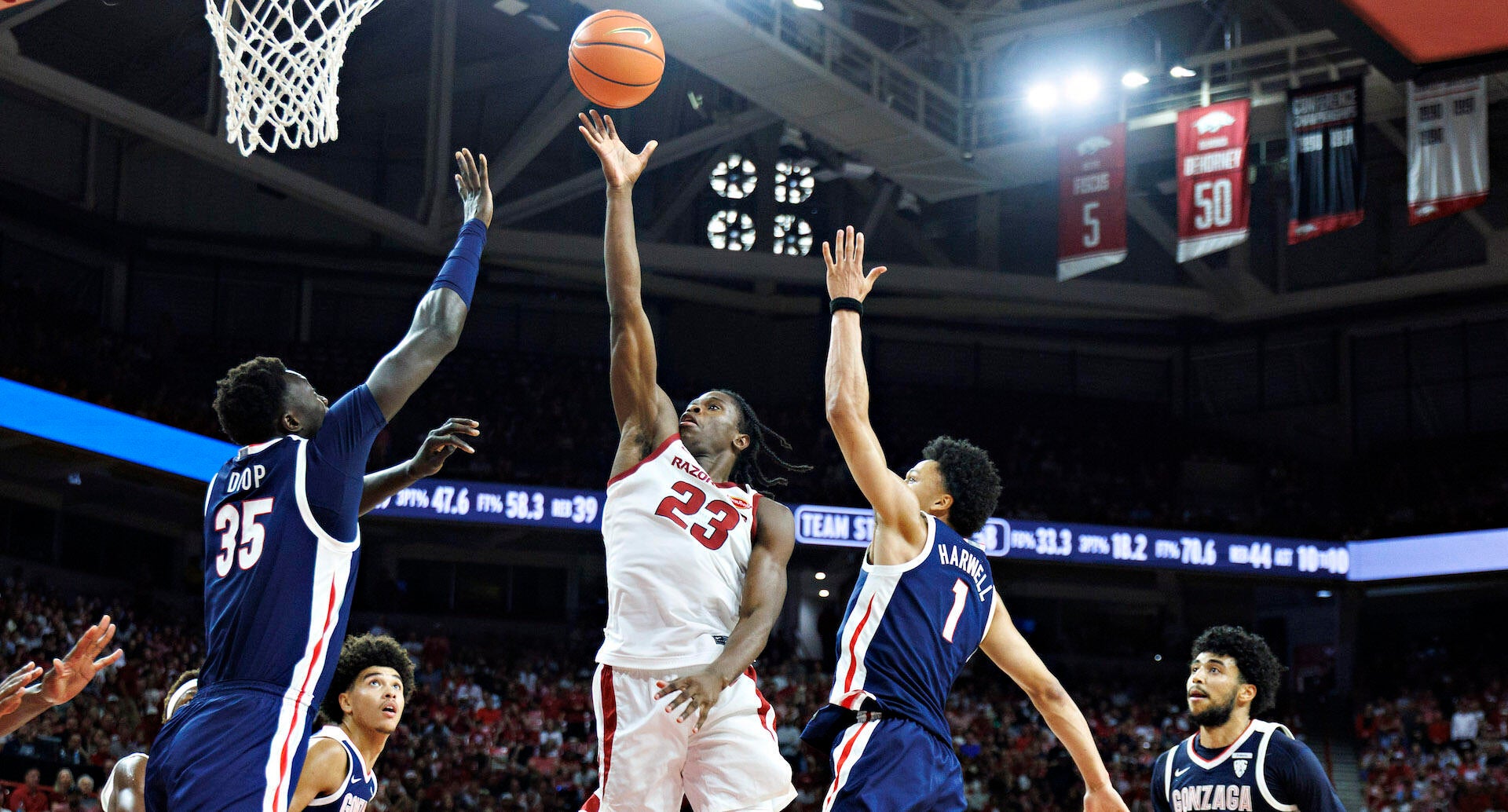

17. Arkansas
In March, for the first time in 26 years, the Razorbacks won the SEC Tournament. John Calipari had Darius Acuff Jr., a top-three must-watch player last season. He's gone to the Sacramento Kings, so we welcome in another infectious talent and the next sure-fire top-10 pick to play for Cal: Jordan Smith Jr. The No. 2 prospect in the Class of 2026 (and Gatorade High School Player of the Year) will be among the best freshman defenders in college ball. His battery life is endless and his game is infectious. Must-watch player and one of seven (!) first-year guys on the roster, including five-star freshman/small forward Abdou Torre and Finnish 4-man Miikka Muurinen.
The returning veteran of note is Billy Richmond, who averaged 11.2 points and 4.3 rebounds and will no doubt improve on those stats. Everyone else is new, including Georgia flamethrower Jeremiah Wilkinson, who had 17.4 points per game for one of the best offenses in the country at Georgia. He'll fit like a glove here. The Hogs are young but should be a lot of fun. Maybe some bumps early but likely to be among the five best SEC teams in February.

18. Texas Tech
There's not a team in the sport with a wider disparity between its ceiling and its floor based upon which players do or do not get a fifth year of eligibility. I'm slotting the Red Raiders at No. 18 with the assumption that Darrion Williams, Donovan Atwell and Jamichael Stillwell all get the friendly judge treatment and play the entire season. Williams doubled back after going to NC State for a season (14.0 ppg). Atwell is trying to return and be one of the best 3-point shooters in his last season of college ball; he hit 45.8% of his triples a season ago. Stillwell was a hoss on the frontline of one of the two best UCF teams of the last 15 years. If they're all available, Tech is a Final Four contender … because JT Toppin will be comin'.
Had Toppin not torn his ACL in February, he probably would have finished second in NPOY voting to Cam Boozer. Toppin was at 21.8 ppg and 10.8 rpg when he got sidelined. We're not sure when he'll return, but mid-December is the hopeful window. Toppin's inclusion on this roster, in addition to the aforementioned three key five-for-five guys, completely alters TTU's outlook. Tech also brought on two 20-point scorers from the lower ranks to ensure the buckets keep raining: PG Cruz Davis was the CAA player of the year at Hofstra and combo guard Dra Gibbs-Lawhorn led the Mountain West in scoring and made 3-pointers (101).

19. Alabama
This is a slight zag on Alabama; Nate Oats' program has finished 14th or better at KenPom in five of the past six years. I still like the Crimson Tide to be a Sweet 16 contender and one of the five best teams in the toughest league in 2026-27. Alabama's riding higher than it's ever been, having peeled off four straight 25-plus-win seasons for the first time in program history. It's also led the nation in points per game three years in a row, something no other high-major has done in D-I history.
After losing to eventual national champ Michigan in the regional semis, Oats managed to reel in the fifth-best overall class of 2026, per 247 Sports. The backcourt is what will get Bama another quality NCAA seed, as Amari Allen and Aden Holloway could prove to be the best guard duo in the SEC. Allen is a first-round NBA talent who put up 11.4 points, 6.9 rebounds and 3.1 assists as a freshman. Holloway is back after a felony marijuana charge led to him having to earn his way back into school and on the team. Bama's fun, new piece is Boise State forward Drew Fielder, a Swiss Army knife addition who will play the stretch 4 in the mold of Grant Nelson from a few years back.

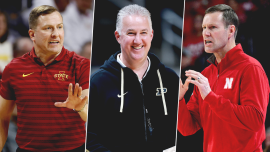
20. Iowa State
Tamin Lipsey's legal battle to get a fifth year of eligibility is up for some debate, but I will guess he gets it and, as a result of that, ISU stays steady in top-25 territory more weeks than not. As CBS Sports recently revealed with its unprecedented look into college basketball spending, TJ Otzelberger gets more out of his roster (which ranks in the bottom six of the Big 12) than just about any high-major coach out there. The Cyclones have won 25-plus games three years in a row for the first time in school history. They also won 11 games by at least 30 points last season, tied for the most such wins by any team in the history of the Big 12.
Familiar faces: Blake Buchanan is back as the rough-and-tumble 5-man, while Killyan Toure's right-shoulder injury will keep him out until January. Toure's a top-end defender, but he absolutely must improve his shooting to expand Iowa State's offensive options. Lipsey — who should be a top-30 player in college basketball — will be a life raft after ISU understandably lost Milan Momcilovic to Kentucky and Joshua Jefferson to the NBA. (Jefferson is the only player in Big 12 history to log at least 500 points, 250 rebounds and 125 assists in a season.) ISU brings on Bradley guard Jaquan Johnson, who was one of eight players in D-I to average at least 16 points, three assists and two steals. He seems like a great culture fit.

21. Baylor
I was way in on Baylor even before October, I swear! But now it seems quite likely that the Bears. Are. Back. No team did more to lift its preseason notions in the past few weeks like Scott Drew's club, which managed to beat the preseason No. 1 (Florida) and the preseason No. 3 (Illinois) teams in a pair of exhibitions that have reignited optimism around Waco. Remember, Baylor's coming off its first season without making the NCAA Tournament since 2017-18. (A reminder that Scott Drew has one of the 10 best records of any high-major coach since 2019-20.)
This team has a pair of brothers — the Mingos — who will team up and try to bring BU back to the top of the Big 12. Dylan is a freshman guard who was a top-15 player in the class of '26. His brother, Kayden, was good for 13.7 points, 4.3 assists, 3.5 rebounds and 2.1 steals playing for Penn State last season. Serious production there, which was also the case with Isaac Celiscar, a Yale forward who will be one of the best glue guys in the conference (13.2 ppg, 6.3 rpg). There's another young face in the mix, Elijah Williams, roaming wing with zeal to his game. Beyond the visions of returning to relevance, Baylor also needs to beat a ranked team to rejoin the polls; the Bears have lost 15 games in a row against Top 25 competition.

22. Villanova
As badly as Villanova fans wanted to see the program continue to sustain itself under Kyle Neptune, last year's immediate turnaround under Kevin Willard (No. 8 seed, 24-9) was proof of why the Neptune era couldn't last longer than three seasons. Now Nova's back into the space where it's projected top-three in its conference, thanks to preseason First-Teamer Tyler Perkins coming back, in addition to Matt Hodge (whose season-ending injury in February torpedoed VU's hopes come March). Gone are Duke Brennan, Bryce Lindsay, Acaden Lewis and Devin Askew, who combined to put up 40-plus points per night, leaving a lot of opportunity for a quality transfer class led by two preseason All-Big East notables.
The first is PF Kwame Evans Jr. (via Oregon), who could be the guy to connect Villanova's defensive prowess. Another player with big expectations is Devin Royal (wing, Ohio State), who will start at the 3 and be a veteran glue guy. Former UIC point guard Elijah Crawford is the one who determines whether Villanova validates this ranking. He can ball out, but how does the jump in league suit him? Two other transfers in the mix, both of whom averaged 16-plus points last season and might pop as double-digit scorers, are former Cornell guard Jake Fiegen and former St. Bonaventure point Daryl Simmons II. Finally, Italian center Luigi Suigo flirted with the NBA Draft, but he's just beginning to understand how to play at an elevated level, so his outlook is interesting — but no guarantee on production in the first six-or-so weeks.

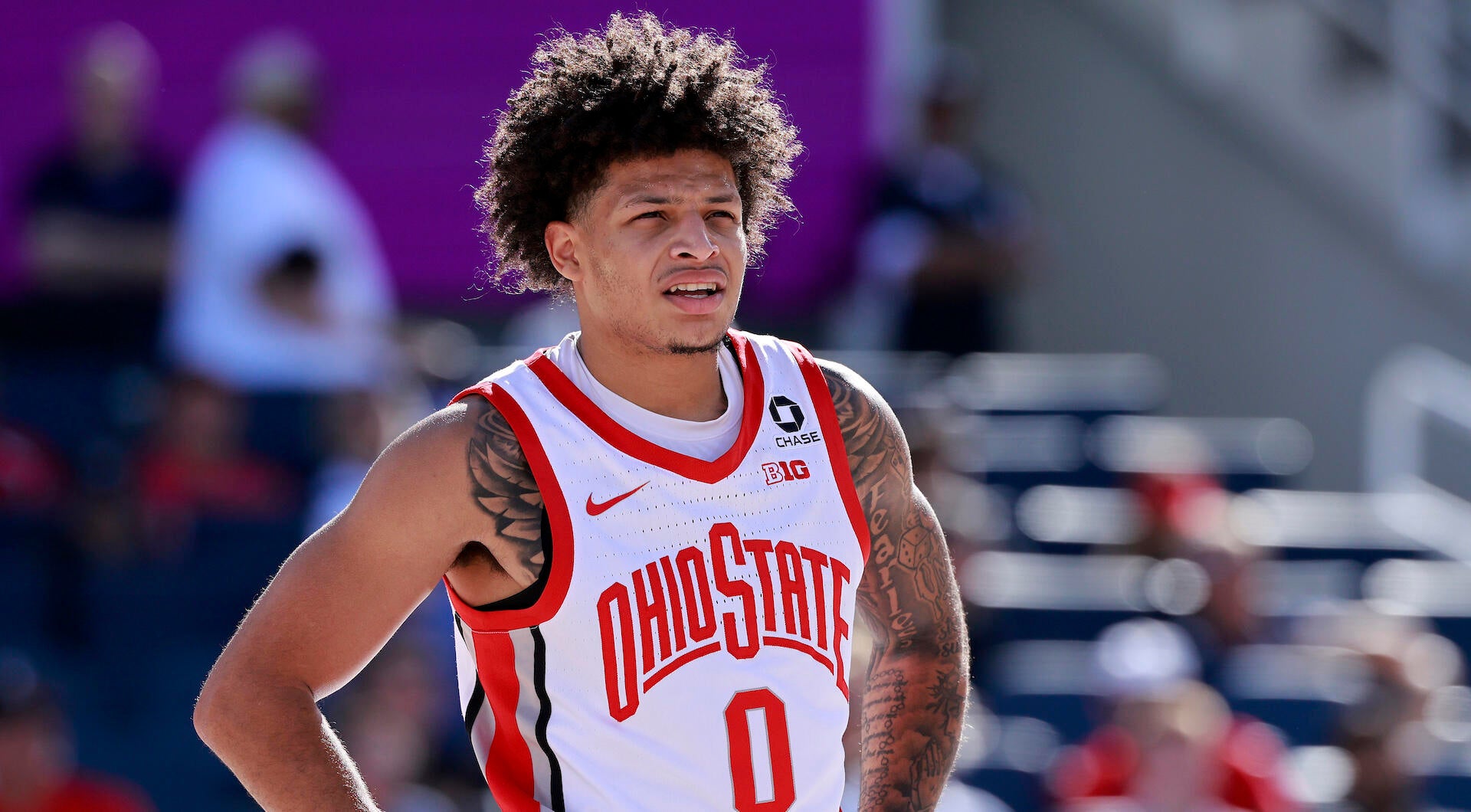
23. Ohio State
There's more talent in Columbus than we've seen in a number of years, which is why I'll be among the biggest Buckeye buyers in 2026-27. Jake Diebler returns John Mobley Jr., a lead guard who put up 15.7 points last season and made 41.1% of his 236 tries from beyond the arc. That spurred the Buckeyes to 79.3 points per game, the school's best average since 1991-92. Ohio State was built around Bruce Thornton Jr., who became the school's all-time leading scorer, and whose leadership and rock-steady production will have to be replaced by some fascinating fresh faces.
How about a McDonald's All-American to help star anew? Anthony Thompson was the No. 7 recruit of 2026 and is a splendid scorer. I'm not sure if he'll pop immediately, but he's more likely than not to turn into a top-20 NBA pick. Thompson's the first five-star to commit to Ohio State since Jared Sullinger in 2010, by the way. He'll have Cal transfer Justin Pippen (14.2 ppg) and Duquesne guard Jimmie Williams (15.1 ppg) to tutor him as a 3- or 4-man in a wing-heavy Buckeyes offense. I won't get out of this paragraph without invoking Amare Bynum, a 6-8, 240-pound paint bully who helped Ohio State shoot 53% in the colored area a season ago and is a top-20 player in the Big Ten.

24. Saint Louis
After turning down a couple high-major opportunities, Josh Schertz was given an eight-figure budget to retain his talent at SLU and bring along reinforcements (inbound from South Carolina, Marquette and Colorado) to make this one of the best Billikens teams ever. The Billikens crack my top 25 just days removed from Robbie Avila getting a temporary restraining order to play a fifth season. If Avila's going to get another year of college ball in, this is definitely the best mid-major on paper entering November.
SLU has five of its top seven back, led by Trey Green, Amari McCottry, Kellen Thames and Ishan Sharma. They helped Saint Louis hit the 100-point barrier eight times last season, which set an A-10 record. Saint Louis also ranked top-five in field goal percentage (51%) and field goal percentage defense (38.3%). The only team in the nation that did it. There's so much to be optimistic about here, especially considering the beautiful style of offense Schertz deploys and how well his guys endear themselves to said style. Schertz has 114 wins in his first five seasons at the D-I level. I suspect this is his best one yet.

25. Vanderbilt
Vanderbilt has never had a preseason First Team All-American. Until now. Tyler Tanner (19.5 ppg, 5.1 apg, 2.4 spg) could be the most valuable player in the sport. His return to Nashville and his inspired, resourceful and quick-witted two-way ability is unique in the context of this season. There's no one else like Tanner in college hoops at the moment. He's probable to carry Vanderbilt to another quality NCAA seed, which is why I'm putting the Commodores as the final team in my preseason top 25. Tanner put on 10 pounds of muscle and is ready for a massive season. His closest friend on the team is also Vanderbilt's second-best returning player, wing Chandler Bing, who checks in on the short list of top breakout players in the SEC.
Transfers who project as starters: Combo guard Ace Glass (16.4 ppg at Washington State), PF Berke Buyuktuncel (gruff defensive presence at Nebraska) and center Bangot Dak (11.5 ppg, 6.5 rpg at Colorado). Vandy has no Sweet 16s since 2007 and only six ever in program history. It almost got there in March in that classic against Nebraska. Tanner won't have to do it all, but he'll probably have to do more than most others to get the 'Dores into a rare second weekend experience in the big tournament.

26. Purdue
For the first time in 80 weeks, Purdue isn't ranked in the AP Top 25. The Boilermakers were left out of the preseason poll after losing Braden Smith, Fletcher Loyer and Trey Kaufman-Renn, otherwise known as the winningest trio in program history. They won 30 games and made the Elite Eight in their black-and-gold swan song, a strong finish that understandably leaves Purdue a notch or two lower as it begins a new era.
Matt Painter didn't go anywhere, though. As long as he's on top of his game, Purdue shouldn't fall off the national radar. Shooting guard CJ Cox is ready to step into a starring role as a ripe breakout candidate. Israeli combo guard Omer Mayer will also see a huge uptick in minutes; Mayer's sophomore season could be Purdue's barometer for success. Caden Pierce was previously an Ivy League stud for Princeton, and now he'll try to finish off his college career as a high-stamina Big Ten playmaker. Daniel Jacobsen is now the starting man in the middle after averaging 5.5 points last season. It's going to take some time to get this team moving in fourth gear, but I'd be surprised if there's a massive fall-off.

27. Nebraska
Nebraska not only won an NCAA Tournament game for the first time in school history — won two of 'em, in fact — it also hit 28 wins. That's a program first as well. Second-place finish in the Big Ten after being picked 14th out of 18 teams a year ago, too. Fred Hoiberg was at the controls for the kind of season that makes following college basketball special and worthwhile.
Now, NU has lost some important players. It's hard to see this team being just as good this season as it was the last. But two top-100 guys are back. Pryce Sandfort (18.1 ppg) will try to best his program-record 129 made 3s from last year. Sandfort's such a gamer and doubles as a tempting dark horse to be the Big Ten POY. He'll team up again with forward Braden Frager, who hit the go-ahead field goal with 2.2 left in the second round win over Vandy. There are some TBD portal pickups (South Dakota State center Damon Wilkinson needs to translate), but Nebraska should be going to a third NCAA Tournament in a four-year span for the first time.

28. Kentucky
Only at Kentucky could a coach, who's an alum, be on the hot seat after starting 46-26 while claiming three NCAA Tournament wins in his first two seasons. Mark Pope's actually done a solid job overall — he just hasn't brought Kentucky back to the top of the sport, at least not yet. UK's also a tad lower here than you'll find in some other places. But no one's got Kentucky preseason top-10; that's also an issue. Whatever. The roster looks plenty capable and UK can be a compelling team again, ideally one that's not burdened by the injury issues from last season.
After plenty of roster-assembly melodrama in the spring, Pope wound up with a team that's got size, quickness, shooting, bounce and camaraderie. Milan Momcilovic enters the season as the best 3-point shooter in the sport (48.7% from deep); his commitment to UK in June significantly altered the team's prospects. The biggest point of intrigue is how Pope's system benefits a pair of on-ball lead guards who will have to split those duties. Zoom Diallo comes over from Washington and Alex Wilkins comes over from Furman. They're similar players who both put up more than 15 points and dished more than four assists per game at their previous spots. Sophomore stud Malachi Moreno came back and needs to be a 14-and-10 guy as a sophomore to bolster UK's toughness quotient.

29. Missouri
Tigers are a fun Elite Eight dark horse if everyone is healthy and cleared across the board. There's no telling if Mark Mitchell gets a full fifth year by way of a judge's ruling, so this ranking comes with the caveat that it's unclear if Mitchell (18.3 ppg, 5.2 rpg, 3.6 apg last season, the first SEC player to clear 18/5/3 in six years) will get to play the whole year. DePaul transfer CJ Gunn is also in court (and like Mitchell, currently eligible) to play a fifth year. If both are available for 30-plus games, Missouri seems to be a top-30 team.
As for the rest of the roster, get ready to learn Jason Crowe Jr., buddies. The freshman (ranked fifth in the class of 2026) is going to be one of the highest-scoring first-year players across college hoops. Teammate Toni Bryant, who's also a five-star prospect, plays the 4 and will also start. They'll learn from Trent Pierce, a 10-points-per-game guy who is the only returning starter if Mitchell has to abandon ship. Dennis Gates has put Mizzou into the NCAAs two straight years for the first time since 2009-13. Now it's time to get in and advance; the last two appearances were one-and-out for the Tigers. (Missouri is strangely 1-9 in its last 10 Big Dance games.)

30. BYU
Kevin Young in his first two seasons running a D-I program in the Big 12: Two No. 6 seeds, a 3-2 NCAA Tournament record and KenPom finishes of 24 and 26. Oh, and a No. 1 overall pick. Yep, it's going well. The '26-27 tour should bring more joy, as Rob Wright III returned and, I think, is a First Team All-America candidate if he has the full green light, which I expect to be the case. Wright dropped 18.1 points per game last season with AJ Dybantsa on the roster. Wright seems keen to crack 20-plus over the next five months. He'll also have another lottery pick flanking him: Bruce Branch III is the No. 6 prospect in 2026 and a small forward who's got a smooth stroke and solid defensive upside.
Collin Chandler is in Provo after two years at Kentucky; he committed to BYU back when Mark Pope was the coach there. Chandler will likely cash at least 2.0 3-pointers per game. Jaxon Kohler is the five-for-five factor. After trying to make the NBA, Kohler is seeking a bigger payday and way more playing time as a starting forward at BYU. If he's involved, this is a near-lock single-digit NCAA seed.

31. Miami
The Hurricanes are a chic pick to be top-20 quality in Jai Lucas' second season. Viable hypothesis! The U was on the No. 7-line and won 26 games in 2025-26, collectively authoring one of the best single-season turnarounds ever. Miami was 7-24 the year prior, the +19 win flip tying the record for the largest single-season swerve in 60 years. Lucas returns Shelton Henderson, a former five-star high school prospect who I think will be a top 40-50 player. His output could match veteran Malik Reneau, who is suing for another season and makes Miami an ACC contender if he's available from November through March.
Miami could have one of the five best front lines in college basketball if Henderson levels up, Reneau is just as good as last season and Georgia center Somto Cyril (9.3 ppg on 75.9% shooting, plus 2.2 bpg) continues to eat iron. Cyril had 83 dunks last season, tied for most in college hoops. The Canes have another option on the wing who's going to be the wild card. Caleb Gaskins might be a top-25 NBA Draft pick if he's uncorked and allowed to fully explore the space. *Touches earpiece* I'm still not done with the playmakers in this locker room. Acaden Lewis left Villanova for the Coral Gables and objectively begins the season as one of the 10 best sophomores in college basketball.

32. North Carolina
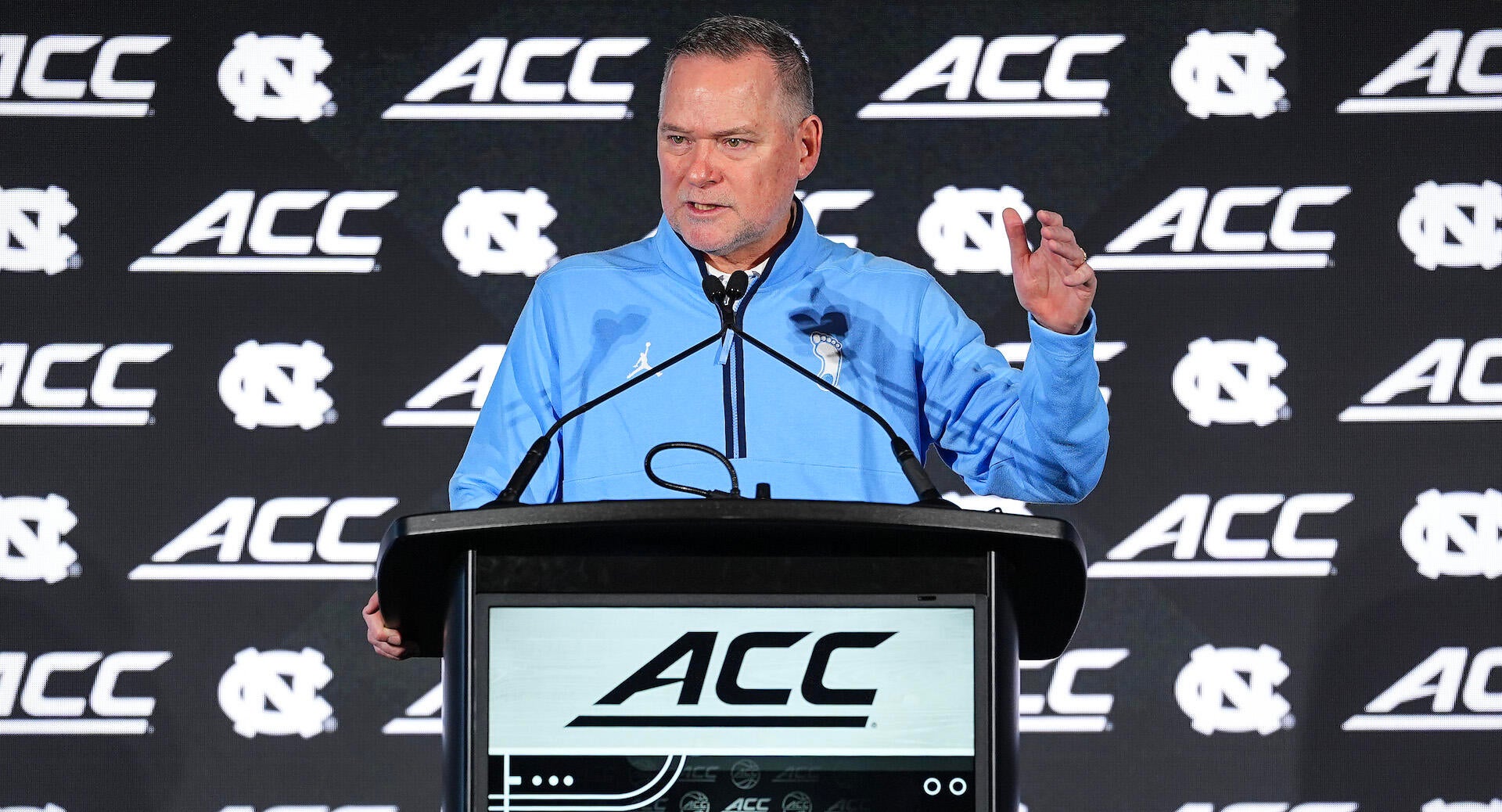
Blue blood hires a coach with no experience running a college program but who spent decades in the NBA and won a world championship with one of the best players in history. Yeah, I'm putting UNC in the top five category for Most Interesting Teams of 2026-27. Michael Malone was provided a budget just north of $20 million and didn't get a roster that was ranked in the preseason, but that doesn't mean this has to be an experimental trial season for Malone. Carolina has the firepower to prove it will wind up approximately where I've slotted it: a top-four team in the ACC right away under Malone.
If it's going to do that, though, then the transfer gets can't be half-measure kind of guys. Losing out on Henri Veesaar to the NBA was a dagger, but Jarin Stevenson returned as a starting-level 4-man, at least. Be it Matt Able (8.8 ppg at NC State), Neo Avdalas (12.1 ppg at Virginia Tech) or Terrence Brown (19.9 ppg at Utah), the Heels have three players who will all have multiple nights of 20-plus-point outputs. This portal club ranked No. 8, per CBS Sports' analysis. Five-star 5-man Sayon Keita could be a first-round pick come 2028. He's got a 7-5 wingspan and is springy. Maximo Adams is a 6-7 SF who's going to get plenty of burn as well. This is a good roster that could be a No. 6-seed-level which, ironically, is where Carolina was in March before Hubert Davis' team blew a 19-point lead to VCU in the first round and put UNC in this position.

33. USC
Eric Musselman averaged 25.6 wins in his first eight seasons at Nevada and Arkansas. What's more, each of those campaigns cleared 20 victories. But the past three years have brought a downturn. No 20-win years, no NCAA bids and a 51-49 mark combined in his final year at Arkansas and his first two with USC. The ship has to head in a new direction, and I very much suspect it will. Too much talent and opportunity this roster to fritter the season away.
After the melodrama from last season, Musselman was deliberate in who he sought to have in his locker room. The Trojans get the benefit of a healthy Rodney Rice (20.3 ppg before going out for the season before December) and an improving Alijah Arenas to build off in the backcourt. Forward Jacob Cofie is a very good defender … while incoming wing KJ Lewis is even better as a lockdown dude. I like that. The big-man brotherly duo of Adonis and Darius Ratliff committed from across the country, trading out White Plains, New York, for the Cali coast. Really promising duo. And though he won't be back from injury until January, center Eric Reibe (UConn) will lift USC's ceiling once Big Ten play is well underway.

34. Providence
Bryan Hodgson quickly proved he had the goods to win immediately at Arkansas State and USF, which is what led him up the East Coast to replace Kim English at PC. Hodgson speaks bluntly, just like his former boss Nate Oats, and wants to represent that PCBC (Providence College Basketball Community) mindset. With eight new guys in the fold, the Friars feel every bit the wild card of the 2026-27 Big East.
With that in mind, who's going to be the standout Friar over the next five months? Miles Byrd is the one. The former San Diego State Aztec arrives via a cross-country flight as a switchable and ultra-durable wing who will be the defensive spirit of this team. He's also likely to jump from 10 points/game to 13 or 14. He'll be set up by Malik Mack, the starting point guard who has familiarity in the league after a couple of years at Georgetown. Those two were welcomed in by Ryan Mela, a Friars holdover from the English era who will start at the wing and probably be good for 10-plus points per game. Six-foot-11 transfer Arrinten Page is expected to start at center. One more name giving PC viability heading into the season is Devin Vanterpool, a lead guard who averaged almost 16 points last season at FAU.

35. Marquette
Marquette is coming off a god-awful 12-20 campaign that had to be Shaka Smart's worst nightmare, professionally speaking. So, do the Golden Eagles bounce back into the top four of the Big East? I think it's going to happen, as do most other prognosticators across the country. Smart might have the most valuable player in the conference in sophomore point guard Nigel James Jr., who could be outstanding. Despite the bad '25-26 go of things, Smart has a loyal culture in Milwaukee. James should shine alongside fellow sophomore Adrien Stevens, who hopes to hit 3-pointers at a 40% clip.
The Golden Eagles have nine back from last season, meaning there's more year-over-year consistency here than just about anywhere else in college basketball. Royce Parham (12.5 ppg), Stevens (7.9 ppg) and Damarius Owens (4.8 ppg) are the most notable guys back. But the portal certainly did giveth: Sananada Fru, a stretch 5 who cost a pretty penny, is the key incoming transfer and possibly the guy who can get MU back into the NCAA tourney. The other transfer is Nolan Minessale, a muscle-bound 3-man from St. Thomas who scored nearly 20/game in the Summit League.

36. VCU
If SLU doesn't win the Atlantic 10, it's probably going to be VCU. The Rams can match the Billikens' returning firepower, led by Lazar Djokovic, Nyk Lewis, Brandon Jennings and Michael Belle. Terrence Hill Jr. is no longer here (he was way too good and Tennessee was going to pay him way too much for him to stay in Richmond), but there's enough talent in the cupboard to expect VCU makes a second straight NCAA tourney under the same coach for the first time since ... Will Wade!
Last season, Phil Martelli Jr.'s team ranked 51st in offensive and defensive efficiency last season; I'd bank on both of them nudging up. The Rams brought over Blake Harper from Creighton, and I suspect he'll have his best college season yet. The program is riding high after averaging 80.8 points per game, winning 17 of its final 19 and pulling off a 19-point comeback against North Carolina, the largest first-round rally in NCAA Tournament history. For the 27th straight season, VCU will finish above .500.

37. Indiana
The Hoosiers were one of the final bubble victims in the 68-team tournament era. Indiana lost six of its last seven to finish with just 18 wins and come up short in Darian DeVries' opening tour. IU's NCAA Tournament drought (last trip was in 2023) should end in March of 2027, though. DeVries was given a big budget to go and bulk up the Hoosiers' bona fides. Two crucial frontcourt adds were Alabama PF Aiden Sherrell (11.1 ppg, 6.2 rpg) and SMU C Samet Yigitoglu (10.7 ppg, 7.9 rpg). IU made 60.3% of its 2s last season; I'd bank on DeVries keeping his team near that clip.
The 3-point shot needs a shot in the arm, though. Indiana was a middle-of-the-pack shooting team from 22 feet-plus. Notre Dame transfer Markus Burton, Nova transfer Bryce Lindsay and Georgia Tech transfer Jaeden Mustaf aren't knock-down distance shooters, but all can create offense and don't clog the second level. Up the defensive intensity, tinker with the rotations and Indiana will be somewhere between fifth and eighth in a Big Ten that's going to send at least 10 to the NCAAs.

38. Grand Canyon
The richest mid-major roster in college basketball cracks my top 40. Bryce Drew was able to spend in the vicinity of $12 million this offseason, according to sources, and as a result brought in one of the best (potentially the best) portal classes by a non-power-conference school in history.
The Antelopes are in the Mountain West and figure to be the best team in that league, which has been torn apart due to the resuscitation of the Pac-12. GCU boasts transfers from St. John's (Dylan Darling), USC (Amarion Dickerson), Wake Forest (Omaha Biliew) and is still waiting on two more in five-for-five cases to clear up, including leading scorer Jaden Henley, who averaged 17.7 points despite shooting a messy 26.8% from 3. Last season saw GCU win 20 games in its first year in the Mountain West. Now, with the exodus of SDSU, Boise State, Colorado State and others to the Pac-12, this looks like the best team in the remade MW, even if the big question is how good it can reliably shoot the 3.


39. Wisconsin
In the last 11 seasons under Greg Gard, the Badgers' average KenPom finish is 30th. In all but two of those years, Bucky had an NCAA Tournament-level team. But this season will mark 10 years since the last time we saw Wisconsin reach a Sweet 16. I expect another solid voyage in Madison with another NCAA bid for sure, but the roster could be hard-pressed to be at the No. 7 seed level or better. The overall class is ranked 84th, per 247 sports. Who's going to step up and help Nolan Winter?
The 7-foot Winter is poised to set personal bests; I expect him to be a 15-and-10 guy and rank among the better bigs in the conference. The up-transfer situation that has my attention is Eian Elmer, who was good for almost 13 and 6 with Miami University last season and a massive part of the RedHawks' undefeated regular season. He'll replace Nick Boyd, who was an All Big Ten-caliber guard, not to mention the dagger departure of John Blackwell to Duke. Those two were the first Big Ten duo to each average 19-plus points since Juwan Howard and Jalen Rose at Michigan in 1993-94.

40. West Virginia
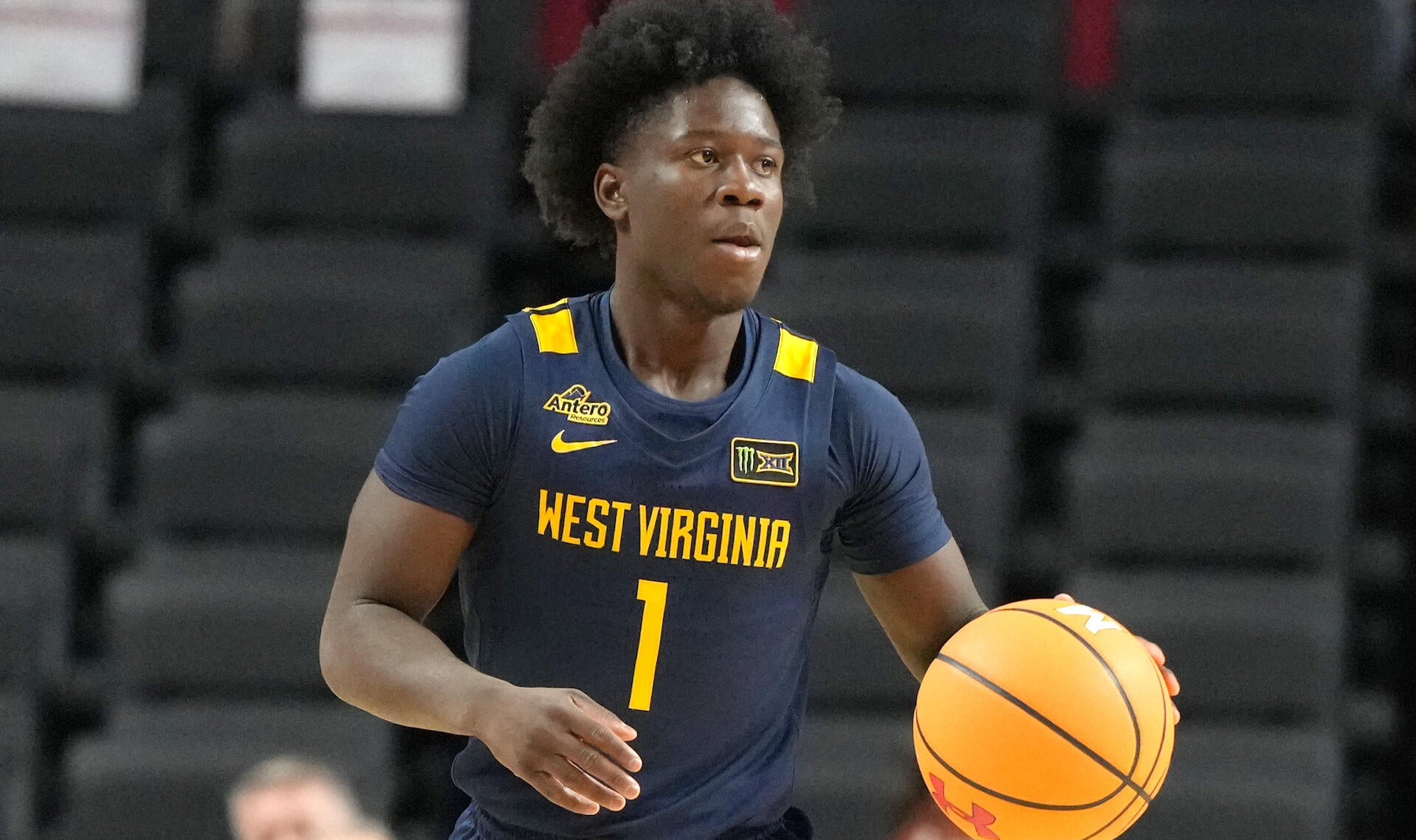
I get the sense Ross Hodge is going to make a name for himself over the next five months. Put me down for the Mountaineers making the NCAAs with some room to spare after winning 21 games last season, tied for the program's most since 2017-18. Hodge's specialty is suffocating defense. WVU ranked third in points allowed in the Big 12 (65.7). That number should nudge closer to 63 in 2026-27.
Don't confuse the defensive tactics for a lack of offensive gusto, though. West Virginia took 43% of its shots from beyond the arc, which ranked near the top in the league. WVU needed some more talent to flesh out the particulars. Fortunately, the 'Eers have a freshman point guard who didn't make our Top 100 And 1 players list, but I bet you will be in the top 60 a year from now. Miles Sadler is a ball of fun and going to be one of the highest-usage freshman lead guards. Joson Sanon comes over from St. John's and Brenen Lorient would be a huge bonus if his five-for-five cases wins out, which is the expectation in Morgantown.

41. Auburn
Steven Pearl got the Auburn job just weeks before the start of last season and wound up having the toughest strength of schedule. The Tigers went 17-16 and missed the NCAAs before winning the NIT. That late-season run, which wrapped with Auburn at 22-16, wound up being an important vibe shift to ensuring Tahadd Pettiford (15.4 ppg, 3. apg) and Kevin Overton (14.1 ppg, 3.3 rpg) returned, giving Auburn one of the best backcourts in the best conference in college basketball.
Auburn feels like it's going to be on a similar track as last season: plenty of big wins but an unavoidable heap of losses to really good teams. The Tigers' big issue that has to get resolved is their paucity of reliable shots around the tin. The Tigers made just 53.5% of their layups (worst in the SEC) and shot 61.8% overall four feet and in, which was in the bottom tier of power-conference teams. The 6-8 Thomas Dowd (via Troy), 6-10 Owen Freeman (Creighton) and 7-1 Bukky Oboye (Santa Clara) comprise the overhauled frontline.

42. Oklahoma
Porter Moser brought something interesting up to me at SEC Media Days: Since taking the Oklahoma job, he spent the first three seasons in the Big 12 and the last two in the SEC. Every one of those years, the league Moser was coaching in rated No. 1. He's the only coach in the country who's been in the top league five straight seasons. As a result, he's been running against the wind, having made just one NCAA Tournament (2025). In multiple years, Oklahoma was among the final cuts to the Big Dance.
That's unlikely to be the case in 2027 with a 76-team tournament and an Oklahoma team that returns one of the sport's most underrated players, Xzayvier Brown. The crafty veteran lead guard put up 15.4 points, 3.3 assists, 3.2 rebounds per game a year ago. He and Derrion Reid (11.7 ppg, 4.4 rpg) are the spiritual center of this team, which will probably be underrated by the masses. The top transfer is Pop Isaacs, who adds to the Sooners' offensive firepower. OU will get a major boost (and would be top-30 territory) if Villanova transfer Duke Brennan and SMU transfer BJ Edwards both litigate their way to a fifth season of eligibility.


43. Cincinnati
Our annual Candid Coaches survey question about the best hire of the cycle led to Jerrod Calhoun receiving the second-most votes this year. Calhoun is a 2004 Cincy alum; this could be the first year of a tenure that lasts well over a decade, Bearcats fans. Thanks to a vast increase in spending power after the firing of Wes Miller, UC was able to be flexible and eclectic in its portal shopping, ultimately bringing on nine players (hoo boy) who scored in double digits last season. That's if MJ Collins can get a judge to give him a fifth season. Collins was one of the best mid-major players in the country for Calhoun at Utah State and would solidify Cincinnati's NCAA tourney hopes. The Bearcats are aching for a return, having last played in March Madness in 2019.
One thing to keep an eye on under Calhoun: success away from home. Miller didn't have an issue at Fifth-Third Arena, going 71-22 in five seasons. It was the 29-52 record outside that building that hard-capped UC's progress (including an 8-26 record against ranked teams).

44. San Diego State
Across the past nine seasons, SDSU's average end-of-year KenPom ranking is a mighty respectable 41st. That's all under Brian Dutcher, who enters his 10th year with a probable top-three team in the new-look Pac-12. With that in mind, Dutcher gets the benefit of the doubt more often than not in my preseason rankings until proven otherwise, though I'll note SDSU narrowly missed the NCAAs for the first time since 2019.
The 'Tecs are light on experience but do bring back a pair of starting-level wings in Elzie Harrington, who had 17 starts as a freshman, and Tae Simmons. Dutcher should mold a tough-as-hell defensive unit again. One player who's going to have the league's attention is Jeremiah "Bear" Cherry, a center by way of Sacramento State. The biggest question here is if Boston U transfer Chance Gladden can hold up (and lift up) as the point guard for 35 games. SDSU played at a faster clip last season than it had in a long time. Interested to see if that approach carries over in '26-27.

45. Creighton
When Alan Huss left High Point after two years, an NCAA Tournament appearance and nearly 60 wins, he did so with the promise he would soon take over at Creighton for his good friend, Greg McDermott. He waited all of one season, and now that decision has led to one of the best retention situations in the Big East. Jackson McAndrew, Jasen Green, Austin Swartz, Isaac Traudt and Hudson Greer are all back after combining to score about 39 points per night with the Jays.
McAndrew dealt with an injury and barely played last season, so there's a good shot that Creighton's first year under Huss will be markedly better than its last one under McDermott, which ended with a 16-18 thud. The transfer who should probably pop is a big that Bluejays fans will have a passing familiarity with. Pricy 5-man Oswin Erhunmwunse played the past two seasons at Providence, but his role in 2026-27 will likely lead to a stronger defensive through line with this team. McAndrew, Green and Erhunmwunse pose such a positive threat for Creighton at both ends, it's easy to see the Big East being a six-bid league if Creighton coalesces by mid-January.

46. New Mexico
When you're a mid-major these days, I suppose the best you can ask for is to retain two starters who average double-digit scoring. If they're both guards, even better. That's the situation in the ABQ, where the Lobos will bring back all-league talent Jake Hall (16.3 ppg) at the 2 and 5-11 point guard Uriah Tenette (10.7 ppg), who is a terrific two-way player. That pairing alone should give New Mexico optimism for a run in the Mountain West under second-year coach Eric Olen. Hall just turned in one of the best 3-point displays by a freshman in history, sinking 112 triples in his first season.
Former Cal forward Rytis Petraitis projects as one of the better inbound transfers in the conference as well. Some real unknowns with how sturdy the frontcourt can be, and also this team's depth is debatable, but Olen's been too good to doubt UNM right now as one of the 10 best outside the power-conference structure. I think this team dances in 2027.

47. George Mason
The Patriots haven't yet made an NCAA Tournament under Tony Skinn, but then again it's only been three years. And in that time GMU has established itself as one of the five best teams in the A-10. The Patriots have put up an enjoyable 23.3 wins per year under Skinn. I'm predicting the Pats match that average, even with some new blood and the expected mid-major rebuild amid the portal wars.
Look for Brayden O'Connor (who missed last season due to injury) and Mercer transfer Baraka Okojie to be one of the three best backcourts in the league. Experienced, if nothing else. James Nnaji's (controversial) run at Baylor didn't work out, but maybe he'll become a real factor in Fairfax, Virginia. GMU also has Lilian Marville coming in to be a spark off the bench, which will be a boost when he likely sinks north of 40% of his 3-pointers after making 52% of them as a flamethrower at UNCG last season.

48. High Point
The Panthers have some quality players back and a nice influx inbound after winning 31 games and providing one of the few high-major upsets in last season's NCAAs with the vanquishing of No. 5 seed Wisconsin. Flynn Clayman retained forward Braden Hausen, point guard Conrad Martinez, forward Cam'Ron Fletcher and big man Caden Miller. The two new big names to know are lead guard CJ Brown (South Florida) and do-it-all wing Jason Rivera-Torres, who was a stud at Monmouth and could be one of the best mid-major portal adds. The Big South might have the biggest gap between its best team and the rest of the conference; High Point will dance again barring a stunner.
To paint the picture of how good High Point is relative to the rest of the Big South, the Panthers won 12 home games last season by 15 or more points. The only programs that won more were Saint Louis (13) and Arizona (14). With so many rotation guys back in a winning culture, let's root for a few of these small schools to crack the top-50 amid so much power-conference portal pilfering.

49. Clemson
The 44-55 range, generally speaking, has been the typical end-of-season finish for the Tigers across 16 seasons in Brad Brownell's run. Sometimes a bit higher, sometimes a bit lower, but Clemson is usually a steady program. The Tigers won 24 games last season and earned a No. 8 seed while making a third straight NCAA Tournament. If Clemson can do it again, it'll mark the first time since the salad days of Oliver Purnell (2008-11) that this school will punch four tickets in a row.
Brownell got it done last season with a really good bench; the team's 29.1 points per game off the pine ranked among the highest at the power-conference level. The Tigers brought back Ace Buckner (point) and Zac Foster (shooting guard) to combine with junior and senior transfers from the likes of San Francisco (David Fuchs) and Samford (Dylan Faulkner). No one's quite sure how good this team will be, but Brownell's only had one underachieving team since COVID. Feels like a modern era bubble team in Year 1 of the 76-team bracket.

50. Georgia
The team with the lowest budget in the SEC will not come close to finishing last in the standings, but I do think it takes a step back. The good news: Mike White's guided Georgia to two consecutive NCAA tourneys, which is right about where the bar for general success sits at UGA in hoops. The issue is, uh, says here the Dawgs were ramrodded both times, losing 102-77 to Saint Louis last season and 89-68 to Gonzaga in 2025. Will Jawja take another step in 2026-27 and end its NCAA Tournament win drought that dates back to 2002? Blue Cain (13.1 ppg), Smurf Millender (12.0 ppg) and Kanon Catchings (11.7 ppg) is a heck of trio to build around. Those three helped Georgia average a program-best 89.4 points per game last year. Cain could be a star. The defense has to sharpen, though, because Georgia also gave up 79.8 points, its highest average in 50 years.

51. LSU
Sure. Let's just toss Will Wade's team at 51 and see how this ages. Wade quite literally took the longest route possible and the most unprecedented approach in college basketball history in assembling this roster. It's a 100% personnel flip that won't include RJ Luis. Wade tried his best for months to puppet-string Luis to eligibility, but the SEC will not let the former St. John's guard (who took a year off from college basketball and pursued an NBA career) to be on this team.
Others who recently earned eligibility will be guys who probably get LSU at minimum into the middle third of the SEC. Saliou Niang has top-100 talent, which makes sense: he was the 58th pick in the 2025 NBA Draft! (But never signed a contract.) Brice Dessert is another international prospect who's going to play more than 25 minutes per night as a critical big man. Donovan Dent and Skyy Clark are suing to play one more year and are currently eligible. Whee! Dent literally unretired from basketball in order to take a few million to play for this team. No. 5 seed or miss the NCAA Tournament altogether? Nobody, including Wade, has any idea how this is going to go.


52. Maryland
A year ago I was far too generous and slotted Maryland 51st in October, only for the Terps to go 12-21 (their worst season in two generations) and fall well outside of the top 100. So … let's try this again? Buzz Williams gets big man Pharrel Payne again, an important keep after Payne's injury last December killed the Terrapins' season. But there's reason to believe maybe this year will be better than the last. Payne probably averages 15 or more points and eight or more rebounds. Guard Andre Mills also comes back and will team up with DJ Wagner, who left John Calipari after three seasons and will try to have his best season in Year 4 in entirely new surroundings. Bishop Boswell is a bruising guard who also came over from the SEC (Tennessee). The top curiosity is lanky big Baba Oladotun, a top-10 freshman prospect who probably will enter the season with some unsteady sea legs before finding more of a groove by February.

53. Oklahoma State
Steve Lutz found the right friends in Oklahoma, that's for sure. I'm referring to the kind of people willing to quite literally donate millions and millions and millions of dollars to get OSU out of irrelevancy and back into the national conversation as a viable factor in the Big 12. The Pokes suitably stocked up, so now we'll find out if having one of the biggest NIL surges from 2025 equates to a boom up the rankings. Kanye Clary — the lone guy still here who averaged double digits on Oklahoma State's 20-15 team — will again be the head of the snake. Beyond that, OSU is going to give role players at previous high-majors a chance to shine, led by former UNC Tar Heel Luka Bogavac and former UCF guard/journeyman Jordan Burks.

54. Iowa
That electric Elite Eight run, which included the thrilling upset of top-seeded Florida in the second round, was such a sweet way to initiate the Ben McCollum tenure in Iowa City. It was Iowa's first E8 since 1987. But! A reminder that Iowa was 3-7 in its 10 games before the NCAA Tournament. And it had eventual first-round pick Bennett Stirtz tasked with more responsibilities at the point than maybe any other player in college basketball. So I'm more wait-and-see with the Hawks than many in college hoops media. Cooper Koch (7.8 ppg) and Cam Manyawu (6.6 ppg) are the most proven guys back. I do like the experimental element of adding 7-3 Andrew McKeever from Saint Mary's. McCollum should rank among the 30-or-so best coaches in D-I. Ready and willing to whiff here, but I think his sophomore tour here is going to be rickety because of the changeover. Iowa has only won 24 or more games two seasons in a row once, and that happened back in the 1980s.
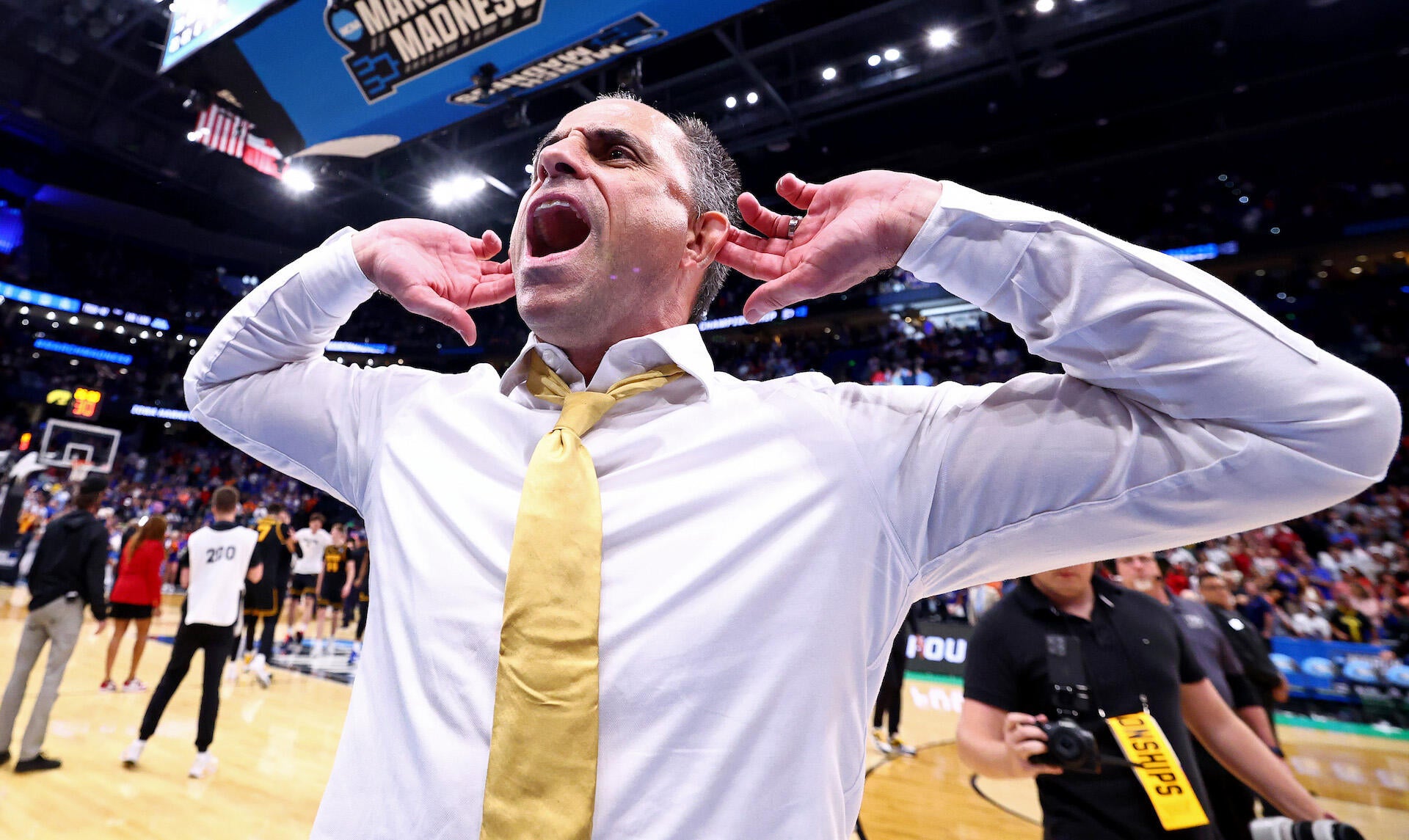

55. Arizona State
Local kid comes home. OK, so: Randy Bennett is 64. But the Mesa, Arizona, native finally got the offer at the right time that got him to leave Saint Mary's after 25 years. This was the most lauded hire of the 2026 cycle, as it should have been; a coach with 589 career wins and a .721 winning percentage is the type of hire ASU would otherwise never dream of pulling off. Timing was everything here. Here's a surprising circumstance as well: ASU's portal class, which is eight-deep, ranks No. 1 in the Big 12. The prize of that group is Paulius Murauskas, a multi-positional player who was good for 18.4 points, 7.6 rebounds and 2.1 assists last season as the most well-rounded hooper in the WCC. The Sun Devils' ranking is something of a dart throw, but finishing 55th would unquestionably be a jump compared to the past three years and likewise be of no shock if Bennett is immediately a mover in the Big 12.

56. TCU
The Frogs (picked seventh in the Big 12) have been in the middle of the league for a half-decade under Jamie Dixon. If he wasn't there, they'd likely be cellar dwellers. The sting of losing David Punch probably dips TCU down from its recent perch. He was a great eval a couple of years back who popped last season and stayed in-state by going to Texas for a paycheck bump. Dixon will likely get more with less again. Keep an eye on Trent Lincoln, who was previously the No. 1 junior-college recruit in the country after putting up 19.4 points, 6.1 assists and 4.5 rebounds at Gulf Coast Community College. Xavier Edmonds is the best returning starter and is probably one of the 10 best players in the Big 12. TCU also retained Brock Harding and Micah Robinson, so there's justifiable pushback from Frogs fans that believe I'm 20 spots too low. I'm just allergic to being predictable.

57. Xavier
The Musketeers are in their second season under Richard Pitino but don't bring a lot back from last year's 15-win team that wound up last in the Big East (strange to see Xavier ever finish last). The primary returnee is 6-10 4-man Jovan Milicevic, who ranks among the most underrated players in the conference. Xavier's outlook as an NCAA Tournament team seems to hinge on a five-in-five case: Filip Borovicanin is trying to get another year. He was good for 10.8 points, 7.4 rebounds per game and could step out and shoot. But nobody knows if he'll be cleared. If he is, we're having a different convo. Look for UAB transfer point guard Chance Westry to be a guy who pops in Cincy. Westry will be the tallest point in the conference and team up with Miami transfer Tru Washington. Transfer forward Mike Nwoko cuts a frame that reflects Pitino's clear philosophy from the offseason: he wanted to get taller. Talent-wise we'll see, but Xavier won't be bullied around.

58. Wichita State
Been a minute since the Shockers received preseason consideration this high. Paul Mills just might have Wichita State's first NCAA Tournament team since the 2020-21 COVID year that saw WSU barely squeak in. Mills' team was noticeably better as the season went along in 2025-26, helped by the 7-2 force that is Will Berg. He'll wrap up his college career with a Shockers team that looks to be the best in the American, thanks most of all to Berg. Other important guys who are back include wing TJ Williams and power forward Dillon Battie. If the Shockers are the best rebounding team in the conference (as I suspect will be the case), then they'll have a 1 next to their name with the league tournament tips and probably a 10 next to their name when Adam Zucker reveals the NCAA Tournament bracket Selection Sunday.

59. Saint Mary's
After 25 years, Randy Bennett is no longer running the show in Moraga. It's going to be strange to see SMC without Bennett on the sidelines … and also SMC in a WCC that doesn't include Gonzaga. Former Gaels guard Mickey McConnell is now the coach. Can he get Saint Mary's a regular-season title in Year 1? Santa Clara seems to be the biggest competition in the league, but McConnell is blessed with the WCC's best point guard: Joshua Dent. Dent is among my favorite mid-major prospects for 2026-27. He's a minutes monster who averaged 13.2 points, 5.6 assists, shot 91.8% from the charity stripe and hit 40% of his 3-pointers. Dent will have full reign over the offense on a team with a lot of parts to figure out. This is a forecast based on Saint Mary's culture. McConnell will have his work cut out for him right away.

60. Dayton
Another solid year is likely coming for the Flyers, who have undergone more roster turnover than desired but still should be one of the four best teams in the Atlantic 10. UD has Amael L'Etang back. If you don't know him, get ready. He's a 7-1 French force who is going to wreck chaos in the conference. He'll have a band of transfers alongside him bolstering Dayton's chances, likely led by former Marquette wing Zaide Lowery. The A-10's best freshman might be Aiden Derkack, a top-75 player in the class who could be a starter midway through the season (if not sooner?). One more guy who's got a lot of intrigue here is Jalen Haynes, last seen at George Mason two years ago when he averaged 14 and 7 as a 4-man. Anthony Grant clearly has the guys to compete for an NCAA bid.

61. Virginia Tech
We're entering into the point of the rankings where I've got a slew of ACC teams bunched together. Let's see which one I miss on the most! Virginia Tech leads off the spate. Mike Young having two real-deal bucket-finders back in his system should mean Va. Tech lives in the bubble conversation at the very least. The Hokies' best player is PF Amani Hansberry (14.3 ppg), who will have a yin/yang dynamic with 5-11 PF Ben Hammond (13.2 ppg, 43.1 3-pt%). Young deserves another run to the NCAAs but he's still lagging behind in NIL. Three of the past four seasons have seen VT end its season at 19 wins. I'd guess they're within two of that total again.

62. Florida State
If Luke Loucks is the real deal, then I'm going to be wrong and have FSU at least 15 spots off the mark. Sixty-two happens to be where FSU finished in KenPom last season, coincidentally enough. The Seminoles turned over almost the entire roster after an 18-15 tour that included a 10-3 record in their last 13 games.
This could be FSU's first season of 20-plus wins since the 2019-20 season that could've seen the 'Noles make a Final Four. Loucks has brought some run-and-fun style to Tallahassee, putting up 80.4 points per game and ranking top-30 in tempo. In addition to four four-star freshmen who will make FSU a higher-rated team a year from now, there's a potpourri of transfers that I expect to be led by UNC Asheville transfer Kameron Taylor and Colorado forward speedster Sebastian Rancik. Freshman C Marcis Ponder might eventually turn into the most undeniable college basketball rebounder since Zach Edey.

63. SMU
Lest you forgot, this was a tournament team last year, albeit one that got toasted by the Miami RedHawks in the First Four. The Dance ticket was the program's first since 2017. Andy Enfield's group sputtered to the finish, losing six of its final seven. Can SMU make back-to-back NCAA tourneys for the first time since 1984 and '85? (Yes, it's actually been that long.) The Ponies got a good gallop going, having won 20-plus games in three straight years for only the second time in program history. Enfield's roster was flipped, with center Jaden Toombs (8.3 ppg) the only notable guy back. Tulane transfer Rowan Brumbaugh should be the top dog horse; he averaged 19.2 points, 4.9 rebounds and 3.5 assists and was the most productive player in the American.

64. Ole Miss
The Rebels were predictably down last season — that 15-20 record was the worst of Chris Beard's career — but Mississippi is prone to get back above .500 after retooling the roster and bringing in some quality shot–makers. Seton Hall transfer Adam Clark led the Pirates in points, assists and steals and is coded to play for Beard. He has the second-most steals in D-I over the last three years (237 to Tamin Lipsey's 241). He'll play alongside returning guard Ilias Kamardine, who plays a heady brand of ball and helped Ole Miss to the lowest turnover rate in the SEC. Someone who could emerge by league play is 22-year-old Aussie import forward Ben Henshall.

65. Pitt
Jeff Capel's Panthers were one of the biggest year-over-year spenders, easily vaulting past $12 million for this roster in a hot-seat season for Capel. Though last year was rough (13-20; Capel's buyout was too big to make a change), Pitt was an above-.500 team the three years prior. One huge problem: Pitt's average possession lasted 19.5 seconds, the second-longest in that stat of any high-major program. The Panthers need to initiate offense with more alacrity and will have the chance at a do-over, given only 1.3% of the team's points are back. Baye Ndongo (12.6 ppg, 8.5 rpg at Georgia Tech) and Naithan George (10.9 ppg, 5.4 apg at Syracuse) are former Georgia Tech teammates who will try to go out with a bang. Jalil Bethea was a five-star prospect a few years ago and seeks to spark his college career in the Steel City.

66. Memphis
Penny Hardaway hasn't had a season without serious turbulence since when? Brace for more in 2026-27, as the Tigers are a mercurial bunch, yet Hardaway's scheduled as if he's got a Sweet 16 squad. Iowa State, VCU, Vanderbilt, Louisville, Dayton, Baylor, Grand Canyon and Texas are all on Memphis' docket in the first seven weeks. This is borderline masochistic. Hardaway clearly did that with the hopes that his team can scrounge up enough good non-con wins to overcome what's likely to be a one-bid American. He also did this after winning only 13 games last season. The player with the highest expectations is Northwestern transfer Jayden Reid, a 5-10 point guard who will team up in the backcourt with Pitt transfer Brandin Cummings. If this doesn't go well, Penny's job will be in jeopardy.

67. Utah State
Really intrigued to see what Ben Jacobson can do with a change of scenery. He won 397 games at Northern Iowa from 2006-26 and patiently waited for a real opportunity. USU has been a revolving door for four good coaches since 2018. Jacobson looks like the next in line to succeed in Logan — but I'd bank on him sticking around for close to a decade. He retains Mason Falslev, giving him the rare kind of high-end talent a coach can inherit at the mid-major level. The other returnee is forward Karson Templin, who should boost up to being a 12-and-6 guy. Center Will Hornseth followed along from UNI, while the player who's waiting for five-for-five eligibility clearance (who could knock the Aggies into the top 50) is Dallin Hall.
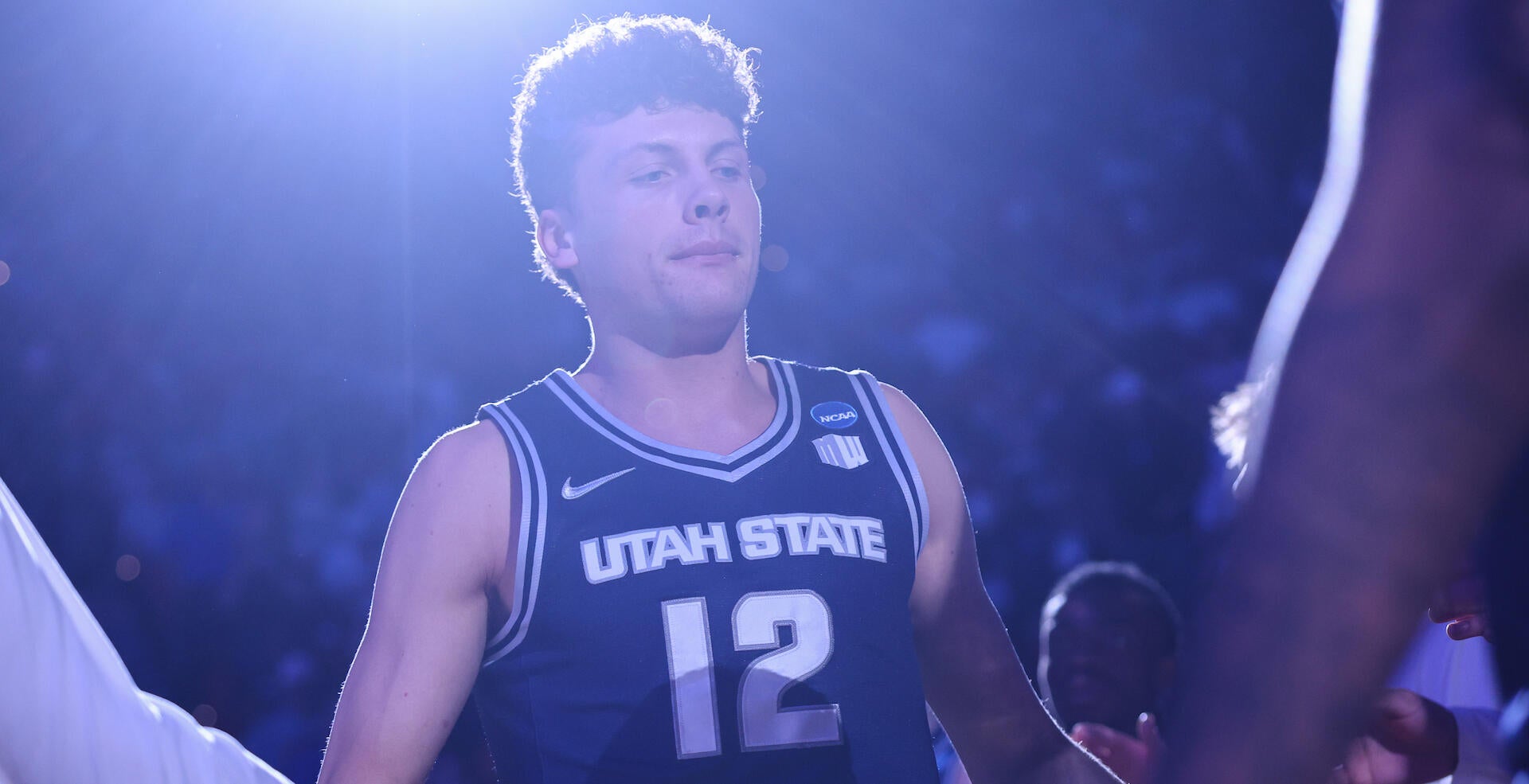

68. Minnesota
Niko Medved's going to improve on Year 1 in Minneapolis, when he finished 15-18 in a predictably tough, but still somewhat encouraging, debut at his alma mater. The key here is whether Cade Tyson (who came into his own and scored better than 14 per game the last two years) gets a fifth season. If he does, bump up Minny another 12-or-so spots for me. The Gophers will rank among the older teams in the Big Ten, including 4-man Jaylen Crocker-Johnson and Bobby Durkin both back in the starting lineup. Good days await in the next few years for the Gophs.

69. Santa Clara
The Broncos almost beat Kentucky as a No. 10 seed in a terrific first round NCAA Tournament game (that UK escaped thanks to a buzzer-beater in regulation from Otega Oweh). That was a really good SC team that ranked top-50 across the board in the metrics. Four players who combined to average more than 25 points last season are back (Jake Ensminger was one of the most efficient players in the country, albeit in a limited role). There's still the waiting game with Elijah Mahi, who is trying to get a fifth year and would make Santa Clara the clear-cut WCC favorite if he can get on the floor.

70. Tulsa
Eric Konkol has never coached in the NCAA Tournament, but last year was his best team yet. That might portend a mainstream breakthrough in 2026-27. The Golden Hurricane went 30-8 and finished 56th at KenPom, the highest for the school since 2002-03 (53rd). Tulsa was able to hold on to Jaylen Lawal, the sophomore point guard who will be surrounded by veteran transfers. Konkol worked the portal to bring in guys via Seton Hall, Creighton, Missouri State, UTSA and beyond. Last season's team made it all the way to the NIT title game. I don't think this year's group is quite as strong offensively, but a top-three finish in the American should be the expectation.

71. Wake Forest
If this ranking proves accurate, then two things will be true. No. 1: Wake Forest will have overshot preseason expectations, especially relative to their bottom-tier NIL spending. No. 2: Steve Forbes' program will miss the NCAA Tournament for a seventh straight year on his watch. Forbes is fighting a brutal uphill battle. I want to believe he'll find a way to make a 76-team tournament after coming close multiple times in recent years. Merrimack transfer Kevair Kennedy is probably the next straw-to-gold transfer glory story in Winston-Salem.

72. NC State
Tough one to peg with new coach Justin Gainey. State opted into the Will Wade Experience in 2025, only to see him bolt back to Baton Rouge, which was a move that began to grow whispers in late January. Gainey comes over after being Rick Barnes' top lieutenant at Tennessee. He's got Paul McNeil returning on the wing, which I love and will probably lead to McNeil averaging 18 points in ACC play. Hofstra transfer PG Preston Edmead was a great get in a trial season for Gainey back at his alma mater. Full transparency: I flirted with going as high as 55 for State, but will temper suppositions in Year 1.

73. Texas A&M
I'm not proud of this one, but every-year readers know that I refuse to groupthink my picks. Some teams will overshoot prognostications by 30-plus spots and others will go in the wrong direction all the same. My belief is that — and I think this is also a big curiosity with A&M's coaching staff — the Aggies' ceiling in '26-27 hinges on the eligibility and health of Jordan Pope to run the point. If that happens and Pope can play 30-plus games and guide this offense, this ranking is going to whiff. Texas A&M doesn't have a viable option at point without Pope, though Bucky McMillan has two of the 80 best players (SG PJ Haggerty and PF Mackenzie Mgbako).

74. Nevada
Elijah Price, Vaughn Weems and Peyton White are the three rotation pieces who will run it back in Steve Alford's final season. They combined to average 28 points last season on a team that won 24 games but lacked the week-over-week consistency in league play to vault them to the NCAA Tournament. Price is so talented, he'll help overcome some of Nevada's weaknesses. Look for him to average somewhere in the neighborhood of 15-and-10 while trying to worm through an easier-to-navigate Mountain West. I'm not seeing a team that's going to be as dangerous as a shooting group, but I do think Alford's last hurrah and the positionless attack will make Nevada good enough to be fighting for an at-large bid entering March.

75. UCF
Johnny Dawkins earned a three-year contract extension in the spring after getting the Knights to only their second NCAA at-large berth in program history. Then most of the roster left, and so here we go again with UCF trying to piece together disparate talents into a whole that's greater than the sum of the parts. It may well happen again, but UCF would seem to be a 12th-at-best team in the 16-school Big 12. Longtime curiosity Dior Johnson has boomeranged back here after a year at Tarleton State that saw him average 24.0 points.

76. George Washington
I'm bullish on the Atlantic 10 being a three-bid league due to 76 slots available in 2027 and plenty of talent influx into the league. George Washington ranked top-five in A-10 spending after bringing aboard wing Omari Witherspoon from Pitt, wing Terrence Arceneaux from NC State (I'm still a believer!), big man Dylan James from Georgia and backup big Andrija Vukovic from Oklahoma State. The majority of the rotation will be juniors, seniors and grad transfers. Coach Chris Caputo has his most rugged defensive roster yet, which should equate to his best team in the District.

77. Colorado State
The Rams are another team that's in the Pac-12, having shifted from the Mountain West. Ali Farokhmanesh did nicely for himself in his first year running a program, getting the Rams to 21 wins and finishing 88th at KenPom. I think CSU plays in the same orbit again: good enough to be a factor in the Pac-12 and flirting with getting into the (expanded) Big Dance. Keeping much of the roster intact, led by Carey Booth and Kyle Jorgensen in the frontcourt, gives the Rams such a solid floor.

78. Georgetown
Year 4 under Ed Cooley brings a serious standards check to D.C. The Hoyas have averaged 14 wins since he took over, which isn't remotely good enough. Cooley took a chance (and a much bigger paycheck) to leave Providence and alienate himself from that hometown fan base in order to try and resurrect Georgetown. The next five months feel consequential; it should be. The Hoyas bring back forward Caleb Williams (8.8 ppg, 5.1 rpg) and likely reserve guard Kayvaun Mulready, but otherwise there's a lot of wait-and-see. The biggest question is Vince Iwuchukwu's eligibility. The center is trying to get a fifth year, but his chances are foggy. Inbound talents include: Chol Machot (Charleston), Elmarko Jackson (Kansas) and Jaland Lowe (Kentucky), all three of whom should get the Hoyas, at least, above .500.

79. Oregon
Dana Altman's early October retirement landed as a shock, which is a surprise in itself because Altman was a rumored retirement candidate in the past two years. With Altman gone, Oregon's outlook gets thrown into the wind. The Ducks didn't have a roster that was top 50-good as is, and now they'll be guided by Tony Stubblefield, who couldn't last more than three years at DePaul and will try to get the most out of a team that is a full-on reconstruction after going 12-20. Big man Sean Stewart is the one proven player who opted to stay in Eugene.

80. Syracuse
Twenty-four years ago at this time, there was excitement bubbling around central New York over the prospect of a freshman who could change Syracuse's program. Turns out, Carmelo Anthony needed frosh teammate Gerry McNamara just as much as vice-versa in order to win that 2002-03 national title. McNamara was called home in March, after two years running Siena, to return as the head coach. He got a nice bump in NIL and brought over three of his Siena guys (most notably stretch big Gavin Doty), but the big curiosity remains the growth potential for Carmelo's son, Kiyan. Interested to see if the vibe shift happens quickly or if McNamara needs years to grow into this job.

81. DePaul
The Blue Demons have made genuine strides in two years under Chris Holtmann, going from 304th at KenPom at the end of the Tony Stubblefield era to 122nd in Holtmann's first year and 99th in 2025-26. The most valuable player is probably senior guard Layden Blocker (11.1 points and 3.5 assists last season), but Magoon Gwath's move from SDSU to Chicago could be one of the most consequential transfers in the Big East. Gwath battled injuries last season after proving himself as the Mountain West's best defender in 2024-25. Holtmann scheduled up a bit, which should give us real indicators by December if this team can contend for the NCAAs. Notoriously, it has the longest drought of any power-conference program (2004).

82. Murray State
I recently learned Murray State is in the vicinity of $9 million-plus for its 2026-27 roster. Good lord! This is a Missouri Valley program, folks. What an amazing fundraising effort by Ryan Miller in what is such an intense mid-major community in Murray, Kentucky. The Racers are triple-lapping the Valley when it comes to basketball bucks, so they are the easy pick here and figure to have an outside shot at an at-large bid if a stumble comes in the MVC tourney. Among a litany of quality options, French wing Roman Domon (14.2 ppg, 5.2 rpg) could blast out of the gates.

83. Colorado
Tad Boyle might be considered one of the 25 best coaches in college basketball if he was at a school with top-50 instead of top-80 resources. The Buffs are sort of spinning in place in the yawning years of Boyle's tenure in Boulder. Isaiah Johnson and Bangot Dak will thrive in other locales this season after being there last season. Boyle deserves better. At least Barrington Hargress is back at the point and he'll have some returning guards/wings who know the system and will give CU a shot at being an occasional spoiler squad in the Big 12.

84. McNeese
Bill Armstrong figures to easily have the best team in the Southland again, boosted by the return of leading scorer Larry Johnson (17.4 ppg). Johnson will have fun like a kid in a ball pit thanks to high-major down-transfers Elijah Moore (Utah), Corey Chest (Ole Miss), Jaylon Dean-Vines (Vandy) and Dellquan Warren (Mississippi State). The Cowboys have made three straight NCAA Tournaments and are lined up to be the rare low-major to fire off four Big Dance tickets in a row.

85. South Carolina
Lamont Paris was given a budget beyond $15 million to bring in a roster that … is expected to finish in the bottom three of the SEC. I'll remind you that Paris has a 26-8 season to his name here, three years ago, so there is proof of concept. I think it's plausible this team makes the 76-team field. The Gamecocks didn't load up on an ultra-talented roster, but there is a 23-year-old Argentinian big named Juan Fernandez who could be capable of moving the Gamecocks up in the SEC hierarchy if his backcourt of imported mid-major players can withstand the rigors of the high-major jump.

86. Washington
Danny Sprinkle had his NIL spigot turned off and as a result Washington looks like it will need a minor miracle to finish better than 13th in the Big Ten. The Huskies have some intriguing pieces, at least. LeJaun Watts will look for a jolt here after his time at Texas Tech. Steele Venters couldn't get going at Gonzaga because of injuries and is closing out his time in Seattle. But it's returning combo guard Wesley Yates III who could be the ignition key, especially if his 3-point shot can get into the 37/38% range.

87. Boise State
The Broncos weren't able to spend like the top-third of their Pac-12 compatriots, but that's not going to hold Leon Rice back from another 20-win season. (He's gotten 20 or more in 13 of his previous 16 seasons in Boise and is easily the best coach in school history.) I'd have BSU about 20 spots higher if not for the offseason patellar injury to former Illinois guard Ty Rodgers, who was poised to be BSU's best player. Forward Spencer Ahrens will carry the heaviest load in the first half of the season.

88. Rutgers
The program will have a unique and unwanted arrangement in the near-term: Steve Pikiell's cancer battle took him away from the job for significant portions of the offseason and will likely affect his ability to be there every day during the regular season. We just wish Pikiell the absolute best and speediest recovery. He's so respected around the basketball community. RU almost definitely isn't an NCAA Tournament team, but it sure would be a welcomed story if this group could get there in this year of all years. Everyone would root for it.

89. Yale
The top of the Ivy League looks like it should be competitive and intense — matching any of its best years this decade. Until Yale is knocked from its perch under James Jones, I'm not picking against the Bulldogs. Yale has claimed a regular or postseason Ivy League title seven years running. Jones truly seems like the most underrated coach in America. He's at 441 wins and counting. This will be his 27th season. (No Ivy hoops in 2020-21, remember.)

90. Mississippi State
Though mighty-mite lead guard Josh Hubbard (who is beguiling with the ball) might have to drop 30 or more a half-dozen times, I'm worried about Mississippi State's efficiency outlook after a 13-19 season and a portal plunge that didn't seem to bring in proven talent or reliable shooters. Chris Jans did get MSU into the Big Dance in his first three seasons here, so we'll see if last season was a one-off or an elongated downturn in the toughest league the sport has.

91. UIC
Rob Ehsan's going to be a trendy coaching carousel candidate if he can get UIC to 19-plus wins in two straight seasons for the first time since 2003 and 2004. The Flames bring back nearly 60% of their minutes and may have the starting five all feature guys who wore these threads a year ago. There are fewer than 10 mid-majors in the country who can claim that kind of vital retention. This team is draped in wings, making UIC a modern malleable mid-major menace.

92. Seton Hall
Shaheen Holloway had the lowest budget of any Big East school this offseason, so the challenge is steep yet again. The Hall brings in 13 new faces, including nine portal pickups, after finishing 21-12. Sophomore guard Trey Parker is the only carryover from last season. Roddie Anderson III, who put up 11 points per game at Xavier, should see the floor a ton, as will Simeon Wilcher. The former high-end prospect has bounced from St. John's to Texas to SHU. Is this the year he pops? Another guy to monitor is Terry Copeland Jr., who is a 6-9, 270-pound big who ranked as the best JUCO player in the country last season.

93. Boston College
Boston College has finished outside the top 100 at KenPom 13 out of the past 15 seasons. It's one of the three worst high-majors of the 21st century. Will this time be different? Getting to 93 in Luke Murray's first season would be a welcomed corner-turn. I know Murray believes BC isn't finishing this low come March. The whip-smart young coach is trying to build a spoiler on Chestnut Hill and will funnel a lot of his collaborative offense scheme through bucket-getter Money Williams (20.6 ppg at Montana).

94. UNCW
Takayo Siddle's Seahawks couldn't get the CAA autobid but nevertheless wound up winning 27 games. UNCW descended just outside the KenPom top 100 for a third straight year. Time to make a move. I'm heaving them over the century mark in 2026-27 due to having nine players with three or more years of experience, including a cluster of 22-year-olds. That includes Patrick Wessler, a 7-footer who will be the CAA's best big man. Siddle should get a bigger job in 2027.

95. Toledo
A year ago I took Miami (Ohio) to win the MAC in a bit of a zag. I'll do it again in the same conference with Tod Kowalczyk's Rockets, who have still somehow not made an NCAA Tournament in his 16 previous seasons at the helm. Toledo took some hits with portal defections in the backcourt, but this team has remained somewhat familiar with each other by holding on to five legitimate starters and rotation guys. The best of the returnees is 6-10 Austin Parks. The best of the new bunch is probably Marquette guard Sean Jones.

96. UNLV
Josh Pastner's return to the sideline was an 18-17 go of it with the Runnin' Rebels and a finish just outside the top 100 in the metrics. Let's bump up Vegas one level in his second season thanks to what's anticipated to be an improvement with a litter of down-transfers from the power-conference ranks. The best guy here is a holdover: PF/C Tyrin Jones. The defense doesn't look encouraging, but this could be one of Chaotic Good teams in a new-look Mountain West that will crave some thrills.

97. Miami (Ohio)
We watched a mid-major program go undefeated in the regular season in 2026. Let's not lose grip on how special that season was. Maybe we won't see something like that again for 30 or more years, you know? The RedHawks gave us one of the defining stories of the year — something no other sport could match in its audacity and unlikelihood. Travis Steele stuck around and kept two guards who can handle with aplomb: Luke Skaljac and Evan Ipsaro, who's returning from injury. Though there will be more than five losses this year, I don't think there's a huge fall-off. With Toledo just narrowly above Miami, I think the MAC might put two teams into the top 100 at KenPom in back-to-back years for the first time since 2013 and 2014. (Akron and Miami did it last season.)

98. Oregon State
The Beavers make their first appearance in the top 100 in years thanks to the hiring of a new coach. Justin Joyner is a sharp young leader who loves to dive into the intricacies of what makes players tick and which schemes fit personnel. His scouting for Dusty May was an important part of Michigan's national title run. The Beavs project as a middle-of-the-pack Pac-12 team whose best player is Josiah Lake II. The 6-2 senior shooting guard is the best holdover from the Wayne Tinkle era and may well put up splits of 15/5/5/2 in Joyner's first venture running a program. A good guy to get started with.

99. Stanford
Kyle Smith has a top-100 finish in seven of his past eight seasons in charge at San Francisco, Washington State and Stanford. While he's yet to oversee an outright NCAA Tournament threat, his teams are basically almost never duds. And his eye for talent is terrific: He recruited one-and-doner Ebuka Okorie a year ago, remember. With literally the lowest roster budget in the Power Five, Smith's team will feature 6-7 freshman Aziz Olajuwon (yep, son of The Dream) on a roster burdened without proven performers at the high-major level. Still, I can't keep the Cardinal off this list.

100. Harvard
I've got Yale slotted 11 spots above, but two Ivy teams being top-100 quality isn't outlandish. We've seen it four times in the previous 12 seasons. Harvard should have its best team in more than a decade. Three double-digit scorers are back, led by junior guard Robert Hinton (16.8 ppg). And Tommy Amaker has the pleasure of bringing on Jason Singleton. The combo guard from Columbus, Ohio, was a top-150 prospect in his class and a rare talent snag for an Ivy school.

And 1: UC Irvine
The perpetually overlooked Russell Turner will cross 350 wins with the Anteaters by December. UCI hasn't made the NCAAs since 2019, but have averaged 25.5 victories the past four years and been among the most consistent mid-majors, regardless of geography. I'll forecast a Big Dance return happens in 2027 thanks to bringing back three double-digit-minutes guys, plus UC Davis import Nils Cooper. There's also the conspicuous portal play of bringing on the tallest person in basketball history, 7-9 Florida transfer Olivier Rioux. The 'Eaters will be worth the watch on multiple occasions over the next five months.
Want more college hoops? We have you covered across the sport, including our list of the Top 101 players, the Top 25 And 1 coaches and unprecedented reporting into the spending levels for every high-major program.