

After Week 1, we looked at four preseason contenders that lost their openers and tried to figure out which of those losses were worth worrying about. At the time, the Rams scared us most, the Patriots scared us least (ha!), and the Chargers and Packers landed somewhere in between. Two weeks later, that order has flipped.
The Chargers are now in "THIS IS NOT A DRILL, THIS IS AN EMERGENCY!" territory, Green Bay's problems have spread, and New England's giveaways have gone from something you could explain away to inexplicable. The Rams, meanwhile, have mostly looked like the Rams, save one or two bad plays a game.
So here's the new order after three weeks. Who can still fix the mess? And who might already be watching the season slip away from them?
| Team | What worried us after Week 1 | What's happened since | Concern now |
|---|---|---|---|
Chargers | Protection, sustaining drives | 0-3; fewer than 17 points in six straight games including playoffs | Highest |
Packers | Protection, money downs | 1-2; run game has disappeared; 1-7 in last eight including playoffs | Very high |
Patriots | Turnovers, explosive plays | 1-2; Maye has 1 TD, 6 INT; offense last in points/drive | Still up there |
Rams | Down-to-down offense, third downs | 1-2; Offense has rebounded dramatically, even after Week 3 line of scrimmages | Lowest of four |
1. Chargers: The Week 1 warning has become the offense
The Chargers weren't bad everywhere against Arizona in Week 1. They actually had the better success rate. The warning signs were more specific: Justin Herbert was getting hit too often and Los Angeles converted just 25% of its third downs.
Those problems have not been fixed.
The Chargers are 0-3 after a demoralizing 24-16 loss in Buffalo, in a game in which the Bills turned the ball over a whopping five times. It's why this is the most concerning game yet for L.A.: the defense gave the offense every opportunity to finally win a game. Despite the plus-four turnover margin, the Chargers mustered just 16 points.
And now the hole they find themselves feels deep enough that there will be no escaping. Since 1990, 171 teams started 0-3. Five of those 171 made the playoffs -- that's 2.9%. Even with the expanded postseason, the math doesn't help much: since the NFL went to 14 playoff teams in 2020, just one 0-3 team managed to qualify. That was Houston last season, and the Texans had to go 12-2 the rest of the way to pull it off. Put another way, 97% of teams that have been where the Chargers are right now since 1990 ended up watching the playoffs from home.
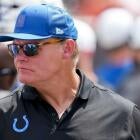
The Chargers aren't just fighting history, either. This unit, with new offensive coordinator Mike McDaniel -- and Greg Roman before him -- has now scored fewer than 17 points in six straight games including last postseason. You can't really pin it all on bad breaks when the opponent hands you five extra possessions.
And the schedule isn't offering much room to breathe: Seattle, Denver and Kansas City are next before the bye, followed by the Rams, Texans and Ravens. There are 14 games left, and the math says it's not over. But, man, it sure feels over.
If there's a way out, it starts with McDaniel finding an offense that can stay on the field and turn all those Herbert dropbacks into points instead of another week of asking the defense to save them.
2. Packers: The problem has gotten much bigger
Green Bay's opener was strange because the Packers were actually 12.3 percentage points better than Minnesota in success rate. Protection and third down were the concerns, which made the loss feel more fixable than alarming.
That looks different now.
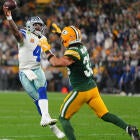
Atlanta outrushed Green Bay 242-17 in Week 3. The Packers ran it just nine times, Jordan Love dropped back 54 times and the offense never found any balance. Matt LaFleur opened his postgame press conference by calling it "a humbling night." Love said the Packers "couldn't execute and couldn't make plays out there."
Injuries haven't helped. Starting guard Aaron Banks was out, Jayden Reed missed the game with a neck injury, and tackle Zach Bako-Bewele is done for the year after a Week 2 knee injury.
But the larger trend is harder to dismiss. Green Bay is 1-7 over its last eight games including the playoffs, and what initially looked like a couple of situational problems has spread to the rest of the offense. The Packers aren't running it well enough to stay balanced, and when they fall behind, everything gets harder.
3. Patriots: The easiest loss to explain away no longer is
New England was the team we had the fewest worries about after Week 1. So … yeah, apparently someone forgot to inform Drake Maye about that. In the opener, the Pats had a plus-10.2-point success-rate differential, held Seattle to 18% on third down and lost largely because Maye couldn't quit throwing interceptions.
The one thing that wasn't sustainable: the giveaways. Well, they sustained.
Maye, you may have heard, has one touchdown pass and six interceptions through three games. New England's offense has scored 29 points on 30 drives, the fewest points per drive by any team through three games since the 2021 Jets.
Yes, A.J. Brown went on injured reserve after Week 1, and starting right guard Mike Onwenu followed him to IR after Week 2. New England was also without Dre'Mont Jones, Craig Woodson and Eli Raridon against Jacksonville. But every team is banged up and none of those names explains why Maye has regressed so far so fast.
"What we're doing out there offensively is unacceptable," Maye said after another hard-to-explain performance in Jacksonville. "It's been unacceptable for three weeks."
The Week 1 loss was easy to explain. The effort over these first three weeks is not. The problem is that there isn't a schematic fix for a turnover-happy franchise quarterback; the Patriots need Maye to get out of his own way, then hope getting Brown back magically fixes everything. (Note: Hope isn't a plan but the Pats are out of options.)
4. Rams: The original concern has mostly changed
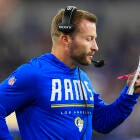
The Rams were the team we were most concerned about after Week 1 because the problems showed up in the areas that tended to matter. They lost the success-rate battle, went 2 of 9 on third down and allowed San Francisco to convert 58.3% of its third downs. Some of that had to do with some wonky Australia travel plans, and more of it had to do with Kyle Shanahan consistently taking it to Sean McVay and the Rams.
So it wasn't all that surprising that the Rams offense started looking like, well, the Rams offense once stateside in Week 2.
Even without Puka Nacua, Matthew Stafford threw for 327 yards and four touchdowns in a 28-6 win over the Giants. Los Angeles finished with 481 yards and the offense sustained drives, something they didn't do vs. the 49ers.
Even without Nacua in Week 3, the Rams built a 16-0 halftime lead in Denver and looked like they were going to run up the score. Thirty minutes, a Stafford pick six and some suspect late-game officiating later, and the Rams were eating the L and trying to figure out how it all happened so fast.
L.A. is still 1-2 but its problems feel imminently more fixable than the Pats, Packers or Chargers. So the solution isn't complicated; it's getting Nacua back, cutting out the game-changing mistakes and finishing those games they're dominating.
That's the difference three weeks in.
The Chargers' problems keep showing up every week. Green Bay's have spread. New England's have gotten worse. The Rams, meanwhile, have given us the most evidence that what we saw in Week 1 isn't who they actually are.