Brandon Lowe trade grades: Pirates land Rays slugger, Astros get worst mark in three-team deal
Lowe, a two-time All-Star, is heading to Pittsburgh in a three-team deal

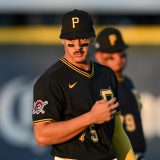
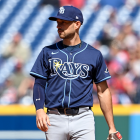
The Pittsburgh Pirates, Houston Astros, and Tampa Bay Rays agreed to a three-team, six-player trade on Friday involving, among others, All-Star second baseman Brandon Lowe. While Lowe heads to Pittsburgh, the Astros gain a starting pitcher and the Rays take in two promising young talents.
As is always the case at CBS Sports when a notable MLB trade happens, I'm here to break it down from all angles. Below, you'll find analysis on every player in this swap, as well as commentary on their fits. You'll also find letter grades summarizing my thoughts on the deal. Those are the least important part of this process, even if they tend to receive the most attention.
Before we get to that, here is the deal in its entirety:
- Pirates receive: 2B Brandon Lowe, LHP Mason Montgomery, OF Jake Mangum
- Astros receive: RHP Mike Burrows
- Rays receive: OF Jacob Melton, RHP Anderson Brito
Now, let's conduct some business.

Pirates grade: B
The Pirates had a clear objective entering the offseason: upgrade one of the majors' worst lineups so that they can compete for the franchise's first playoff berth since 2015. Pittsburgh's lineup ranked last in home runs and runs scored, and only two Pirates, regardless of sample size, finished with an above-average wRC+ (FanGraphs' park-adjusted offensive metric). That's why you've seen them connected to everyone, from stars Kyle Schwarber and Ketel Marte to non-stars Luis Robert Jr. and Willi Castro. When the bar is this low, a team almost has to try to not find improvements.
The Pirates may have landed one such improvement earlier this winter, nabbing outfielder Jhostynxon Garcia from the Red Sox. Here, they've grabbed a bigger one. Lowe, 31, isn't on the level of a Schwarber or a Marte. He's not a transformative talent despite being named to two All-Star Games in his career. Thankfully, he doesn't have to be in order to provide the Pirates with more offense than the Nick Gonzales-Adam Frazier connection did in 2025.
Lowe has been at least a league-average producer in all of his big-league seasons, even in those years where he was compromised by injury. To an extent, he fits the blueprint for the modern overachieving slugger. He's a free-swinger who will expand and chase, but he's adept at lofting the ball hard, particularly in the air and to his pull side -- he hasn't averaged more than 30 home runs per 162 games for his career by accident.
There are some downsides to Lowe's game and fit to be aware of if you're the Pirates. He's not nearly as effective against lefties, and his defense at the keystone has fallen off in recent years. (He has experience in the outfield, but he hasn't played an inning out there in three seasons.) PNC Park is also a tough slugging environment for lefty bats. Statcast suggests Lowe would have 22 fewer career home runs if he had played all his games there. Some would-be home runs will turn into doubles, others outs. On the bright side, Lowe will probably feast on road trips to Cincinnati and Milwaukee.


The other potential negative with Lowe is the opportunity cost. He's under contract for 2026 at an $11.5 million wage that will make him the third-highest-paid Pirates player. Given Pittsburgh's history, it's possible he ends up being the winter's big splash. In turn, he may be exposed to expectations he may not be able to meet. Let's hope not, because Lowe at face value is a good addition: a bat-first, most-days starter who'll almost surely rank among Pittsburgh's two or three best hitters in 2026.
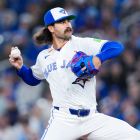
Montgomery, 25, should enjoy the longest stay in Pittsburgh of the incoming players. He's a hard-throwing lefty who creates an optical nightmare for hitters thanks to his tall and deep release point. His fastball sits in the upper 90s and appears to defy gravity with above-average rising action. When he wants to take a little off, he turns to a gyro slider that grades well in isolation but that doesn't necessarily tunnel well off the heater -- batters are able to detect which of the two pitches is coming with high accuracy before they have to make a swing decision. Factor in Montgomery's below-average control, and he may continue to veer between stretches of dominance and inconsistency.
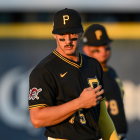
Mangum, 29, is a switch-hitting, speed-and-D outfielder who notched a 96 OPS+ in his rookie season. Take the under on that figure going forward. He swings at everything and, often to his detriment, he usually makes contact. Mangum has the speed to beat out his share of mishits and squibbers, but he's without the bat speed to slug or the discipline to walk. In an ideal world, he's leveraged as a reserve.

Astros grade: C
You can argue the Astros, with a farm system that's long been depleted by win-now trades and late-round draft picks, gave up two of their three best prospects here. Evaluations of those players will differ -- I talked to an executive right after the deal who thought Houston fared well here -- but it is worth contemplating how this trade may impact the Astros' ability to do more later.


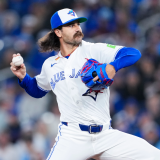
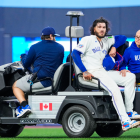
Anyway, the prize here is Burrows, fresh off a rookie year that saw him compile a 3.94 ERA (109 ERA+) and a 3.13 strikeout-to-walk ratio in 23 appearances. He's sort of your classic No. 4 starter type in that he throws strikes with five pitches, including a good cambio and above-average slider. If I had to guess, I suspect he won't throw his four-seamer 40% of the time again heading forward. The catch is that Burrows also doesn't have much history of staying healthy, with his age-25 campaign representing the first time he's ever thrown more than 100 innings in a single season. Thinking of him as a safe quantity, then, is ignoring a very, very big part of this career story to date.
The Astros have a better read on Burrows' health than I do. They also have a demonstrated track record of unlocking better work from pitchers than other teams have mustered. The second part makes this deal tougher to square, because I think a reasonable forecast for Burrows puts him within a performance range that would have been accessible to them in other pitchers who would not have necessitated sacrificing the top of their farm system. Clearly they disagree in that assessment.

Rays grade: B
In exchange for a year of Lowe, probably less of Mangum, and potentially several years of Montgomery, the Rays net two of the most interesting young players in the Astros system.
Melton, 25, was terrible for the Astros last season during a 32-game big-league stint. That's life sometimes. He's a potential most-days option in the outfield thanks to his athleticism and his combination of strength and zone control against right-handed pitching. It wouldn't surprise me if the Rays tweak his swing a bit, since batters with his amount of loft generally have a pull-centric barrel angle.
Depending on how that goes (if it goes at all) and what the Rays do the rest of the winter -- they've already added two veteran lefty hitters, in Cedric Mullins and Jake Fraley, to their outfield depth chart -- Melton could get a real, extended big-league opportunity by the summertime.
Brito, 21, is a short right-hander with a lively arm who posted a 3.28 ERA and a 2.32 strikeout-to-walk ratio in the South Atlantic League. He later made four appearances in the Arizona Fall League, raising his stock by striking out 22 batters in 11 innings. Brito has touched 100 mph with his almost-cutting fastball, and the heater plays hotter thanks to him getting further down the mound than his 5-foot-10 frame suggests he should. He shows promise with a few secondary pitches, too, including a sweeper, curveball, and a changeup that features occasional sink.
In a past era, Brito would've already been assigned to a life in relief because of his size and delivery. He may end up there anyway, but the Rays have every reason to work with him on throwing more strikes as a starter.