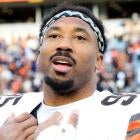


The easy way to look at the Myles Garrett trade is to say the Rams added the best defensive player in football and instantly became the favorite to win Super Bowl LX.
Garrett is still one of the rare defenders who changes the pre-snap math for every offense he lines up against. He's coming off a record-setting 23-sack season, just won NFL Defensive Player of the Year and gives the Rams the type of game-wrecking edge presence that comes along every couple of decades.
But that's also the easy part of the conversation. The more interesting question isn't whether Garrett makes the Rams better -- he does. The question is whether the Rams would have been better off keeping Jared Verse, preserving future draft capital and using those resources to build a more complete version of this same roster.
That's where things become less straightforward.
The Rams didn't just trade for Garrett in a vacuum. They traded Verse, the 2024 Defensive Rookie of the Year, along with a 2027 first-round pick, a 2028 second-round pick and a 2029 third-round pick. That's the kind of move that only makes sense if an organization believes its current championship window is more valuable than future flexibility.
Given that we're talking about the latest version of the "F them picks" Rams … yeah, of course that's what they believe.
General manager Les Snead's philosophy has never really been about ignoring the draft. It's about being willing to exchange future uncertainty for present certainty when the championship window is open (see the trades for Matthew Stafford and Jalen Ramsey, moves that led directly to a Lombardi Trophy).
Most teams talk themselves out of such decisions because of the cost. The Rams have repeatedly talked themselves into them. Sometimes that's left them with less depth and fewer resources down the road, but it also produced a Lombardi Trophy and multiple seasons during which they entered the year with a legitimate chance to win another one.
When you view the Garrett trade through that lens, it feels less like a departure from the Rams' philosophy and more like its logical conclusion. So the question isn't whether Garrett is better than Verse. The question is whether the difference between those two players is worth everything else the Rams surrendered to acquire him.
The opportunity cost
While it's fun to just anoint the Rams as Super Bowl champions and go on with our days, the real challenge is that every blockbuster trade should be evaluated against the alternatives.
History is full of deals that made teams better without making them champions. Khalil Mack transformed the Bears. Tyreek Hill took the Dolphins offense to another level. Christian McCaffrey helped push the 49ers to a Super Bowl. All three trades worked. None ultimately produced a Super Bowl.
The lesson: the player usually delivers … but the championship usually doesn't follow. That's what makes the Garrett trade so compelling. The Rams weren't choosing between Garrett and doing nothing. They were choosing Garrett over every other possible use of those resources.
Which brings me to A.J. Brown, who landed in New England for less draft capital than the Rams surrendered for Garrett. It's also worth noting that this wasn't purely a hypothetical alternative. The Rams were repeatedly connected to Brown throughout the offseason and, according to multiple reports, were at one point further down the road on a potential deal than New England. Ultimately, the Patriots emerged as the destination, aided by Brown's relationship with Mike Vrabel and Los Angeles' decision to move in a different direction.
Pairing Brown with Puka Nacua would have given Sean McVay two No. 1 wide receivers and one of the most dangerous receiving tandems in football. And while depth still would have been a concern -- if the team moved on from Adams had they landed Brown (as reports suggested), that would have left Jordan Whittington, Konata Mumpfield and rookie C.J. Daniels competing for significant snaps -- the Rams may not have viewed that as a problem.
No team currently has more tight ends on its roster than Los Angeles. After drafting Terrance Ferguson a year ago, the Rams doubled down this spring by selecting Max Klare, adding another athletic pass-catching option to a room that still includes Tyler Higbee.
One possible interpretation of the Rams' offseason is that McVay is becoming less interested in stockpiling traditional wide receivers and more interested in creating matchup problems through versatility. If Ferguson and Klare become meaningful pieces of the passing game, the need for another expensive receiver becomes easier to justify passing on.
That's also where the draft enters the conversation. Selecting either Makai Lemon or Omar Cooper Jr. would have given McVay another young, cost-controlled playmaker regardless of whether Brown or Adams occupied the top of the depth chart. On the other side of the ball, pass rusher Rueben Bain Jr. could have been paired with Verse to create a long-term pass-rushing foundation.
None of those players individually matches Garrett's impact. But Garrett wasn't competing against one player. He was competing against everything else the Rams could have done with those resources.
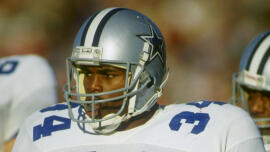
How much better is Garrett than Verse?
This is where the conversation becomes tougher to evaluate. The counterargument to keeping Verse is obvious and a good one: Garrett is better. The question is how much better.
While Garrett remains the gold standard for NFL pass rushers, Verse may already be closer than the trade compensation suggests. Over the past two seasons, Garrett led the NFL with 167 pressures while Verse was third with 157. Garrett finished with 101 hurries and Verse had 108.
In other words, the Rams didn't trade a developmental player or even a promising young pass rusher. They traded one of the most productive edge rushers in the NFL.
The separation, however, shows up when those pressures become game-changing plays. Garrett recorded 37 sacks over that stretch, the most in the league. Verse had 12. Garrett led the league with 55 tackles for loss. Verse had 22.
So while the gap in disruptive plays is smaller than many people realize, the gap in finishing ability quickly becomes a chasm.
One of the biggest surprises in the metrics supports both sides of the argument. As a rookie in 2024, Verse drew double teams at nearly the same rate as Garrett, per ESPN. Offenses quickly started treating Verse like one of the league's premier pass-rushing threats.
That's impressive and surprising. And it shows the Rams weren't trading a player who might someday command elite attention -- they were trading a player who already did. The difference then?
Last season, Garrett saw double teams on more than half of his pass-rush opportunities while continuing to lead the league in sacks and pressures. Plenty of pass rushers can dominate when offenses don't game-plan around them. Very few produce at an elite level when entire protection schemes are built to stop them.
That's the strongest football argument for the trade. The Rams aren't paying for pressures. They're paying for sacks, game-changing plays and the certainty that comes with knowing exactly what Garrett is. They're evaluating who gives them the best chance to win the Super Bowl in 2026, not who might be the better player in 2029.
If that's the question, Garrett is almost always the answer. He changes protections, forces quarterbacks to play faster (or face the consequences) and commands constant double teams, creating cleaner opportunities for Kobie Turner, Braden Fiske and Byron Young. He makes the secondary better because quarterbacks simply have less time to find answers. In that sense, Garrett doesn't just replace Verse's production, he changes the way offenses have to play the Rams.
Why Stafford still matters more
As significant as Garrett is, the most important variable on the roster remains Stafford. That's true of virtually every championship team not named the 2000 Ravens.
Garrett can make the defense terrifying, create shorter fields and be the difference between winning and losing on a critical third down in January. But what he can't do is compensate for a quarterback who isn't playing at a championship level.
Put another way: the Rams made this move because they believe Stafford still has another Super Bowl run in him. If they're right, Garrett may be the final piece who pushes them over the top. If they're wrong, everything changes -- and likely very quickly.
The Rams have elite players at quarterback, wide receiver, edge rusher, cornerback and on the defensive line. They have one of the best offensive coaches in football. They also have a roster construction model that leaves less margin for error than teams built primarily through the draft. That's the uncomfortable reality facing any star-driven roster, though a reality Snead and McVay have shown they'll happily embrace.
How this trade will get judged
The optimistic comparison is the 1994 49ers. That team was loaded before adding Deion Sanders. Steve Young was in his prime. Jerry Rice was still Jerry Rice. San Francisco wasn't trying to become a contender. It already was one. The goal was to add the final piece. That's what the Rams are hoping Garrett does.
They're not asking him to drag a mediocre team into relevance. They're asking him to push a Super Bowl-caliber roster over the top. That distinction matters, and it's why this trade feels more defensible than many of the blockbuster moves that have fallen short over the years. Mack arrived in Chicago with the expectation he could help elevate a talented but incomplete roster. Hill was supposed to unlock another level for Miami. Christian McCaffrey helped turn San Francisco into a perennial contender. All three players delivered. The teams just never achieved the outcome that ultimately justified the price.
The Rams are one of the few franchises that can point to Stafford and Ramsey and say their all-in approach actually produced a championship. Whether that's because Snead is better than most at identifying the right stars, McVay is better than most at maximizing them, or some combination of both, it helps explain why Los Angeles was willing to make another massive bet on elite talent.
Still, the alternative version of this team is difficult to ignore. Imagine the Rams with Verse still on the edge, Brown lining up alongside Nacua and future picks still intact. Imagine Verse paired with Bain. Imagine McVay adding Lemon or Cooper to a receiver room that could use another long-term answer.
None of those versions has Garrett, but all of them might have been deeper, younger and more sustainable. That's the debate.
The Rams chose the highest-ceiling individual player over the broader roster-building choice. They chose the future Pro Football Hall of Famer over the younger player and the possibility of adding multiple premium pieces elsewhere.
And, yeah, I get it. If you believe Stafford can win another Super Bowl right now, you don't build for 2029. You build for February. You add the player who can ruin a playoff game by himself and worry about the future later. Essentially, Snead is keeping the main thing the main thing.
But understanding the move is not the same as concluding it was unequivocally worth the cost. Garrett makes the Rams scarier -- a lot scarier. It's not hard to argue that he makes them the best team in the NFC. He might be the difference between losing another conference championship game and playing for a Lombardi Trophy.
What Garrett doesn't do is eliminate the question of what else the Rams could have become. Yes, Los Angeles paid a hefty price to upgrade from an elite young pass rusher to the best pass rusher in football. And the question isn't whether Garrett is better than Verse – the question is whether the difference between those two players is worth everything else they gave up.
If Garrett helps deliver another Super Bowl to the Rams, nobody will care about the picks, the cap implications, or anything else. But that's always been the gamble with blockbuster trades. They aren't judged against the player acquired, they're judged against everything that was sacrificed to get him. The difference, at least in Los Angeles, is that Snead has earned enough credibility that what feels reckless elsewhere often feels almost inevitable with the Rams.
The 2026 season will determine whether this becomes another Stafford trade or a reminder that even the right player isn't always the right trade.