The Bulls reportedly want to emulate the Pacers, but being an NBA copycat doesn't work
It's hard to do a better job of building the Pacers than the Pacers did

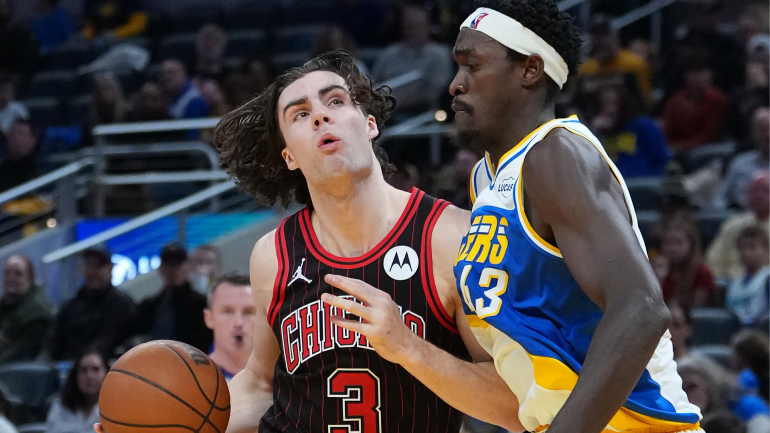
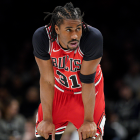
Who are the Chicago Bulls? It's one of the more persistent questions of the early 2025-26 season. Their 6-1 start -- which came on the heels of a successful end to last season -- suggested that this was a team on the rise. They've lost nine of their 12 games since. That, in itself, doesn't necessarily need to be damning. Growth isn't linear, and developing identities is usually a bumpy process. The 2022 Celtics were below .500 in mid-January before reaching the Finals. Last year's Pacers were 16-18 on New Year's Day.
That Pacers comparison is appropriate. Chicago has emulated components of what made Indiana so successful in recent years, most notably its speed. That hasn't been an accident. In a deeply reported Bulls feature for ESPN, multiple sources cited the Pacers as a source of roster-building inspiration for Chicago. "That's who we have to be," head coach Billy Donovan said. "We have to be better than the sum of our parts. ... Everybody sees Indiana play, and the thing that everybody goes to right away is oh, their pace, their pace, their pace."
Another Bulls source cited the Pacers as an example of what might come next for Chicago. "They have Haliburton, who is an All-Star, and they have Siakam," the source said. "If Giddey can develop into an All-Star and be what Hali was, when do we pull the trigger to get our Siakam?"

The concept of following another team's blueprint gets bandied about in roster-building discussions somewhat frequently, but it's worth asking how often that approach really works. Look at the best teams in the NBA today. Did Oklahoma City copy anyone? They tanked aggressively for two years, but nobody has a patent on losing. They are stylistically defined by one MVP-level scorer and wave after wave of All-Defense-caliber role players. There's not exactly a model for what they've built.
Denver? Of course the Nuggets didn't copy anyone. They have Nikola Jokić, who is one of a kind. Their roster build has more or less boiled down to finding players that make sense next to him, specifically: defensive-minded, athletic forwards that can cut (Aaron Gordon, Peyton Watson, Bruce Brown on the smaller side), shooting wings (Michael Porter Jr., Cam Johnson, Tim Hardaway Jr.), a backup center who can serve as an offensive hub in the best of times (DeMarcus Cousins, Jonas Valančiūnas) and of course, a high-level guard creator who developed a unique chemistry with their big man (Jamal Murray).
Houston? They certainly modeled their asset accumulation after Oklahoma City, but their playing style is distinct. Think of their historic offensive rebounding. That was seemingly a market inefficiency they identified early. They led the league in offensive rebounding rate by a mile during the 2022-23 season. At that point, league-wide offensive rebounding was at an all-time low. The 2022-23 season saw the eighth-lowest league-wide offensive rebounding rate in history, but the seven seasons with lower ones were the seven preceding seasons. Houston jumpstarted the league's shift toward offensive rebounding last season, when they won playing Alperen Sengun and Steven Adams together primarily to maximize their offensive rebounding.
The best teams by and large tend to be trendsetters, not followers. This season has had the highest league-wide offensive rebounding rate since the 2012-13 campaign. The Rockets are primarily responsible for that. League-wide 3-point attempts are down year over year, and so are ball screens. Denver isn't the only team responsible for that shift, but it's hard not to view the Nuggets as a model of how a team can win with ball-movement and limited 3-point shooting. The Thunder have led the league in drives in four of the past five seasons. Last year, only the Grizzlies and Thunder averaged at least 54 drives per game. This year, seven teams have crossed that threshold.
Common teams look at the best organizations in the league and try to emulate them. They usually just build pale imitations of the true contenders they're copying. We see versions of this story play out almost every year. Remember when the Lakers won the title in 2020? Everyone assumed that the only way to keep up with them would be to stockpile big men to throw at Anthony Davis and their enormous front line. Several contenders threw ill-fated contracts at centers specifically to combat the Lakers. Utah gave Derrick Favors a three-year mid-level deal that's still the Jazz today, as they had to give the Thunder a valuable first-round pick just to dump the contract a year later. The Clippers swung and missed on Serge Ibaka, and Boston did the same with Tristan Thompson. Mason Plumlee was a backup who hardly played in the Western Conference finals against the Lakers. He still managed to parlay his size into a big three-year deal with the Pistons. The entire league shifted off of one championship run.
And it didn't exactly pay off. The Bucks played big lineups when they won the 2021 championship, but Giannis Antetokounmpo is inimitable. The Western Conference champion Suns were a one-big team. And then the Warriors reclaimed the title a year later with Draymond Green starting at center in the last three games of the Finals, much as he did in 2015, when the Golden State dynasty began. Time, in the NBA, is a flat circle.
This is the danger in chasing trends. They change so quickly that by the time you've successfully copied whoever you're trying to copy, the league has adjusted to whatever made that original team so successful. That doesn't put an expiration date on stylistically distinct teams. The best ones are capable of some measure of adaptation, but are also so good at what makes them special that they can overcome league-wide adjustment in ways that copycats often can't.
So let's compare the Pacers and the Bulls. Josh Giddey does share stylistic similarities with Tyrese Haliburton. They're both transition maestros, after all, and Giddey has improved markedly as a 3-point shooter lately, which is a Haliburton staple. But Giddey only really makes 3s off the catch. Haliburton made 39 pull-up 3s in last year's playoffs alone. Giddey has made 35 in total over the last four seasons. Giddey has never shot better than 53% on 2s, and he's at just 50.9% as a Bull in a higher-usage role. In Haliburton's three full seasons as a Pacer, he's made 58% of his 2s. Giddey can do some of the things that Haliburton does, but that doesn't mean he can be for Chicago what Haliburton has been for Indiana.
The notion of finding their own Siakam is similarly fraught. All-Star forwards very rarely become available. When they do, they typically either come with enormous prices (we live in a world in which Mikal Bridges went for five first-round picks) or they have a specific destination in mind that is usually closer to contention than the Bulls are now. The Bulls could aim for a star trade, but there's no guarantee they could make one without gutting their team. Even trading for Anthony Davis, as ESPN reported they've considered, comes with taking on a max salary. The Siakam trade, for Indiana, was in many ways a case of "right place, right time." A player who made sense for them was available at a price that made sense for them. Siakam's age, his shooting, and his impending free agency made him gettable for the Pacers without sacrificing anything from their core. They pounced, and the rest is history. If anything, Chicago's best chance at a Siakam-esque forward is probably internal with Matas Buzelis, but he has a long way to go before that becomes a possibility.
The Pacers have had a ton of success with so-called "second draft" players, highly drafted youngsters who didn't quite pan out with their original teams. Think Aaron Nesmith and Obi Toppin. This is another tactic the Bulls have tried to copy. They by and large seem happy with Giddey thus far, though again, they may be setting expectations a bit too high for him. Isaac Okoro is still more or less the same player he was in Cleveland: a decent defender who can make wide-open looks, but still shoots at modest volume and likely won't be guarded in high-leverage moments.
If you squint at Chicago's roster, almost everyone seems like a slightly worse version of an Indiana equivalent. The Pacers hit a home run with Andrew Nembhard at top of the second round. The Bulls hit a solid double with Ayo Dosunmu in the same range of the drafts. The Pacers had shooting center in Myles Turner. The Bulls do too in Nikola Vučević, but he doesn't defend nearly as well as Turner. That has made it far harder for the Bulls to copy the Pacers defensively. In 2024, the Pacers, sensing their defensive vulnerability, decided to essentially punt on rim-protection in favor of 3-point defense. They were the only team to allow fewer than 30 3-point attempts per game, but in exchange, they allowed the most paint points per game in the league. The Bulls allow the second-most paint points per game this season behind only the tanking Wizards, but their opponents take the seventh-fewest 3s per possession in the league.
This is the real pitfall of trying to copy another team's roster-build. What are the odds that you're going to build a better version of the Pacers than the Pacers did? Especially since the Pacers still exist, and Chicago will have to compete against them moving forward. The irony of all of this is that it seems as though the Bulls are trying harder to be the Pacers than the Pacers did.
The Siakam trade was opportunistic. So, frankly, was the Haliburton acquisition. Rick Carlisle was never locked into the idea of playing fast. In fact, his last six Mavericks teams were below league-average in terms of pace. Because that's what his rosters dictated. The Pacers formed their style around their players. They drafted well and traded aggressively for who was available, not a predetermined set of players that they wanted. What they built was organic to the players they had. They made the most of who they could acquire.
The danger of locking into someone else's course is that you're not going to be presented with all of the same roster-building opportunities that they were. A Siakam-esque addition might never be available to the Bulls. Giddey probably won't ever be Haliburton. The Bulls don't have a top-five pick in a loaded draft coming as the Pacers do. But the Bulls may at some point in the next few years have access to roster-building opportunities that the Pacers didn't, things that might force them to adjust the way that they're playing or the sort of players they intend to target.
When that happens, they're going to have to keep an open mind, because there's just no way to out-Pacers the Pacers, or out-Thunder the Thunder, or out-Nuggets the Nuggets. What the Bulls can do is become the best possible version of the Bulls. That's how you build a contender in the NBA. You can only get so far playing the copycat game.