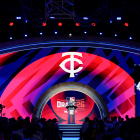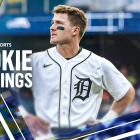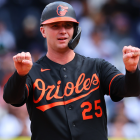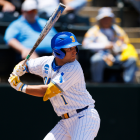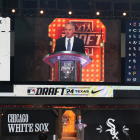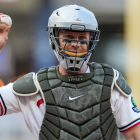

Day 1 of the two-day MLB Draft arrived Saturday and the White Sox used the No. 1 selection on UCLA shortstop Roch Cholowsky. Cholowsky was a career .329/.448/.624 hitter with more walks (105) than strikeouts (100) in three years with the Bruins, plus he had a knack for big moments. It shouldn't be long before he joins an up-and-coming team on Chicago's South Side.
It takes years to properly evaluate a draft class, but that won't stop us from naming some winners and losers from the first round. We already graded every first-round pick; now let's break down our 2026 Draft winners and losers.
Winner: The White Sox and Cholowsky
Chicago gets their guy at No. 1.
When you have the No. 1 pick, you're a winner in my book. (Except for all the losing that got you that No. 1 pick, I guess.) And when you're the No. 1 pick, you're a winner in my book. Not much to quibble with here. The White Sox took the consensus best available player in Cholowsky and didn't overthink things or play bonus pool games. The arrow is pointing up for the ChiSox, and they just added a high-ceiling prospect who should move through the minors quickly.
Loser: Rob Manfred for mispronouncing Cholowsky
The MLB commissioner couldn't get it right for the biggest day of Cholowsky's life.
Come on, man. You had a year to prepare for this! Cholowsky just kind of rolls off the tongue, too. Instead, Manfred pronounced it "Cha-loo-sky." At least he got the Roch/Rock part right.
THE PICK IS IN... pic.twitter.com/A28njITE9V
— Chicago White Sox (@whitesox) July 11, 2026
For real though, that's rough. That's the No. 1 overall pick and it's not like Cholowsky going there was a surprise. He was the wire-to-wire favorite to be the No. 1 pick. Every commissioner hears boos at every draft. Manfred earned them this year.
Winner: Georgia Tech
Two Yellow Jackets went early, a nice commendation for the ACC school.
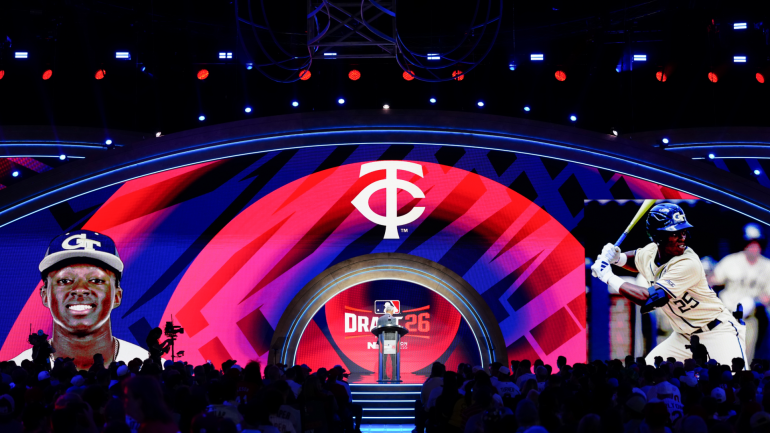
The Yellow Jackets had two players selected within the top eight picks this year: C Vahn Lackey (No. 3 to Twins) and OF Drew Burress (No. 8 to Athletics). The next college with multiple players selected is Ole Miss, and that wasn't until RHP Cade Townsend (No. 23 to Cubs) and RHP Taylor Rabe (No. 30 to Cubs). Two other Georgia Tech players were drafted on Saturday too: 2B Jarren Advincula was the No. 45 pick (Angels) and SS Carson Kerce was the No. 53 pick (Diamondbacks). Bittersweet day for the program. They're losing some very good players, but they're also proud to see them become high draft picks.
Winner: Contact hitters
Bat-to-ball skills were the tool of the day.
A trend emerged early in the first round. Teams prioritized prospects with strong bat-to-ball skills, even if they came with a lack of power. In an era of high strikeouts and pitchers this nasty, it makes sense. Getting the bat on the ball is becoming an uncommon skill. Among the high-contact hitters taken early in the first round are LSU OF Derek Curiel (No. 5 to Pirates), Louisville OF Zion Rose (No. 6 to Royals), and Virginia OF AJ Gracia (No. 9 to Braves). They were all picked a little earlier than expected. On the flip side, Florida high school SS Jacob Lombard went from a projected top five pick to the No. 14 pick (Marlins) because he swings and misses a little too much. Same with Alabama SS Justin Lebron (No. 18 to Reds), who was considered a candidate to be the No. 1 pick going into last season.
Loser: Pitchers
Teams prioritized bats in the first round, continuing a trend.
Only three pitchers were taken in the first 20 picks: UC Santa Barbara RHP Jackson Flora (No. 4 to Giants), Florida high school LHP Gio Rojas (No. 16 to Rangers), and Florida RHP Liam Peterson (No. 19 to Guardians). Three pitchers in the top 20 is tied for the fewest in draft history. As a result, a record 12 college hitters were selected inside the top 20 picks. This is not a blip either. The previous record was 11 college hitters inside the top 20 set in 2023 and matched in 2024. Now it's been broken in 2026. Teams keep pushing pitchers further down their draft boards and taking hitters early.
Winner: Rockies
The return of Paul DePodesta was all about upside.
The POBO Paul DePodesta era is underway in Colorado and after years of some questionable and not very fruitful draft picks under the previous front office, the Rockies went for upside. They assumed injury risk to get that upside, but they went for upside. Kentucky SS Tyler Bell (No. 10) is a switch-hitting shortstop who does it all and might have been a top five pick if not for the torn labrum in his non-throwing shoulder. UCLA RHP Logan Reddemann (No. 39) has top 10 stuff, but arm fatigue ended his season in mid-April. Reddemann attended the Draft Combine last month and took a physical, and clearly the Rockies were comfortable with his medicals. Colorado landed two top 10-ish talents with the top two picks.
Loser: Fans who just want to watch
Good luck finding the draft across so many streaming services.
To watch your favorite team these days, you have to subscribe to the local broadcast package and however many streaming services to watch games that have been peeled away from that local broadcast package you already paid for. It is incredibly fan-unfriendly. The draft was the worst version of this. Day 1 coverage was spread across three broadcast packages:
| Day | Time | Picks | TV and streaming |
|---|---|---|---|
Saturday | 1 p.m. ET | 1-10 | NBC and Peacock |
Saturday | 2:30 p.m. ET | 11-40 | MLB Network, MLB.com, and MLB.tv |
Saturday | 4:30 p.m. ET | 41-135 | MLB.com and MLB.tv |
So much for making your sport more accessible and easy to follow, huh? The crux of MLB's salary cap argument is that fans want it (which fans, exactly?) and they're listening to the fans. Will the league listen to fans when they say they don't want to subscribe to all these different services to watch MLB's product, or nah? I'm guessing nah.