

It took 72 seconds to insure LSU's national title hopes on the sports prediction market.
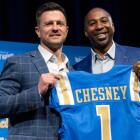
A third-party insurance company placed five trades on the prediction market Kalshi that could pay out $3 million if LSU wins the national championship this season, a Kalshi spokesperson confirmed to CBS Sports Tuesday. The number raised eyebrows this week when InGame, a publication covering sports betting and prediction markets, uncovered the trades, which match the exact cash figure LSU would owe coach Lane Kiffin in College Football Playoff bonuses if he wins the national title, according to a contract he signed in November.
The third-party insurance company, which Kalshi did not identify, purchased 837,500 contracts on LSU reaching the College Football Playoff, followed by contracts on LSU reaching the semifinals, the national championship game and winning a national title. Their last contract was on LSU reaching the quarterfinals. CBS Sports reviewed Kalshi's trade data and confirmed the five blocks in which the buyer paid $662,050. The other side of the trade put up $2,337,950.
Spokespeople for LSU did not immediately respond to CBS Sports' requests for comment.
Large athletic departments typically insure the bonus structure in coaches' contracts through third-party insurance companies. Insurers then pass that risk on to specialist reinsurers, including well-known marketplaces such as Lloyd's of London.
But a new trend to counter insurers' risk has emerged among sports insurers: prediction markets.
The New York Times reported Feb. 10 that Kalshi had begun working with Game Point Capital, which CBS Sports could not confirm. The New York Times described Game Point Capital as an insurance company that helps college athletics departments, sports teams and sponsors manage the financial risk of performance incentives written into athletes' and coaches' contracts. Game Point had historically laid that risk off through Lloyd's of London and later through American providers. It told the Times it expected to hedge roughly $30 million a year through Kalshi.
"We want to offer the most efficient pricing for teams and other clients," Will Hall, Game Point's co-founder and CEO, told the Times.
Kalshi filed a rebate program with the Commodity Futures Trading Commission in January, allowing members to offset risk from insurance contracts written on sporting outcomes.
LSU trade data on Kalshi (Aug. 13)
Covers | Executed | Price | Cost | Payout if it happens |
|---|---|---|---|---|
Makes the CFP | 3:05:35 p.m. | 41¢ | $343,375 | $837,500 |
Reaches quarterfinals | 3:06:47 p.m. | 29¢ | $106,575 | $367,500 |
Reaches semifinals | 3:06:05 p.m. | 18¢ | $84,600 | $470,000 |
Reaches championship game | 3:06:16 p.m. | 12¢ | $64,500 | $537,500 |
Wins national title | 3:06:28 p.m. | 8¢ | $63,000 | $787,500 |
All five | | | $662,050 | $3,000,000 |
Source: Kalshi public daily trade files
InGame reported that the LSU trades in August came from a third party that helps sports organizations hedge risks such as coach bonus payments, and identified Game Point -- a Charleston, South Carolina, firm that lists the SEC, ACC, Big Ten and Big 12 among its clients on its website -- as a company known to place such trades on Kalshi. Game Point would not confirm or deny involvement, InGame reported. Game Point did not immediately return CBS Sports' request for comment Tuesday.
"The only thing I can confirm is that it is the third-party insurance company," Jack Such, a Kalshi spokesperson, told CBS Sports. He declined to name the firm.
The playoff market was not busy on Aug. 13. The contract on LSU reaching the quarterfinals and title game traded exactly once all day -- the block by the unidentified third-party insurance company. In the playoff market, 837,500 of the day's 837,735 contracts were that single trade on LSU making the playoff, according to data CBS Sports reviewed.
More eye-opening, according to trade data CBS Sports reviewed, was that the risk priced at $343,375 for LSU to reach the playoffs was the largest on the entire Kalshi market that day. It also happened off the exchange because the public couldn't absorb a large trade block of 837,500 contracts at that moment, so it found a private counterparty, a Kalshi spokesperson told CBS Sports. Kalshi doesn't pair the sides, the Kalshi spokesperson said. Firms solicit bids and let market makers find the other side willing to participate.
If LSU reaches the playoff, the payout is $837,500, which more than offsets the $750,000 bonus Kiffin would be owed for reaching the postseason event. If the Tigers win it all and hit all five rungs, the Kalshi payout -- and Kiffin's separate CFP bonus -- increases to $3 million.
Kalshi is not a sportsbook; it is a federally licensed exchange. With sportsbooks like FanDuel and DraftKings, when a bettor picks a side, the sportsbook takes the other side, sets the price and books the risk. Kalshi doesn't take a side. It matches buyers and sellers and collects a fee, an arrangement that resembles a stock exchange more than a casino.
People trade contracts on the Kalshi market with simple yes-or-no answers on topics such as politics, weather, pop culture, cryptocurrency, and sports.
Federal rules require Kalshi to publish trade data daily for the public. The Commodity Futures Trading Commission designated KalshiEX LLC a contract market in November 2020, the same status held by exchanges trading oil, grain, and interest-rate futures.
South Carolina's future was big on the market, too
Kalshi confirmed to CBS Sports that similar trades involving South Carolina's football program were placed July 15.
The trade file shows four trades, though InGame confirmed two in its report. Three were on the Gamecocks making the CFP -- 40,000 contracts at 5:33 p.m., then 40,000 more and another 50,000 in the space of 17 seconds just before 6:53 p.m. Nine seconds after that came a fourth: 100,000 contracts on South Carolina winning eight or more games.
Together they cost $41,300 and cover up to $230,000.
"The University of South Carolina does not have agreements with Game Point Capital or any other third-party insurer related to coaching bonuses, nor is aware of any arrangements to use trading markets to hedge against future bonus payments," a South Carolina spokesperson told CBS Sports.
South Carolina trade data on Kalshi (July 15)
Covers | Executed | Price | Cost | Payout if it happens |
|---|---|---|---|---|
Makes the Playoff | 5:33:14 p.m. | 11¢ | $4,400 | $40,000 |
Makes the Playoff | 6:52:40 p.m. | 11¢ | $4,400 | $40,000 |
Makes the Playoff | 6:52:57 p.m. | 11¢ | $5,500 | $50,000 |
Wins 8 or more games | 6:53:06 p.m. | 27¢ | $27,000 | $100,000 |
All four | | | $41,300 | $230,000 |
Source: Kalshi public daily trade files
Why would an insurance company use Kalshi and not another reinsurer?
Schools typically buy insurance policies against a large bonus they may owe in the future. The insurance company can then reinsure it through another company, but in Game Point Capital's business plans, Kalshi has become the new offset.
Such told CBS Sports the exchange is effectively acting as a reinsurer in these arrangements.
It has already happened in European soccer. In June, Semafor reported that a top-flight Spanish club facing relegation -- and the loss of ticket and broadcast revenue that comes with it -- was covered through Game Point, which routed the trade through commodities broker Greenlight Commodities and onto Kalshi. Susquehanna International Group took the other side. Hall told Semafor the firm wanted to see how prediction markets would handle a large, binary outcome.
College athletics, however, is different. Kalshi works with integrity firm IC360, which maintains league- and NCAA-supplied lists of athletes, coaches, trainers and staff and screens them out of markets tied to their own sport, according to Kalshi's market integrity disclosures.
"None of the entities trading on Kalshi have material non-public information about the events that will happen," Such said.
Still, many may see this as a school betting against its own team. "Betting against yourself is kind of a weird way to phrase insurance," Such said.
The NCAA's stance on prediction markets like Kalshi further muddies the waters. In December, Kalshi filed to include predictions on college players entering the transfer portal. NCAA president Charlie Baker said at the time he "vehemently" opposed college sports prediction markets. Kalshi stepped back and shelved the product.
One month later, Baker asked the CFTC to suspend college sports prediction markets until new safeguards are in place. In July, he repeated that message to Congress in written testimony, asking that the NCAA be consulted on which college markets are listed, along with secure player protection from harassment.
The NCAA did not immediately respond to CBS Sports' request for comment for this story Tuesday.
Kalshi is in state or federal court with at least 15 states and three tribal groups, according InGame. Judges in Michigan, Nevada and Washington have ordered restrictions on the platform.