

Overall, the Atlanta Braves' 2026 season has gone swimmingly thus far. Coming off a disappointing, injury-marred 2025 campaign in which they endured their first losing season since 2017, the Braves this year have barged to a healthy lead in the National League East and are on pace for 101 wins. Lately, though, some concerns are bubbling up. That's the case with any team, even potentially great ones, across the marathonic 162-game season. With the Braves, though, these recent struggles hint at more lasting concerns.
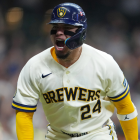
At this writing, the Braves have lost eight of 11. That span includes taking two of three from the mighty Brewers, but also includes series losses to the White Sox, Mets, and Giants. Roughly a month ago, the Braves peaked with a 10 ½-game lead in the division. Now, thanks to the Braves' mortal stretch and the Phillies' surge, that lead is down to 6 ½ games -- still comfy but hardly insurmountable. In June, the Braves are 8-9 with a -13 run differential.
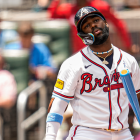
As for this recent 11-game skid, the Braves have the worst record in baseball over that brief span. Their 33 runs scored across those 11 games is easily the lowest tally in MLB since June 9. While the more acute forward-looking concern is the rotation -- more on that in a moment -- the Braves do have real worries on offense. Austin Riley's overall numbers are the worst of his career, and he hasn't homered in more than a month. Ronald Acuña Jr. has been out since June 9 with a left hamstring strain -- a recurrence of the same injury that cost him more than two weeks in early May. His re-injured hammy came with a worrisome recent update:
Weiss said Acuña is a “long way” from returning. Because the hamstring strain is in the same spot, the Braves will be more cautious than they were when Acuña missed nearly three weeks with the previous strain
— Mark Bowman (@mlbbowman) June 17, 2026
Acuña is an MVP-grade performer when healthy, but injuries -- so many of them lower-half injuries -- have taken a hunk out of what should still be his prime seasons. It's simply unknown how much the Braves will get from their best player over the remainder of 2026.
There's also Drake Baldwin, the Braves' star young catcher. It's too soon to overreact, but Baldwin since returning from an oblique strain on June 15 has a slash line of .077/.077/.192 in 26 plate appearances. The sample size is obviously minuscule, but underlying batted-ball quality has been similarly dismal over that span. According to the Baseball Prospectus recovery dashboard, an oblique strain comes with an average absence of 47 days. Baldwin was back in just a bit over half that time and made just one rehab start. The Braves, of course, know their player better than anyone else, but it does raise the possibility that Baldwin is still feeling the effects of that injury -- especially at a rigorous position like catcher, where he's played half his games since returning.
Eyeball the lineup and the roster, and the Braves simply have too many names like Mauricio Dubón, Dom Smith, Mike Yastrzemski, Jorge Mateo, Rowdy Tellez, and Joey Bart playing notable roles right now and in some cases doing so with probably unsustainable levels of production at the plate.
Then there's the rotation. Across this 3-8 stretch, Atlanta starters have pitched to a 6.53 ERA with a not-much-better FIP of 5.68. Over those 11 games, they've logged exactly one quality start while averaging 4.6 innings per start (without the use of any openers). That, in turn, has strained the bullpen.
As long as we're throwing numbers around, there's this one: four. That's how many starting pitchers the Braves currently have on the injured list. Spencer Schwellenbach has been out since spring training after undergoing arthroscopic elbow surgery, and there's currently no timetable for his return. AJ Smith-Shawver is working his way back from June 2025 Tommy John surgery, but he obviously carries with him little guarantee in what would be his first (partial) season back. Lefty Joey Wentz won't pitch this season after tearing his ACL in the spring. Then there's Spencer Strider. The right-hander was not so long ago one of the game's most dominant starting pitchers, but he just hasn't been the same since he suffered a partially torn UCL early in the 2024 season. The numbers of note:
| Seasons | IP | ERA | FIP | K% | Avg. fastball velocity |
|---|---|---|---|---|---|
2021-23 | 320 ⅔ | 3.37 | 2.48 | 37.2% | 97.7 mph |
2024-26 | 199 ⅔ | 4.33 | 4.25 | 27.7% | 95.5 mph |
That's just not the same pitcher, and right now Strider is on the 60-day IL with yet another round of elbow issues. As great as he once was and as young as he still is (27), Strider just isn't a known quantity moving forward and especially in 2026.
Right now, the Braves are stretched too thin in the rotation, and there's not much help on the way, at least beyond the possibility of Hurston Waldrep, who's back pitching in the minors (albeit with somewhat diminished velocity) after undergoing an elbow procedure in the spring. At the very front, Chris Sale is still pitching like a Cy Young winner, but he's 37 and will always be at least something of an injury risk.
All of this brings us to lead decision-maker Alex Anthopoulos and what may be this team's closing championship window. Anthopoulos is typically an aggressive operator, and he needs to play to type leading up to the Aug. 3 trade deadline. The Braves could use lineup help, yes, but the most pressing need is for a true needle-mover to slot in behind or alongside Sale. Tarik Skubal, assuming the Tigers shop him, is of course the prize, and other theoretical-at-this-stage possibilities include Sonny Gray of the Red Sox, Joe Ryan of the Twins, Dustin May of the Cardinals, and Freddy Peralta of the Mets (assuming a willingness on the part of New York to trade him within the division). That's not a full listing, of course, but just the same, there's a risk that the compressed wild-card standings give us very few sellers. Whatever the pool of availables looks like, the Braves need to be working at the tip-top of it. At the same time, they could use additional lineup depth, but the rotation is the most pressing need.
Let's not overstate the urgency here. The Braves are, as noted, still on pace for a 100-win season, and SportsLine right now gives them a 94.6% chance of winning the division. Still, if the Braves want to fend off the Phillies (and the Nationals and Marlins) in the NL East and compete with the Dodgers and Brewers for a first-round bye, then they're probably going to need a headline-grabbing trade deadline. The Braves' recent struggles and what's behind them remind us that this team's story will be told in part by who's new to the roster on Aug. 4.