

Probably the most common descriptor of college athletics over the past three years: chaos.
It's never been more true, or more destabilizing, than what's been transpiring in football and men's basketball in the past month.
Former college football players who participated in NFL training camps this month are trying to return to college, less than a few days before the 2026 season begins this weekend. Dozens of college basketball players who exhausted their eligibility this past spring are fighting back and forth with the courts, trying to figure out if they're eligible for the 2026-27 season this fall.
In the background of all of this, conferences are taking a stand about professionals returning. The Big 12, Big Ten and SEC all voted this week to approve a ban on professionals returning to the college ranks. The ACC is planning to vote to adopt a similar policy sometime this week — which would put an end to that madness — while simultaneously creating five more problems in the process.
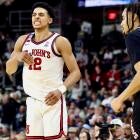
While those policies are likely to apply more so on the football side, there are players — most notably LSU forward RJ Luis Jr. — who fit the bill for the ban on the basketball front. Luis is regarded as the most polarizing case of any player fighting for an extra year of eligibility this offseason. He went undrafted and signed a two-way contract with the Utah Jazz last year and last played in college basketball in March of 2025 for St. John's.
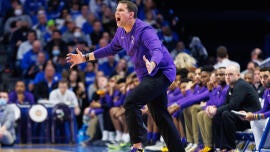
The former Big East Player of the Year technically falls into the bucket of a Class of 2022 high school graduate seeking an additional year of eligibility. However, his case is far more complicated because his decision to leave school early and declare for the NBA Draft despite not being projected to get drafted remains one of the most puzzling decisions of the NIL era.
Despite being granted a preliminary injunction for immediate eligibility earlier this week, Luis would still be ineligible to play under the new SEC rules, ratified earlier this week. Even though Luis didn't play in a single G League game last season, he would be ineligible because he declared for the draft and signed a professional contract. Luis' teammate at LSU, Saliou Niang, could also technically fall into that bucket because he was drafted No. 58 overall by the Cleveland Cavaliers in 2025.
The Tigers only have four players on their publicly disclosed roster and will have to rely on the courts to get players eligible in time for the start of the 2026-27 campaign. LSU first-year coach Will Wade is not alone in trying to figure out who's eligible and who's not for this season. And because of lawsuits in federal and state court — and the appeals that come with them — it's hard to know who will actually be eligible to suit up this season.
September is days away, yet a high-major program hasn't announced enough players to put out a starting five.
Things have gotten more tangled in the past week-plus as eligibility cases in Ohio and Tennessee both received stay orders, effectively putting those players on pause while those cases await a hearing.
Here's one glimpse into the ever-fluid nature of where college basketball is at: One coach who recruited a player in one of the eligibility cases (who is now at least temporarily ineligible due to a recent stay) told CBS Sports' Matt Norlander it would actually be better for his team if the NCAA won in court later this summer/fall. That coach said he'd rather lose his player and see fellow teams in his league lose theirs than win the battle but face an influx of more fifth-year seniors in conference play.
If this all seems complicated, or if you're lost on who might be eligible this season, you are not the only one. Here is a crash course to get you up to speed on what's going on in college athletics, specifically on the basketball side.
Why are so many seniors trying to return?
Here's the first logical question several people have posed when bringing up this topic: Why are so many college players trying to return despite being ineligible? Has this happened before?
Well, the root of the chaos stems from the NCAA introducing the new five-for-five eligibility model, which would allow athletes to play five seasons in five years in their sport, starting when they finish high school or turn 19.
That extra eligibility isn't needed for a stud one-and-done basketball prospect. However, it could make a massive difference for fringe NBA players who will make most of their career earnings playing at the college level. There's been an increase in college basketball players electing to take the college payday — see Florida star forward Thomas Haugh, who is poised to make at least $8 million this season — instead of declaring early for the NBA Draft.
That's going to become more common in the years to come with five-for-five starting this year.
Because the class of 2022 was not grandfathered into those rules, lawsuits to capitalize on the potential earnings a player could make at the college level were inevitable. It started in individual states such as Ohio, Tennessee and Georgia, where large groups of athletes attempted to sue to gain an additional year that this year's seniors will get.
After athletes were initially ruled eligible in Ohio and Tennessee, that fifth year of eligibility is now in flux after state appeals courts granted the NCAA's request to pause previous court orders. Several notable names are part of those lawsuits in Tennessee and Ohio, including AJ Storr (UNLV), Chendall Weaver (Houston), B.J. Edwards (Oklahoma), MJ Collins (Cincinnati) and Jalen Washington (Tennessee).
One coach admitted to CBS Sports that he was going to have to covertly try and recruit yet another player, as the one who'd committed to him for a bonus fifth year of eligibility did not have an immediate and sufficient backup plan after being ruled ineligible in the Wisne case in Colorado. Speaking of Colorado ...
How does a Colorado judge factor into all of this?
Although chaos was going on earlier this summer in the fight for college athletes to cash in on another season of eligibility, the floodgates really opened in late July when Judge Charlotte Sweeney of the U.S. District Court of Colorado granted a class-wide preliminary injunction requiring the NCAA to declare athletes from the high school class of 2022 eligible.
It was a broad ruling that, for a few weeks, opened the door for every 2022 high school grad to seek a bonus year of eligibility — despite the NCAA's strict rule against it.
However, the Tenth Circuit Court of Appeals granted the NCAA a stay last week, which reversed the judge's decision.
Different players are now in different scenarios. One coach, who's trying to get back to the NCAA Tournament after missing it last season, told CBS Sports that he's still confident because, although the player who committed to him was ruled temporarily ineligible due to the Colorado stay, that player has a case in-state that they believe will ultimately win out.
Some other players who were banking on these state-by-state rulings did not have a quick fall-back plan. They have been scrambling to determine their best way to either get onto an existing lawsuit (which might not be advisable, as it could be viewed by a judge as blatantly opportunistic) or find a feasible way to create their own and bring it to a local judge in an expedited manner.
A handful of athletes who weren't suing in individual states were relying on the injunction in Colorado to remain eligible this season. If the injunction in Colorado held up, every graduating senior across all sports would be immediately eligible for a fifth season. But as of now, that's not the case.
So what is most likely to happen?
The common desire among almost all coaches and administrators who spoke on background to CBS Sports this week: either allow everyone a bonus fifth year of eligibility or allow no one. They want unilateral decisions across the board.
In typical NCAA fashion, that's highly unlikely to happen. The NCAA won't be doubling back and allowing a blanket waiver, which means the only way to get there would be for the NCAA, and every conference, to lose every single legal battle in the weeks and months to come. Given the recent decisions on stays and the confident language coming from Indianapolis, the overwhelmingly likely endgame here is some happy players and coaches who win their cases ... and no shortage of disappointed and ticked-off others who don't win out in the weeks to come.
Things will probably be ruled upon unevenly, which means 2026-27 should be one last season of sizable imbalance before five-in-five is the undisputed universal eligibility framework moving forward.
The other factor in play? School. Yeah, these players have to be in classes, after all. Most colleges either started classes already or are starting school in the coming days. Programs have been caught in a bit of no-man's-land this week for that reason, as the stays have led to urgent situations without immediate solutions.
For some schools, players needed to be registered for classes by the end of this week. Without any assurance they'll be allowed to compete in a fifth season in 2026-27, some players are still going through the process of being properly registered. A source at one school said that the stay in the Ohio eligibility case was going to prompt a lengthier discussion with his athletic director to make sure the school would still support pushing through in defiance of NCAA rules.
Major conferences speak out
There is a first for everything, but a player getting cut before final roster cutdowns during NFL training camp and then jumping back to the college ranks is unprecedented. Dae'Quan Wright, who played last season for Lane Kiffin as a tight end at Ole Miss and was participating in training camp with the Cleveland Browns, was waived earlier this week and is now attempting to return to college. Wright committed to LSU shortly after getting cut by the Browns.
Former Ole Miss defensive tackle Zxavian Harris, who was with the New Orleans Saints in training camp, is also expected to join LSU.
Shortly after those commitments, the Big Ten became the first conference to enforce significant penalties when its athletic directors and faculty athletics representatives approved a ban on former NFL players pursuing a fifth year of eligibility within their league. The SEC followed suit shortly after, with harsh punishments for any league members found in violation of the rules.
The policy the SEC released states that an athlete who "previously declared for the NFL, NBA, or WNBA Draft, and did not appropriately withdraw" would be ruled ineligible. That would disqualify multiple players from transferring and playing at LSU, including Luis, Wright and Harris.
Following meetings with the Presidents, Chancellors, and Athletics Directors of the Southeastern Conference, the SEC will enforce the following policy: pic.twitter.com/LohWnb7G1J
— Southeastern Conference (@SEC) August 25, 2026
CBS Sports reported that penalties and punishments for an SEC program that tries to roster a player who fits the new policy could include a half-season suspension for the head coach, a hefty fine and SEC voting privileges revoked on business matters for the school in violation of the rule.
The Big 12 was the latest conference on Thursday to be in lockstep with the Big Ten and SEC. There was some initial confusion based on the policy released by the Big 12, which stated that any athlete who has been "listed on the roster of a professional sports league" would not be able to be rostered.
Two players who would technically fall under that umbrella are Arizona stars Ivan Kharchenkov and Motiejus Krivas, who both played professionally overseas before arriving to play college basketball at Arizona. However, Norlander clarified that the NCAA rules "still apply to the pre-enrollment space," making them eligible to play.
Why Mark Mitchell is a unique case amid the chaos
One of the biggest winners of the fifth-year chaos from the last month was Kentucky. The Wildcats secured the top-ranked transfer portal class in the 247Sports rankings after landing a commitment from former Missouri star forward Mark Mitchell. Despite Mitchell being cleared by a Kentucky judge to play via a temporary restraining order in the state of Kentucky, his path to suit up for Big Blue Nation got a whole lot more complicated.
SEC intra-conference rules state that an athlete can transfer within the conference, "within their sport's regular NCAA transfer window immediately following the sport's championship segment." Sources told Norlander that the intra-conference SEC transfer is under renewed scrutiny and in serious doubt after SEC presidents reaffirmed their conference's policy on intra-league transfers.
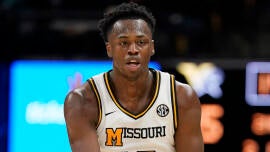
Mitchell, who exhausted his eligibility after playing this past season at Missouri, didn't enter the transfer portal during the window described because he wasn't eligible to play (at the time) since the five-in-five rule hadn't been made official. If the rules around intra-conference transfers in the SEC hold firm, Mitchell's options would be to return to Missouri or play outside the SEC this season, assuming his eligibility holds. (Which it may not. His case will still be heard in Kentucky eventually.)
With Mitchell, Kentucky would be one of the top contenders to win the SEC after a busy offseason that included landing prized sharpshooter Milan Momcilovic from Iowa State. However, his future playing for the Wildcats isn't looking promising at the moment.
So, who are the impact fifth-year players to know who might play in 2026-27?
CBS Sports has been tracking commitments from fifth-year players as they happen. From Darrion Williams returning to play for Texas Tech, Donovan Dent transferring to LSU and Jaxon Kohler electing to play for BYU, there have been several big names who have made their commitment to their next school, and some who are still waiting to be ruled eligible either for the first time or again, like the cases in Ohio and Tennessee.
Here are the biggest names who have transferred already. Keep in mind, these players all still need to win their court cases eventually. And the fight will continue on the conference level, as the leagues look to forbid anyone who signed any type of professional contract and/or didn't properly withdraw from the NBA Draft process.
| Player | New school | Previous school |
| Keyshawn Hall | St. John's | Auburn |
| RJ Luis Jr. | LSU | St. John's |
| Mark Mitchell | Kentucky | Missouri |
| Donovan Dent | LSU | UCLA |
| Jaxon Kohler | BYU | Michigan State |
| BJ Edwards | Oklahoma | SMU |
| Duke Brennan | Oklahoma | Villanova |
| AJ Storr | UNLV | Ole Miss |
| Seth Trimble | Louisville | North Carolina |
| Skyy Clark | LSU | UCLA |
| Darrion Williams | Texas Tech | NC State |
| RJ Godfrey | Arizona | Clemson |
| Amarri Monroe | Syracuse | Quinnipiac |
| Chendall Weaver | Houston | Texas |
| MJ Collins | Cincinnati | Utah State |
| Jalen Washington | Tennessee | Vanderbilt |
| Javon Bennett | Gonzaga | Dayton |
| Cameron Fens | North Carolina | South Dakota |