Somebody (not Kansas) will pay Flory Bidunga $5 million to stay in school. That resets the big man market
Flory Bidunga's $5 million asking price may reshape decisions for a wave of NBA fringe prospects weighing the draft vs. a lucrative return to college

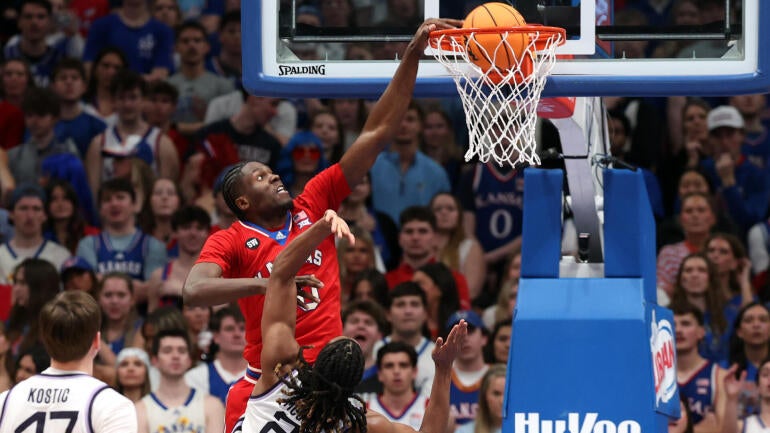
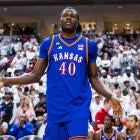
Flory Bidunga, who averaged 13 points and nine rebounds per game this season at Kansas, is the top-ranked prospect in the college basketball transfer portal. He's also a projected first-round draft pick, currently slated at No. 29 on the CBS Sports Big Board.
In years past, that type of projection would typically incentivize a prospect to stay in the draft. In Bidunga's case, though, that might not prove to be the case. Even more interesting is that his process could prove to be a litmus test for numerous other big men who are weighing remaining college eligibility against a spot in the NBA Draft.
If Bidunga were to elect to stay in the draft and ended up being the 29th pick, he would earn a salary of roughly $2.3 million next year in the NBA, based on this season's sliding scale. In order to push that salary up to $3 million, he would have to climb into the top 20 of the draft. Of course, if he were to slip just a couple of spots to the second round, he wouldn't be assured of a guaranteed contract, however unlikely that might be.
Conversely, in a robust big man market in college basketball, he is said to be seeking $5 million for next season and may have multiple schools willing to pay it. To get that type of money in the NBA, he wouldn't just have to be a lottery pick, but a top-10 pick. In other words, that's not happening.
Projected first-year NBA salaries (based on 2025 numbers)
- No. 15 — $3.88M
- No. 20 — $3.05M
- No. 25 — $2.49M
- No. 30 — $2.29M
With college basketball set to pay roughly twice as much as the NBA, chances are we'll see Bidunga back in college next year, albeit not at Kansas, as that price tag was too high for the Jayhawks, sources tell CBS Sports.
Now the question is what happens with the rest of the class. The top eight centers on the CBS Sports Big Board are all underclassmen, and seven of those eight rank between 20-40, meaning they are on the first-round fringe to varying degrees.
In other words, with Bidunga now setting the market, virtually all of them would stand to make more money by returning to college. Their decisions will have ripple effects on some of the biggest programs in college basketball, all of whom are hoping for retention and simultaneously trying to figure out contingency plans.

Michigan
No. 21 Morez Johnson, No. 23 Aday Mara
Neither Johnson nor Mara were perceived as legitimate NBA prospects in the 2025 cycle, but a year later that has changed dramatically, as both would likely hear their name called in the first round if they were to stay in the draft.
While Johnson was slightly ahead as of our last update, that is certainly a matter of perspective. Both could probably command bigger paydays in college, but the question, particularly for Mara, is whether his stock can ever get higher than it is right now.
The 7-foot-3 Spaniard made a major impression down the stretch of the NCAA Tournament as a truly dominant defender. Not only did Mary shut down the rim, but he was also more capable than expected when pulled to the perimeter. Offensively, he answered any questions about his hands, continued to show off his passing acumen and clever instincts around the rim.
As for Johnson, it was his newfound versatility, coupled with his physicality and efficiency, that has propelled his stock. Previously considered an undersized five, he proved he could be effective at the four, sliding his feet well enough to have defensive versatility and showing the first signs of floor-spacing potential.
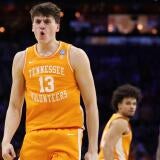
While neither player has formally announced their plans, Michigan is already working on contingencies. They landed a commitment from Tennessee transfer JP Estrella on Thursday, who fits their double-big system with his combination of size and face-up skill. That won't be enough, though, if they lose both Mara and Johnson, so they're also involved with Bidunga and undoubtedly have numerous feelers out in the market as well. The bottom line is that their massive size was probably their most defining characteristic in their national championship run, and they'd like to maintain it if at all possible.

Arizona
No. 24 Motiejus Krivas
After a sophomore season that was largely lost to injury, Krivas had a breakout junior year. He was inserted into the starting lineup for the first time and responded by anchoring the second-best defense in the country and helping Arizona establish the paint dominance that led them to the Big 12 regular-season and conference championships, as well as the Final Four.
While he's still more of a complementary piece offensively, his role is completely scalable to the NBA. At 7-foot-2 with a 260-pound frame and a reported 7-foot-5-plus wingspan, he has massive size even by NBA standards. He's strong, physical and just the type of drop-coverage monster that has a clear niche in the modern NBA (think Walker Kessler, Ryan Kalkbrenner and Donovan Clingan).
The Lithuanian native turned 21 in December. When you look at his numbers -- 10 points, 8 rebounds and 2 blocks in roughly 25 minutes -- there's a quick argument to be made that another year could bring further offensive growth. While that may be true, it might not have much bearing on his NBA stock, since what he does now on that end -- set big screens, duck in for deep post catches and seal off rotating defenders -- is largely what he'll be asked to do at the next level.
Right now, the point guard spot is the top priority for Arizona, since they lack a replacement for Jaden Bradley. Figuring out what's next in the frontcourt -- where some are even wondering out loud if Koa Peat could contemplate a return for a major payday -- is next, and there are obviously big questions to be answered.
Duke
No. 25 Patrick Ngongba
Two things can be true at once. First, Jon Scheyer has a very strong track record of retaining his best players. Second, there have been rumblings of a potential Ngongba departure for months now.
With Duke also being linked to Bidunga, it at least suggests they may be worried about losing their big man as well as Cam Boozer. Ngongba put up 10 points, 6 rebounds and a block per game this year, in about 22 minutes per night. Simultaneously, he intrigued NBA scouts with his size, length and budding inside-out skills. What's clear, though, is that there is room for further growth. He wasn't as efficient at the rim this year (ranking in just the 52nd percentile), has yet to turn floor-spacing potential into reliable range (8-31 on the season), and could be better as both a defensive rebounder and shot-blocker. Simultaneously, with his injury history, there are still concerns about durability.
Without Boozer coming back, Ngongba should have the platform to be Duke's featured big next year, with the volume and post touches he reportedly covets. The question is whether he will stick around for it. Duke has already lost Darren Harris and Nikolas Khamenia to the portal. Their incoming recruiting class is very good but lacks the star power of recent years (in correlation to the class itself), so the stay-or-go decisions of Ngongba, Isaiah Evans and Dame Sarr will be critical to their outlook for next season.

North Carolina
No. 26 Henri Veesaar
New coach Michael Malone's pitch should be pretty clear: he coached Nikola Jokic when he was both the NBA's MVP and led the Nuggets to a championship.
While Veesaar is no Jokic, he's as offensively talented a 7-footer as there is in college basketball, with the ability to stretch the floor, pass it and pose a scoring threat from multiple levels. Carolina also has the funds to pay him more than he would make in the NBA next year, unless he makes an unexpected jump in the pre-draft process.
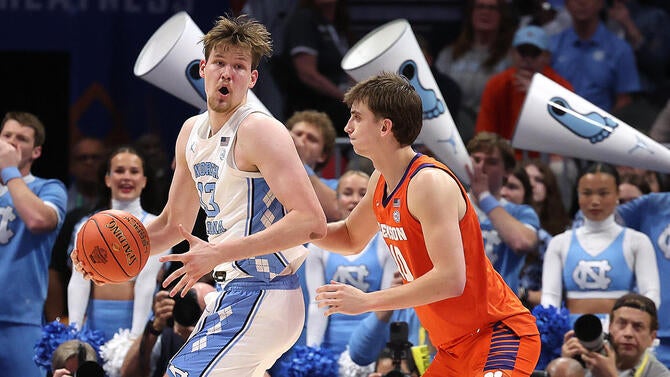
The case for Veesaar to make the jump to the NBA is also straightforward, though. He's 22 years old and is coming off a season in which he just made a significant offensive jump and impression. His defense and rebounding aren't yet where they need to be, but that may not change much with another year. There's a clear market for a floor-spacing five in the modern NBA, and the sheer depth of big men in this draft could quickly diminish if more follow Bidunga's expected example. If that is compelling enough for him to leave, Carolina will need to move quickly to rebuild its frontcourt, since there's no one capable of filling Caleb Wilson's shoes either.

Florida
No. 37 Rueben Chinyelu, No. 47 Alex Condon
Right now it looks like both of Florida's bigs are headed back to Gainesville next year, solidifying the massive double-big lineup that Todd Golden has consistently been committed to.
While neither is currently projected as a first-round pick, they're both in the ballpark, and the fact that there's so little buzz about them pursuing the draft is a testament to the big man market and buying power in the college game.

Kentucky
No. 64 Malachi Moreno
Moreno is testing the waters but not putting his name in the portal, and quite frankly that's a win for Kentucky. He would have had a massive market had he hit the portal, given his size, relative skill and ability to play in structure.
Virtually every school mentioned above would have surely targeted him to fill any void, while others like UConn, Indiana, Louisville and numerous others likely would have as well. As for his chances of sticking in the NBA this year, it just doesn't make much sense, given the money he's likely to make next year and the chances of playing his way up draft boards in 2027 when there is far less star power or certainty in that class.