How Mikel Arteta saved Arsenal and ended a 22-year Premier League title drought
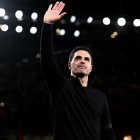
Mikel Arteta transformed Arsenal from a fractured club with a half-empty stadium into Premier League champions after a grueling seven-year rebuild

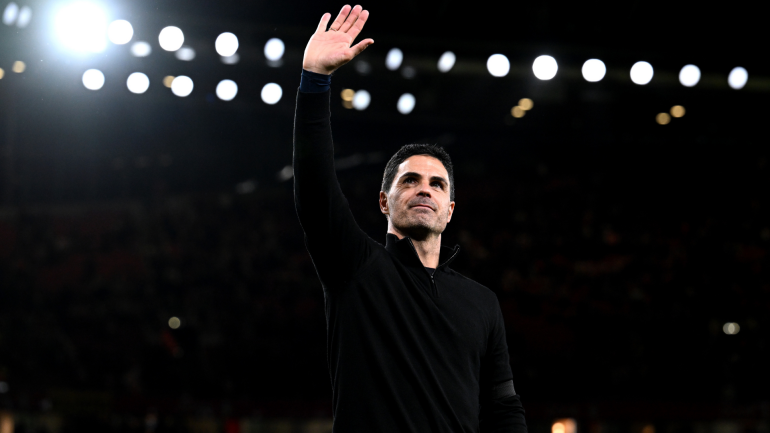
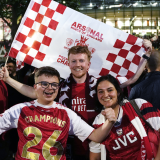
For the first time in a generation, Arsenal are champions of England. When they last lifted the Premier League trophy 22 years ago it seemed the good times might never end for the Invincibles. Two doubles in the preceding seven years, a new stadium that would eventually bridge the financial gap to their great rival Manchester United: sure, there would be some pain in financing the Emirates and the millions at Chelsea's disposal were a worry, but the idea that a generation might pass without the biggest prizes coming to north London would have seemed unthinkable.
That's how it always begins. Then one day, you find 15 years have gone by and you are as far from glory as ever. On and off the pitch, the structure is a mess, the players are bafflingly expensive for the quality of their performances, the fans aren't even at their throats anymore, they're resigned to ignominy. That was what struck Mikel Arteta, then Pep Guardiola's assistant at Manchester City, five days before he took the plunge and returned to the club at which he had ended his career. Even as the Emirates Stadium has become a fortress once more, the memory of how far his club had fallen before he picked them up off the mat is still as vivid now as it was in December 2019.
"That image, that feeling of the stadium, the crowd," Arteta said last week. "Fifty percent of the stadium was empty. It really got into me. I said, with this, there is no project, there is anything that we're not going to do. This is not going to work."
That it did work is Arteta's great victory. The Premier League title they secured as Manchester City dropped points to Bournemouth
on Tuesday is the outcome of his triumph, and a particularly glorious one.
The story of Arsenal is not the norm-breaking, discourse-making, nerve-shredding 2025-26 season. No, the story of Arsenal is the seven-year journey that got them back to where their manager always knew they belonged.
The long rebuild
To understand the sheer scale of Arteta's achievement, one that should probably make the holy trinity of Arsenal managers -- Arsene Wenger, George Graham, Herbert Chapman -- into a quartet, one must appreciate the depths this club had to climb out from. For many, it had never got quite as low as it did in 2019. Co-owner Josh Kroenke would admit he had to develop a "rhinoceros hide" to cope with the anger aimed in his direction amid the We Care, Do You movement, one which challenged ownership on a deeper level than just getting their checkbook out. Kroenke Sports and Entertainment had held a stake in Arsenal since 2007 and, after a protracted boardroom battle with Russian-Uzbek billionaire Alisher Usmanov, took the club private in 2018.
That decade had been hard on Arsenal. Wenger had become a divisive figure and a post-prime coach. Though the bulk of the stadium debt had been lifted, neither Kroenke nor Usmanov were putting money into a club that wasn't theirs. The ground might have been a great revenue generator, but in the 2010s the revenue growth was in broadcast and commercial, both areas where Arsenal were lagging behind. Their defining games of the years gone by had been the routs inflicted on them by the teams they once battled with: 5-1 to Liverpool, 6-0 to Chelsea, 8-2 to Manchester United.
Defeat at Old Trafford did at least deliver two of the foundation pieces of the future rebuild. Per Mertesacker and Arteta were cornerstones of a club that won three FA Cups in four years. The former would go on to manage the academy, the latter, well it was apparent even when he was club captain that he was destined for bigger things. His presence ahead of the 2015 FA Cup Final, a match he would miss through injury, stood out to more than one senior figure at the club as a lightbulb moment, when it struck them they were looking at a future Arsenal manager. Wenger entrusted Arteta with a mid-week team talk in which a video reflected the importance of the competition the Gunners have won more than anyone else. Reading and watching back the press conference from a few days' later, it is already striking how at ease the then 33-year-old seemed in front of the media.
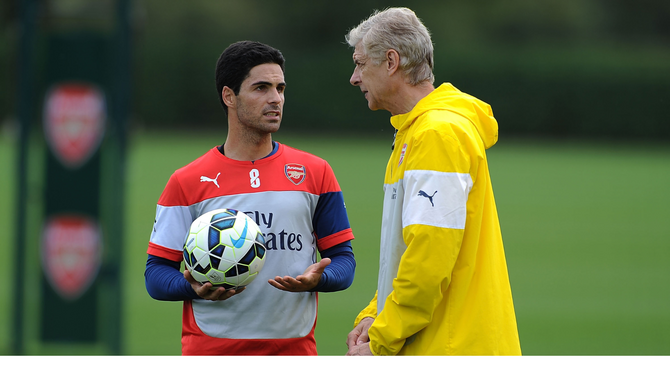
"His focus and his dedication were remarkable," said a source. "I thought Wenger was obsessive and committed to a degree I'd never seen before. Mikel is another level again."
That was what Arsenal needed. They just didn't know it, though Arteta was agonizingly close to getting the job after Wenger's departure. After a manager who had bent the very turf at London Colney to his will, it felt natural that they should go for a pure head coach. It did not take long for them to realise that they had erred in hiring Unai Emery. An organization that had become so used to seeing the guy in the dugout as a figurehead erred through a disastrous rebuild, struggling to improve a team that Kroenke memorably labelled a "Champions League wage bill on a Europa League budget." Other clubs might have sacked Emery after failing in the Europa League and Premier League in year one. Years with Wenger had long since convinced Arsenal that they weren't a sacking club. In holding on so long, they deepened the rot.
Before his first match in charge, this was the situation that Arteta faced. Arsenal were 11th in the Premier League, closer to the relegation zone than the top four. Their wage bill was the fourth highest in the division, £3 million a year greater than a Liverpool side that was about to win the league. The club had repeatedly broken their transfer record in recent years, such that there was little in the kitty to improve the team.
It was not without hope entirely, but some of Arsenal's best players -- Gabriel Martinelli and Bukayo Saka in particular -- were years away from their prime. In appointing Arteta, ownership acknowledged that their best hope for a bright future lay in those players. They would give their head coach time and the authority that came with a switch to manager at the start of his first full season.
That meant holding firm in the most trying of circumstances. And these were experiences that would have tested a far more experienced manager. In March 2020, Arteta's testing positive with COVID-19 proved to be a watershed moment in the outbreak in the United Kingdom. He was obliged to navigate football behind closed doors, something he consistently refers to as the most challenging period of his career, and be the face of a club that was cutting jobs and wages.
Nearly a year in, Arteta's future looked untenable externally. He had won the FA Cup, but the league form looked terminal. A run of two points in seven games meant a scrap against relegation threatened to be a real prospect. Still, Arsenal held firm, insisting at the time that they were standing by their manager. Free to be more candid now that they have been vindicated, senior figures are no less insistent now. Even if what turned out to be a watershed 3-1 win over Chelsea had been a defeat, Arteta was not going to be sacked. They were all in.

That was a problem for those Arteta was not all in on. Through his seven years of management a familiar refrain from sources close to players is that when the manager has lost faith in you, he does not recover it. That was a marked contrast with Emery, who would prevaricate on whether he should continue to pick big names those above him were looking to move on from. He did not have the authority of the manager's title.
Mesut Ozil was brought back into the squad on the change of management and started every Premier League game under the manager before the pandemic. Then came his refusal to join much of the rest of the squad in taking a wage cut. Whatever the rights or wrongs of a request that the player felt had been asked without full transparency, Arteta concluded that he could not pick a player who was not all in. He was similarly firm when club captain Aubameyang returned later than authorised after visiting his mother at the start of 2022. Arsenal's best forward was drummed out without a replacement.
These were signs of a new club. "When Mikel took over, no one lived the Arsenal values that the team talked about," said a club insider. "The players were difficult to work with. It was not a pleasant environment in which to work."
The right recruitment
It took a lot of money to change that. The Kroenkes dug deep, directly securing the finances to, for instance, pay the release clause of Thomas Partey when he left Atletico Madrid in 2020. Arteta's backing for the Ghana international amid police investigations into six counts of rape and one of sexual assault still hangs heavy over the club, a jarring reminder that Arsenal did not always live up to the values they aspire to.
Partey was among 18 signings worth over $30 million that Arsenal have made during Arteta's tenure. Total expenditure is well over $1 billion, net expenditure the third highest in the Premier League during his time in charge. That they have outspent Manchester City in the latter metric is no great surprise given that their manager's former employers have been the gold standard for over a decade. Arsenal had ground to make up and they are still underpowered in financing terms.
Their wage bill, the best predictor of likely finishing place, has grown significantly as they have contended for silverware once more, but at around $460 million as of 2025 it is still only the fourth most in the league, far behind the $546 million City spend annually on their squads. It is worth noting that one of the quieter triumphs at Arsenal in recent years has come from changes to the commercial department that were steered by former chief executive Vinai Venkatesham. According to Deloitte's Football Money League, deals with the likes of Adidas, Emirates, Deel and Sobha Realty have more than doubled revenue to $365 million in four years. That has created enough headroom that Arsenal's wages-to-revenue ratio was below 50% in their most recent accounts, meaning there is room to strengthen the playing squad as required.
Keep hitting at the rate they have over the last few years and they could get even better. For all that this is Arteta's triumph, the primary reason that it is possible is that Arsenal have bought really good players. The decision by former sporting director Edu to overhaul the recruitment department has been largely vindicated, though it should be noted that big additions such as Partey, Gabriel Magalhaes and even Leandro Trossard were first championed by the ancien régime and, in particular, Francis Cagigao.
Arteta and his staff, though, is Arsenal's ace in the hole when it comes to sealing the deal. You will continually hear the word "aura" come up when players talk about their conversations with the manager. They are the ones who can seal a deal against all sorts of competition. Take the summer of 2023. Aaron Ramsdale was safely ensconced as Arsenal's No.1, beloved by supporters for his exuberance and garlanded with awards after Arsenal's first swing at the title.
Meanwhile, Bayern Munich had their eyes on Brentford's David Raya. Manuel Neuer had just turned 37, and there was every reason to believe that Raya, who had risen from non-league to England's top flight, could be the man to succeed Germany's greatest ever goalkeeper at a perennial Champions League contender.
What Bayern did not have was years of legwork and serious attempts to sign Raya earlier. When Arsenal reignited their interest, the biggest club in Germany didn't have a chance.
According to Raya's agent, Jaime Munell, "Mikel has always been upfront and, together with [goalkeeping coach] Iñaki Caña, had been able to convey the reality and why they wanted David. The Arsenal project convinced us more, and we accepted, but it was always our first option, since Arsenal tried twice to sign David."
To get their squad right Arsenal have been prepared to play the long game. When Edu first arrived at the club six months before Arteta, he delivered a vision to his employers for how a title contender would have to look. Two starter-level players in each position would be needed if the Gunners were to compete with Manchester City and Liverpool across a gruelling Premier League season. A year after he left, that vision was brought to fruition.
It did not have to be the plan they executed. In the final months of the 2024-25 season, Arsenal once more considered a possible move for long-standing target Alexander Isak, who was believed to be open to considering a switch to north London. Had they pushed ahead with a deal that would go on to cost Liverpool over $160 million there would surely not have been the funds to round out the squad as they did. Arsenal were focused on deepening a squad with players who had a strong track record of availability. The extent to which they made the right calls on the likes of Viktor Gyokeres, Noni Madueke, Christian Norgaard and Eberechi Eze, among others, has been the subject of endless debate.

Whatever the merits of those signings, the reality is that Arsenal have found a way to lead the Premier League from October to the end despite a volume of injuries only "bettered" by Tottenham. Suppose at the start of the season you were told that the following players would be out of the starting XI in seven or more Premier League games: Gabriel Magalhaes, William Saliba, Jurrien Timber, Kai Havertz, Bukayo Saka and Martin Odegaard. Indeed, the latter trio would not start a league game together until the penultimate match of the season. Could you have imagined a team so wracked by injuries winning the title?
Forging a bond
That Arsenal have not let the injuries blow them off course speaks to the bond forged and maintained by Arteta. It had been a long time this group of players was hammering at the door to no avail. Through it all, they stayed engaged.
Again, this redounds to the manager's credit. He continues to freshen his approach up, introducing new approaches and fresh tactics to test his own players and react to the opposition. As late as the final few days of the season, Arsenal were adapting their kick-off routine to a rugby style up and under, the ball arcing high in the air to create an aerial duel or a pressing opportunity in the final third.
"Everything gets seen," says a source who knows Arteta well. "Everything gets a reaction."
That speaks to the image of Arteta as the overly intense, explosive and often humourless figurehead of an Arsenal who have tested every margin in pursuit of silverware. Like most caricatures, the starting point is an element of truth then heightened beyond recognition. After all, it seems hard to believe that seven years of that sort of management would not grate on players.
Arteta knows how to keep it light in the dressing room. After all, this is the man whose performance of the Macarena when he first joined Arsenal as a player had Wenger and his coaching staff in paroxysms of laughter. He is hardly delivering a tight five before matches, but anyone who has seen the Amazon documentary that chronicled the 2021-22 season knows that creativity abounds.
Though Arteta seems to grimace whenever his year in front of the camera is mentioned, he is always trying new methods to get his message across to his team. Plumbing in a washing machine before one match? That particular bit of showmanship did not quite come together, though it is understood the Arsenal manager wanted to use it to make a point to his team.
It is the same off the pitch. Arteta's fingerprints are all over the videos Arsenal post on social media before big matches. He has championed the introduction of tifos ahead of big games and was all in on the weird "Vamos Arsenal," seemingly AI tune that has become the soundtrack to the final weeks of the season. Given how it has ended, "make it happen, north London forever, we are the Arsenal" might be a cry that echoes around N5 for many years to come.

What next?
All the more so if Arsenal can build on this triumph. Beat Paris Saint-Germain in Budapest in the Champions League final and there is a conversation to be had between 2025-26, the Invincibles, 1970-71 and a handful of others for the greatest team in the club's history. With 44 wins (so far), the high-water mark of wins, the 41 of the 1971 double winners, has been broken.
All through the season, the focus has been on punching through the final hurdle, but comments from ownership ahead of the final home match of the campaign on Monday night spoke to an intent to keep going. "We are building something very special and, wherever this month of May takes us, there will be no standing still when the season ends," said Josh and Stan Kroenke. "We are always forward in our approach, taking the learnings as we go and relentless in the pursuit of progress. We remain focused on raising the standard, creating the best possible environment for our players and people to succeed, and elevating the unity that exists between club and community."
CBS Sports understands that Arsenal expect departures from their squad this summer after the ambitious commitment of nearly $350 million for seven permanent signings before the start of the season. The option to sign Piero Hincapie should also be exercised at a cost of around $60 million. Then again, with the revenue from a deep Champions League run and title challenge, departures from the squad can be seen as about making space as much as they are balancing the books.
Ben White, Gabriel Jesus, Ethan Nwaneri, Gabriel Martinelli and Leandro Trossard are among those who could depart, according to CBS Sports sources. The futures of Kai Havertz and Martin Odegaard have also been a matter of speculation, given that both are entering the final two years of their contract. Cristhian Mosquera is a target for Atletico Madrid, and having signed for just $17 million he is a player on whom Arsenal could make a tidy profit. It is not yet clear if that is something they would be minded to do.
In terms of incomings, Arsenal have Atletico Madrid's Julian Alvarez on their list of targets and have been linked with a move for Khvicha Kvaratskhelia, though it is understood the Georgian winger is happy at Paris Saint-Germain. A fullback and a starter-level player in midfield are also positions the Gunners are monitoring.
This is a good time to have solid foundations. With Pep Guardiola's impending departure from Manchester City, the ongoing rebuild at Liverpool and the institutional turmoil at Chelsea, there is an opportunity for Arsenal to stamp their authority on England once more.
Their supporters will know as well as anyone that the moment when you feel on top of the world might be the precursor to a long and painful slide back down the mountain. Arteta, though, will not have wanted to spend so many years dragging this team up the mountain and then not enjoy a long stay at the summit.