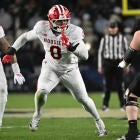


The coaching carousel delivered several landscape-shifting moves, but expectations are hardly uniform entering the 2026 season. Lane Kiffin arrives at LSU with the nation's top-ranked transfer class and a playoff-or-bust mandate. Elsewhere, success will be measured differently.
Some coaches inherited loaded rosters with impatient fan bases and no grace period. Others are stepping into extensive rebuilds where bowl eligibility, improved play and meaningful progress would represent success.
Roster strength, schedule difficulty, quarterback stability and transfer portal success all factor into the equation. Here is our projection for how each new Power Four coach will fare this fall, from immediate playoff contenders to those simply hoping to keep their heads above water.

Ryan Silverfield, Arkansas
Year 1 goal: Qualify for a bowl game
Projected record: 4-8, 2-7 (SEC)
Silverfield faces a difficult first season at Arkansas, where patience has worn thin, and the schedule offers few opportunities to build momentum. The Razorbacks lack the roster depth needed to survive an unforgiving SEC slate, making a 4-8 finish an unfortunate, but realistic, projection.
Silverfield showed off his coaching chops at Memphis, but Arkansas must spend like a program serious about escaping the league's bottom tier if it wants to move forward. Until he convinces influential supporters to donate and strengthens the program's NIL operation, meaningful progress will be difficult. His first year is less about contending and more about establishing credibility, developing players and creating enough belief to unlock resources.

Alex Golesh, Auburn
Year 1 goal: Flex progress with a mid-tier SEC move up
Projected record: 7-5, 4-5 (SEC)
The situation is not as grim for Golesh as it is for Silverfield, partly because of what Auburn returns on defense under coordinator D.J. Durkin. The Tigers can create problems in the SEC, even if they are not yet ready to contend for a championship.
An aggressive portal haul addressed several weaknesses, added proven playmakers -- many from USF -- and gave this staff enough depth to challenge ranked opponents deep into the fourth quarter.
Golesh's offensive creativity should make Auburn a tough out, particularly if Byrum Brown stabilizes the quarterback position and the revamped offensive line holds up. The Tigers have dark-horse potential if everything clicks, but a more realistic identity may be that of a weekly nuisance nobody wants to face.

Tosh Lupoi, California
Year 1 goal: Let quarterback Jaron-Keawe Sagapolutele run the show
Projected record: 7-5, 5-4 (ACC)
Most first-year coaches do not inherit a proven quarterback like Lupoi has in Sagapolutele. His command of the offense gives the Golden Bears a chance to exceed modest expectations. The challenge will be building enough support around him and developing a defense capable of surviving an ACC schedule filled with toss-up games.
Lupoi brings energy, recruiting credibility and a defensive edge, but immediate contention feels premature. A 7-5 finish and bowl appearance would represent a strong debut.
Jon Sumrall, Florida
Year 1 goal: Lead talented roster to a ranked finish
Projected record: 7-5, 4-5 (SEC)
Sumrall's inaugural campaign at Florida comes with little margin for error. The Gators could face six ranked opponents, a daunting path for a new staff installing its systems and establishing a different identity. Sumrall hopes much of that work is accomplished before the SEC opener at Auburn.
Florida should be physical, disciplined and dangerous at home, but lulls are inevitable as players adjust and Sumrall learns to navigate the league's weekly pressure. This roster is capable of reaching eight wins, though a 7-5 finish feels more appropriate given the schedule. Growing pains should not diminish optimism; they are part of Florida's climb.

Jimmy Rogers, Iowa State
Year 1 goal: Avoid detonating program momentum
Projected record: 4-8, 2-7 (Big 12)
Perhaps the toughest rebuild in the Power Four this cycle, Rogers steps into a difficult situation at Iowa State after Matt Campbell left for Penn State and took many of the program's best players with him. That stripped the Cyclones of proven production, leadership and depth.
His developmental track record will be tested immediately as Iowa State leans on inexperienced players and portal additions. The schedule offers few breaks, and bowl eligibility would represent an impressive accomplishment.

Collin Klein, Kansas State
Year 1 goal: Push team back into Big 12 threat status
Projected record: 7-5, 4-5 (Big 12)
Klein returns to Kansas State with immediate expectations and a quarterback he knows better than most. Avery Johnson, whom Klein originally recruited, is the linchpin for everything the Wildcats hope to accomplish in Year 1. His athleticism and experience give Kansas State a chance to contend, but his consistency as a passer will determine the team's ceiling.
Klein should build the offense around Johnson's strengths, emphasizing tempo, movement and explosive plays. Eight wins feels attainable, with dark-horse conference title potential still in play. Seven wins is the safer projection.

Will Stein, Kentucky
Year 1 goal: Get to bowl eligibility while showing progress
Projected record: 5-7, 2-7 (SEC)
Stein stole the show at SEC Media Days with a Curt Cignetti-like confidence. He has brought a noticeable jolt of optimism to Lexington, a refreshing change after the Mark Stoops era ended with consecutive losing seasons.
The Wildcats invested in the roster during the offseason, upgrading both lines of scrimmage and adding portal talent around a new-look offense built to generate explosive plays. Stein's confidence is not empty optimism. Kentucky has enough pieces if its transfers mesh quickly. The schedule remains demanding, and depth concerns will surface, but bowl eligibility is an achievable goal.
Lane Kiffin, LSU
Year 1 goal: Make the College Football Playoff
Projected record: 10-2, 7-2 (SEC)
Kiffin did not leave Ole Miss for LSU to oversee a lengthy rebuilding project, and everyone knows it. Anything short of a CFP appearance in Year 1 will feel like a massive disappointment.
LSU backed that urgency with the nation's top-ranked transfer portal class. There are impact additions at premium positions, proven depth and enough offensive firepower for Kiffin to immediately build one of the league's most dangerous attacks. This is not about progress in Louisiana. It's playoff or bust from the start.

Kyle Whittingham, Michigan
Year 1 goal: Make the CFP
Projected record: 8-4, 6-3 (Big Ten)
Whittingham faces the most difficult schedule of his lengthy coaching career as he moves to the Big Ten. Unlike Kiffin at LSU, a CFP appearance is not necessarily expected, but the Wolverines need to remain in the conversation into November. Bryce Underwood gives Whittingham a potential superstar at quarterback, the type of difference-maker capable of changing games with his arm, athleticism and growing command of the offense.
Paired with an elite defense, Whittingham inherits a team without many obvious weaknesses. His physical, detail-oriented approach should fit seamlessly in Ann Arbor, where winning at the line of scrimmage remains the program's identity.

Pat Fitzgerald, Michigan State
Year 1 goal: Qualify for a bowl game
Projected record: 3-9, 1-8 (Big Ten)
This is not a one-season turnaround in East Lansing. Fitzgerald inherits a difficult situation in which roster limitations and a punishing November schedule could make his first season especially uncomfortable. A Week 3 trip to Notre Dame only adds to the challenge. The Spartans lack proven difference-makers at several premium positions, and depth concerns could become glaring if injuries mount.
Fitzgerald should improve the program's toughness and organization, but those changes will not guarantee immediate results. Wins could be scarce if the offense struggles to find consistency. Admittedly, this outlook is more pessimistic than most.

Eric Morris, Oklahoma State
Year 1 goal: Finish with a winning record in Big 12 play
Projected record: 9-3, 7-2 (Big 12)
Morris plans to shock the Big 12, armed with more than 60 new players and an offense designed to stress opponents. The massive roster overhaul was necessary after the forgettable end to Mike Gundy's tenure, when the Cowboys lost their identity.
Chemistry and depth remain obvious concerns, but Morris' system can accelerate the turnaround if Oklahoma State gets dependable production from Drew Mestemaker, Caleb Hawkins and others on offense. This is a high-variance team capable of frustrating contenders one week and looking disjointed the next. That's the reality for many portal-heavy rosters. Bowl eligibility would represent progress, but the Cowboys believe they can become the conference's biggest surprise in Year 1, and we're buying in.

Matt Campbell, Penn State
Year 1 goal: Bounce back from the Nittany Lions' 2025 fiasco
Projected record: 9-3, 6-3 (Big Ten)
Campbell has a golden opportunity to make Penn State fans forget the frustrations of the James Franklin era and deliver immediate success in 2026. The Nittany Lions own one of the Big Ten's more favorable schedules, avoiding Ohio State, Indiana and Oregon during the regular season.
Campbell also brought several familiar Iowa State players with him, which should ease the transition and accelerate the development of his culture. That continuity matters for a program expected to win immediately. Penn State has talent, experience and opportunity. Anything short of a playoff push would feel disappointing given the schedule.

Tavita Pritchard, Stanford
Year 1 goal: Show meaningful progress
Projected record: 2-10, 0-9 (ACC)
This is a complete rebuild for Pritchard under general manager Andrew Luck, who is reshaping the program from recruiting operations to roster development.
The Cardinal must become more competitive in the ACC, establish an offensive identity and prove they can hold up physically against every opponent. Bowl eligibility would be a remarkable achievement, but four wins and improved weekly execution would signal momentum. Getting there is another story entirely.
Bob Chesney, UCLA
Year 1 goal: Qualify for a bowl game
Projected record: 7-5, 5-4 (Big Ten)
Chesney brings immediate credibility after he led James Madison to the CFP. However, Chesney's first Big Ten season will require a different level of roster management.
He has built winners through discipline, development and belief, traits UCLA desperately needs after years of instability. The baseline goal is six wins, with seven representing a notable debut. If his culture takes hold quickly, the Bruins could accelerate their climb toward Big Ten relevance.

Morgan Scalley, Utah
Year 1 goal: Reach the Big 12 Championship Game
Projected record: 10-2, 7-2 (Big 12)
Expectations have not changed at Utah despite Whittingham's departure and Scalley's promotion. The program's identity remains intact, and the return of Devon Dampier and Byrd Ficklin gives the Utes two proven offensive difference-makers. Scalley understands the culture, toughness and developmental blueprint better than anyone, limiting concerns about the transition.
Utah still must replace Whittingham's steady leadership, but this is not a philosophical departure. With experience at quarterback and a dynamic backfield, the Utes should remain among the Big 12's most physical and dangerous contenders this fall.

James Franklin, Virginia Tech
Year 1 goal: Challenge for eight wins in a top-heavy conference
Projected record: 8-4, 5-4 (ACC)
Franklin begins his tenure at Virginia Tech with the institutional support the Hokies have lacked for years. The administration has committed resources to staffing, recruiting and roster acquisition, giving Franklin the infrastructure needed to build quickly.
His track record as a recruiter should resonate throughout Virginia and the surrounding region, where too much talent has left the state in recent cycles. The challenge is turning that investment into immediate production while restoring Lane Stadium's home-field advantage. Virginia Tech is not expecting a slow climb. With Franklin's experience and the school's renewed commitment, winning big is once again the expectation in Blacksburg.