

For more than a decade, the most powerful people in college sports kept making the same trip to Capitol Hill, where they testified, lobbied and poured millions of dollars in an effort to secure antitrust protections and national regulation.
Late Monday night, they ultimately secured the first historic vote they sought.
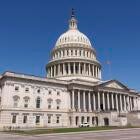
The U.S. Senate passed the Protect College Sports Act by a 77-22 vote following nearly six hours of debate and consideration of seven amendments on the floor. It's the first time either chamber of Congress has approved sweeping federal legislation to govern college athletics. The bipartisan bill, written by Sens. Ted Cruz (R-Texas) and Maria Cantwell (D-Wash.), would write the NCAA's rules into federal law, give the industry a limited antitrust exemption to enforce rules on transfers and eligibility, and codify the House v. NCAA settlement that turned schools into direct payers to their athletes.
"This bill puts an end to the chaos plaguing college athletics," Cruz said Monday on the Senate floor. "It protects NIL opportunities because student-athletes deserve the opportunity to benefit from their talent without being taken advantage of by unscrupulous agents and backdoor deals. It creates clear, enforceable rules for eligibility and transfers. It protects our traditions and rivalries. It prevents the most powerful and wealthy conferences from breaking away to form a super league. But most importantly, it protects our student-athletes."
The NCAA and its most powerful conferences have chased this moment since before athletes could legally earn money for playing college sports. They have never been closer to the finish line, but they're not there yet.
The bill now heads to the House of Representatives, where it is unlikely to reach the floor before the Nov. 3 midterm elections, sources in Washington, D.C., told CBS Sports this week. The House is not scheduled to return to work until Nov. 9, raising concerns about whether a college sports bill would even be considered during a lame-duck session. Speaker Mike Johnson said he expects the bill won't be considered until then.
President Trump has pressed House leaders to return in October, and he may do so again after the Senate passed the bill Monday. The House has a slim Republican majority, and the bill can not afford to lose any Republican support for passage.
"I'm not sure what the fight is going to be like in lame duck as they try to push this over the edge, especially if the House switches from Republican to Democrat," Sen. Cory Booker (D-N.J.), an opponent of the bill, told CBS Sports. "Democrats should have a chance to really author a bill that corrects for a lot of the failings in this bill."
That leaves a narrow window. The real deadline for the bill is Jan. 3, when a new Congress is sworn in, and any bill that hasn't become law dies. Other obstacles in the legislative session are also choking the air in the chambers. Government funding runs out Dec. 11, a fight that will swallow floor time in both chambers. House Republicans have also signaled they want changes to the bill, including an outright ban on classifying athletes as employees and, among a growing number of members, a cap on international players, as Front Office Sports reported this month.
Any change sends the bill back to the Senate, stringing out a bill whose primary enemy is time.
Cruz has insisted a lopsided Senate vote would push the House to act, voicing confidence that the House will return in October and vote the bill into law. As of now, the House is not expected to return until Nov. 9, after the midterm elections.
The bill would deliver the prize the NCAA has pursued for a decade: an antitrust exemption that would let the industry set and enforce eligibility and transfer rules without having them struck down in court, as judges have repeatedly done in recent years.
Perhaps the biggest change in the bill came on Monday evening. After a late rewrite earlier this month loosened restrictions on conference realignment, fears of future disruption to conference membership in the 2030s were reawakened across the industry. Those concerns grew Monday night when a bipartisan amendment raising the 19-member cap on conference membership to 20 passed by a voice vote. Sens. Ashley Moody (R-Fla.) and Richard Blumenthal (D-Conn.) presented the amendment.
A school jumping between power conferences would have to remain independent for three years instead of five, and the waiting period would disappear entirely six years after the law takes effect. It also does not affect Notre Dame, which is already an independent. The bill would also ban a super league, effectively walling off private equity from building a breakaway league.
The money gets bigger, too. Schools could pay athletes from three buckets: the $21.6 million revenue-sharing cap from the House settlement, a new $22.5 million retention fund and $5 million reserved for women's and Olympic sports. That puts schools on the hook for up to $50 million a year, more than double what they have paid during the first two years of the House v. NCAA settlement.
"That's sort of where the market is," Sen. Eric Schmitt (R-Mo.), a key co-sponsor, told CBS Sports in August.
The retention fund, a mechanism designed to slow churn in the transfer portal, comes with strings attached. Schools that miss graduation and academic benchmarks lose access.
The bill covers a variety of issues that have complicated college sports in recent years. Under the bill, athletes can transfer once without sitting out a season, which would also make the NCAA's new five-year eligibility clock law. Football coaches will no longer be allowed to leave midseason for another job. Players' agents would be required to register in a national database, and their fees would be capped at 5%. Schools must also maintain minimum sport offerings and baseline roster sizes and scholarships in women's and Olympic sports.
"We need to stop stealing money out of college [and] university institutions for education, for tuition, for professors and putting it into an arms race on sports," said Cantwell, who co-authored the bill. "It is putting a pin in the problems to stabilize the loss of women's and Olympic [sports] and to create the opportunity to discuss the larger structure moving forward. That is why I think we have so much support."
The bill does not answer the question that has hovered over college athletics for five years: whether athletes are employees. It stays neutral. Many Democrats have fought for a collective bargaining structure.
Their argument is that the bill locks in the NCAA's rules through federal statute, meaning athletes could never negotiate those terms through collective bargaining without Congress first repealing the law. The College Football Players Association and Athletes.org opposed it on those grounds.
"This is a bill being made without athletes' input, and it reads like that," CFBPA executive director Jason Stahl told Fox Sports earlier this month.
Sen. Chris Murphy (D-Conn.) became the loudest opponent in the chamber. On a call with reporters, he said the bill would "allow colleges and conferences and the NCAA to illegally collude." The NAACP, the AFL-CIO and the Congressional Black Caucus lined up against it. NAACP president Derrick Johnson said in a statement that it "does little to actually protect the student-athletes who make this multi-billion-dollar industry possible."
Booker, a former Stanford football player, and other critics also targeted the legislation's $900 million allocation for Historically Black Colleges and Universities, calling the pledge a hollow gesture instead of guaranteed financial backing. Booker, long an opponent of the bill, argues the legislation will strip players of their right to sue and fail to guarantee health and safety standards.
"I've been fighting against an institution called the NCAA that has violated [players'] rights all throughout my lifetime," Booker said on the Senate floor before the roll call. "I urge my colleagues to oppose this bill. I urge my colleagues to stand up for justice. I urge my colleagues not to race to get a bill done right before an election. I urge my colleagues to hold hearings and actually listen to survivors of sexual assault, parents of dead college athletes, to the kids who have serious, debilitating injuries right now and are paying for their own medical bills. I beg my colleagues not to do this. It's wrong."
Sen. Chris Murphy (D-Conn.) termed the PCSA as a long-term threat to college athletics, calling the NCAA's structure an "illegal system."
"We could have done what happens in most industries, which is just say to the NCAA and to the colleges, tough luck," Murphy said. "Congress isn't going to come in here and micromanage your relationship with the athletes. If you want to work something out, sit down and talk to the athletes about it. If you want rules that apply across the industry, then do what every other industry does, which is have a dialog with the workers."
On the other side stood the supporters of the bill: Senate leadership, President Trump, 32 conferences and more than 370 schools, according to the White House. In recent months, legendary coach Nick Saban and Colorado coach Deion Sanders supported the bill in campaign commercials partly funded by Texas Tech megabooster Cody Campbell.
The journey to passage in the Senate was long, arduous and littered with dead bills.
Talk heated up in July 2021, when the NCAA lifted its ban on name, image and likeness compensation, weeks after the Supreme Court ruled against it unanimously in the landmark NCAA v. Alston case. As states enacted piecemeal NIL legislation, administrators sounded the alarm about an unbalanced playing field.
Since 2020, Congress has introduced more than 40 college sports bills to establish national regulations. Most never reached discussion, and others didn't leave committees. The House's SCORE Act came closest, and then collapsed twice: Republican leadership pulled it from the floor in December 2025 hours before a scheduled vote, after a procedural measure survived 210-209, and pulled it again in May after the Congressional Black Caucus came out against it.
Even the Protect College Sports Act stalled this summer, as the Big Ten and SEC demanded changes before signing on after several negotiation deadlines passed.
The power conferences are not idling, counting on the House to pass the bill into law. Several power conferences have been developing self-governance models since May under the House settlement as a backup plan if the bill fails before the new year. Those plans include a larger pool of player payments of up to $50 million, though doing so would require plaintiffs in the House v. NCAA settlement to agree.
Regardless of what lies ahead, Monday night marked a historic turning point. The question of whether the Protect College Sports Act ultimately becomes law now shifts to another chamber and another grueling round of political maneuvering during a heated midterm cycle.