

College football's 2026 season opens with a rare kind of pressure map in college football: a full reset of expectations across the sport's most volatile job market, where first-year coaches within the Power Four are judged less by long-term vision and more by immediate proof of competence.
Patience is no longer a universal concept -- it's a sliding scale defined by roster quality, NIL investment, transfer portal activity and institutional urgency on an annual basis. This ranking isn't just about wins and losses. It's about context. A coach walking into a rebuilt SEC roster loaded through the portal is operating under a different microscope than one inheriting a developmental rebuild in another power conference, for example.
Few programs are truly rebuilding these days -- they're just reloading under a tighter clock.
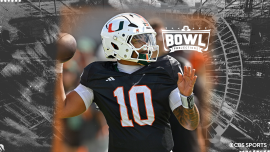
There were 33 FBS coaching changes during the 2025-26 cycle, including 17 within the Power Four ranks -- six in the SEC alone. We've assigned a numerical projection to a patience meter scale for coaches inheriting Power Four programs, each with varying expectations in their first seasons.
Patience meter scale
1 | Understandable multi-year rebuild |
2 | Plenty of runway for future progress |
3 | Commence bowl eligibility after roster overhaul |
4 | Expectations are high and potentially unrealistic |
5 | Win big now, given the resource allocation |

Matt Campbell, Penn State
Patience meter: 4
Campbell inherits a Penn State program still trying to shake the frustration of last season's collapse under James Franklin, when lofty playoff expectations unraveled against the Big Ten's elite and intensified criticism surrounding the Nittany Lions' inability to win the biggest games on the schedule. That reality is why 2026 feels so pivotal from the start in Happy Valley.
Penn State didn't make this move for a rebuild. The Nittany Lions made it, expecting Campbell to elevate the program into the national-title conversation right away -- at least in the next few seasons. The Nittany Lions hired him to provide stability and close the gap nationally against some of the Big Ten's better-equipped competition. Campbell wasted little time rebuilding key positions through the portal with ample Iowa State talent, including experienced offensive line help, veteran defensive depth and proven playmakers capable of helping Penn State contend right away rather than endure a transition year.
Campbell's first season will be judged less on long-term vision and more on whether these portal additions translate into wins against the league's heavyweights -- the exact hurdle Franklin's teams consistently struggled to clear.
Bob Chesney, UCLA
Patience meter: 2
Expectations are immediately amplified for Chesney thanks to a transfer portal overhaul that reshaped the roster from top to bottom, but this program has a long way to go. In Westwood, patience is thin, especially after years of underachievement in a market that demands relevance in the Big Ten race as one of the league's newest members. Chesney's reputation for program-building now meets a different scale of investment and pressure, where wins must come quickly and offensive identity must stabilize early. If the portal additions translate, UCLA could surprise. If not, the Bruins risk another reset narrative before momentum ever takes hold under the new regime in the Los Angeles market pressure cooker.

Pat Fitzgerald, Michigan State
Patience meter: 1
Assuming the Spartans learn from their last mistake after firing a coach following his second season, Fitzgerald should have a grace period -- albeit shorter than other Power Four opportunities he could've swiped -- at Michigan State. He flexes a résumé that carries weight from his long tenure at Northwestern, but East Lansing is a different standard entirely. Expectations are shaped less by nostalgia and more by urgency to stabilize a program that has struggled with consistency and identity. Fitzgerald's blueprint -- physical defense, disciplined football, and developmental patience -- must translate quickly in a Big Ten landscape that no longer waits for rebuilds. Early competitiveness matters, and looking the part in rivalry matchups is season-defining.

James Franklin, Virginia Tech
Patience meter: 4
Backed by a mandate from an athletic department that clearly decided incremental progress wasn't enough anymore, Franklin has solid institutional backing at Virginia Tech -- part of the reason he pursued the Hokies over other offers. After years of uneven results and ACC frustration, this is a win-now hire in every sense. Franklin's track record at Penn State sets the expectation bar immediately: double-digit win potential, physical recruiting wins and a program that can realistically chase a College Football Playoff berth. The Hokies didn't invest in this regime for a slow burn. Year 1 isn't about culture-building alone -- it's about proving the concept, competing in the ACC race, and quickly restoring national relevance in Blacksburg.
Pete Golding, Ole Miss
Patience meter: 4
Golding set the first-year bar quite high for himself after nearly reaching the CFP title game in the aftermath of Lane Kiffin's departure to LSU. Saddled under a spotlight that rarely comes with an interim-to-permanent transition, expectations in Oxford have officially shifted from survival to sustained contention. The roster is built to win big after retaining quarterback Trinidad Chambliss and tailback Kewan Lacy, with the new standard being a playoff appearance. Anything short of competing near the top of the SEC will feel like a step backward. Golding isn't chasing approval anymore -- he's defending momentum already established on his watch.
The primary question for Golding, whose previous 20 years of coaching experience were on the defensive side of the ball in various roles, is whether the newcomers Ole Miss acquired in the transfer portal pan out defensively. A number of key starters are gone, and it was that unit that cost the Rebels a potential title last fall.

Alex Golesh, Auburn
Patience meter: 3
Auburn didn't make this hire for a slow, methodical rebuild; the Tigers want immediate traction in the SEC arms race. Golesh's offensive track record creates intrigue, especially with tempo and quarterback development, but contending for a national title in Year 1 remains a steep climb given roster turnover and league depth. Realistically, playoff contention is the ceiling, not a championship run. Still, early competitiveness against Georgia and Alabama will define whether belief in the new era takes hold quickly, especially once this roster is flushed of former South Florida players after this season.

Lane Kiffin, LSU
Patience meter: 5
Kiffin leaving Oxford for Baton Rouge this offseason raises the pressure to a level that borders on transactional, given the vast resources invested: one of the most expensive portal-built rosters in college football. This isn't a slow-burn rebuild or a developmental season loading. It's win-now, and everyone knows it. The expectation is simple in theory, brutal in practice -- compete for the playoff immediately and look like a national title contender by midseason.
LSU didn't invest heavily in the transfer portal to be "good." It was built to overwhelm opponents with depth, speed and quarterback-driven explosiveness, which Kiffin has long been known for maximizing. But that's the catch. High-dollar rosters don't guarantee cohesion in September. Chemistry, especially along the offensive line and in the secondary, will decide how quickly this group clicks. If LSU isn't in the playoff conversation when the selection committee meets for the first time, the conversation around Kiffin's debut season will shift quickly from excitement to scrutiny in a place that measures success in trophies, not transition curves.
LSU's portal haul highlights
Player, former school | Position | 247Sports ranking |
QB | No. 1 overall | |
OT | No. 4, No. 1 OT | |
Princewill Umanmielen, Ole Miss | EDGE | No. 5, No. 1 EDGE |
QB | No. 21, No. 7 QB | |
S | No. 40, No. 2 S | |
WR | No. 55, No. 11 WR | |
EDGE | No. 59, No. 14 EDGE |

Collin Klein, Kansas State
Patience meter: 3
With returning starter Avery Johnson back under center, the Wildcats have a proven dual-threat catalyst who already understands the speed of Big 12 play and can stress defenses in multiple ways. His long-standing relationship with Klein doesn't hurt. Kansas State's new coach inherits a roster built to compete immediately -- not to develop over time -- and the Wildcats' expectations reflect that reality. In a league defined by quarterback-driven offenses and weekly shootouts, having an experienced playmaker like Johnson significantly shortens the rebuild timeline. The Wildcats don't need patience -- they need production, balance and execution right away in Manhattan.

Tosh Lupoi, California
Patience meter: 3
The second former Dan Lanning coordinator at Oregon to leave this cycle for a head job, Lupoi homered on an 0-2 pitch his first week on the job after retaining star quarterback Jaron-Keawe Sagapolutele for 2026. With a potential all-conference candidate manning the offense, Lupoi can help the Golden Bears engineer a clear defensive identity shift, where his reputation as an elite tactician must translate immediately. Improvements in fundamentals, recruiting momentum in the Bay Area and competitive showings against upper-tier conference opponents will define the early perception of the new-look Cal. Wins matter, but visible structure matters just as much. Bowl eligibility is a viable goal.

Eric Morris, Oklahoma State
Patience meter: 3
Curt Cignetti set the blueprint, and now every former Group of Six coach who transitions to the Power Four will be compared to the greatness of Indiana's leader. That's unfair to Morris, who follows a program legend in Stillwater. However, when you bring your three best North Texas players with you and nearly two dozen others within college football's largest portal haul, no remnants of last season's struggles are allowed. The portal reinforcements should help the Cowboys avoid a full reset, and if the defense holds at a serviceable level, Oklahoma State will have the scoring punch to potentially upset the hierarchy and push into the league's upper tier sooner than expected.

Tavita Pritchard, Stanford
Patience meter: 1
There's no quick-fix capability for the Cardinal. The roster is young, and Stanford lacks depth. Pritchard's familiarity with the program helps stabilize culture, but the immediate on-field expectations are modest: competitiveness, discipline and signs of offensive development. Wins will be hard-earned, especially against deeper, faster rosters across the ACC slate. The uphill climb is steep, but Stanford is betting on identity restoration first, scoreboard results second, in this new era under his leadership. Andrew Luck made sure to do his homework with this hire.

Jimmy Rogers, Iowa State
Patience meter: 2
Unfortunately for the Cyclones, this has the look of a reset more than a retool in Ames. The roster turnover, combined with the departures of key veterans and the loss of system familiarity under the previous regime, leaves noticeable gaps on both sides of the ball. Rogers' defensive identity is clear, but implementing it with a new group in a competitive Big 12 landscape takes time. Offensively, consistency is the bigger question, especially with limited proven production returning. Iowa State isn't starting from scratch, but it's far from a finished product and is still in development.

Morgan Scalley, Utah
Patience meter: 4
Continuity helps with the return of quarterback Devon Dampier and other playmakers, but replicating Kyle Whittingham's sustained success is no automatic task for a program most expect to be an immediate Big 12 contender under its new regime. Whittingham built Utah into a program defined by elite physicality, veteran roster retention and consistent defensive dominance -- standards that don't necessarily carry over simply through internal promotion. Scalley inherits that culture, but maintaining it through roster turnover, evolving NIL dynamics and Big 12 competition presents a different challenge.

Ryan Silverfield, Arkansas
Patience meter: 2
This quietly might be the SEC's most unforgiving job in 2026. Expectations lean more on optimism than greatness, but the margin for error is thin, and the roster profile still lags behind the league's recruiting and NIL heavyweights. Arkansas has struggled to consistently win head-to-head battles in the NIL era, where programs like Georgia, Texas, LSU and Oklahoma routinely close elite talent the Razorbacks are also pursuing. That gap has shown up in recent years, as Silverfield explained this offseason.
Silverfield also inherits a program caught between identities: physical enough to compete, but not deep enough to sustain it over a full SEC slate. That makes Year 1 less about big-time upset wins and more about being respectable while modernizing recruiting infrastructure. Progress will be measured less in wins and more in whether Arkansas can finally start closing the talent gap that has defined its recent ceiling.
Will Stein, Kentucky
Patience meter: 2
Perhaps Stein's patience meter should be higher than for most first-year SEC jobs, given that the roster has already been reshaped by strong transfer portal activity. However, this is still Kentucky, and he's following a coach who posted multiple 10-win seasons before cycling back toward the bottom of the league. Stein's reputation as an innovative play-caller at Oregon raises optimism that Kentucky can modernize quickly, given the portal upgrades at key skill positions, including quarterback (Notre Dame's Kenny Minchey). Still, the SEC grind won't wait for cohesion. If the Wildcats look functional offensively and steal a few league games, Year 1 will be viewed as a successful foundation.
Jon Sumrall, Florida
Patience meter: 3
Sumrall is stepping into an ideal situation in Gainesville. His defensive pedigree and culture-first approach fit what the Gators have lacked in recent years under Billy Napier, who left the new regime with talent at several key positions, including wide receiver and the defensive front seven. There's a sense of urgency and volatility at Florida since the decision-makers aren't heavy on patience. Any slip in home games will amplify pressure fast. Progress must be visible early, not theoretical in The Swamp.
Kyle Whittingham, Michigan
Patience meter: 5
Whittingham walks into one of college football's most pressurized jobs in 2026 with expectations far different than the ones he faced at Utah. At Michigan, respectable -- with an occasional conference championship -- isn't enough. Consistent playoff contention is the standard, and anything short of competing with Ohio State, Indiana and Oregon near the top of the Big Ten will leave fans restless.
That's why Whittingham's first season matters so much. Early momentum shapes everything at a place like Michigan -- recruiting, roster retention, donor confidence and long-term buy-in from a fan base desperate for good news following the tumultuous end to Sherrone Moore's tenure. Whittingham earned widespread respect for maximizing talent with the Utes, but this is his first opportunity leading a true blueblood with championship expectations attached every Saturday.