

College basketball players who just finished their fourth and final year of eligibility might now be in line for another season in 2026-27 if a legal challenge being raised against a new NCAA rule is successful.
The end result could be a late infusion of chaos into college basketball's offseason player movement cycle.
The NCAA Division I Cabinet voted unanimously on Tuesday to approve an age-based eligibility model for college sports. Under the new rules, players will be granted five years of eligibility to be completed within five years of high school graduation or an athlete's 19th birthday, whichever comes first. There would be limited exceptions for factors like religious missions, maternity leave and military service.
But the proposed rule will not apply to players who just exhausted their eligibility in 2025-26 under the old rules.
That's where prominent sports attorney Darren Heitner enters the picture. Heitner has spent weeks working alongside fellow attorney Ryan Downton in an effort to sign up basketball players to file lawsuits in a variety of states that would keep the NCAA's rule from excluding those who exhausted their eligibility in 2026 after their fourth season.
If they are successful in receiving temporary restraining orders, it could allow for dozens or even hundreds of seniors from the 2025-26 season to run it back in 2026-27.
"Our initial focus will be basketball players who just completed their 4th season and have been unfairly excluded from a 5th year of competition," Heitner wrote on X. "Once again, the NCAA has proven that it will act arbitrarily with the enforcement of its rules. We will hold them accountable."
Who could regain eligibility?
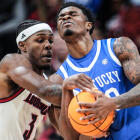
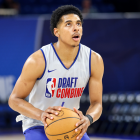
Several college basketball stars who are projected as second-round picks in the NBA Draft could theoretically benefit from a successful challenge by Heitner's group. Big-name stars like Purdue guard Braden Smith and Kentucky's Otega Oweh -- just to name a couple -- played four seasons in four years and then believed they had no choice but to be done with college basketball.
They might have been interested in playing a fifth season over going to the NBA as a potential second-round pick if they were allowed to capitalize on the new NCAA rule, which will benefit players who come after them.
Another season of playing college basketball could be more financially lucrative for someone like Smith or Oweh if the alternative is fighting to make an NBA roster as a second-round pick on a minimum contract.
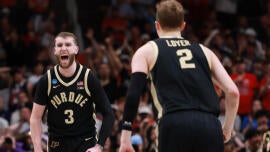
Whether players who get drafted in the second round of the NBA Draft on Wednesday night decide to join the legal effort to return to college basketball for a fifth season will be a fascinating plot to monitor.
Players who haven't taken the fifth
Notable seniors who declared for the NBA Draft who have not played five seasons of college basketball.
| Big Board ranking | Player | Position | School |
|---|---|---|---|
| 27 | Tarris Reed Jr. | C | UConn |
| 29 | Zuby Ejiofor | C | St. John's |
| 30 | Joshua Jefferson | PF | Iowa State |
| 33 | Braden Smith | PG | Purdue |
| 34 | Richie Saunders | SG | BYU |
| 35 | Ryan Conwell | SG | Louisville |
| 39 | Otega Oweh | SG | Kentucky |
| 40 | Jaden Bradley | PG | Arizona |
| 43 | Bruce Thornton | PG | Ohio State |
| 44 | Ja'Kobi Gillespie | PG | Tennessee |
Where would these players play?
This exact scenario is why a wave of players with no eligibility remaining entered the transfer portal following the season. They wanted to position themselves to have options if a rule like this passed and did apply retroactively. The NCAA rule does not apply retroactively. But if legal challenges to change that caveat are successful, even those who didn't enter the portal could theoretically still return to college basketball to play for their former schools.
Congressional bill would codify the rule
This scenario is also another example of the benefits that would come from passing the Protect College Sports Act, which includes a five-year eligibility rule similar to the one passed by the NCAA cabinet on Tuesday. If Congress enacts a federal law surrounding this issue (among many others), it will stand up to legal challenges far better than an NCAA rule. At a time when NCAA rules have repeatedly been battered by judges, this one could wind up being no different.